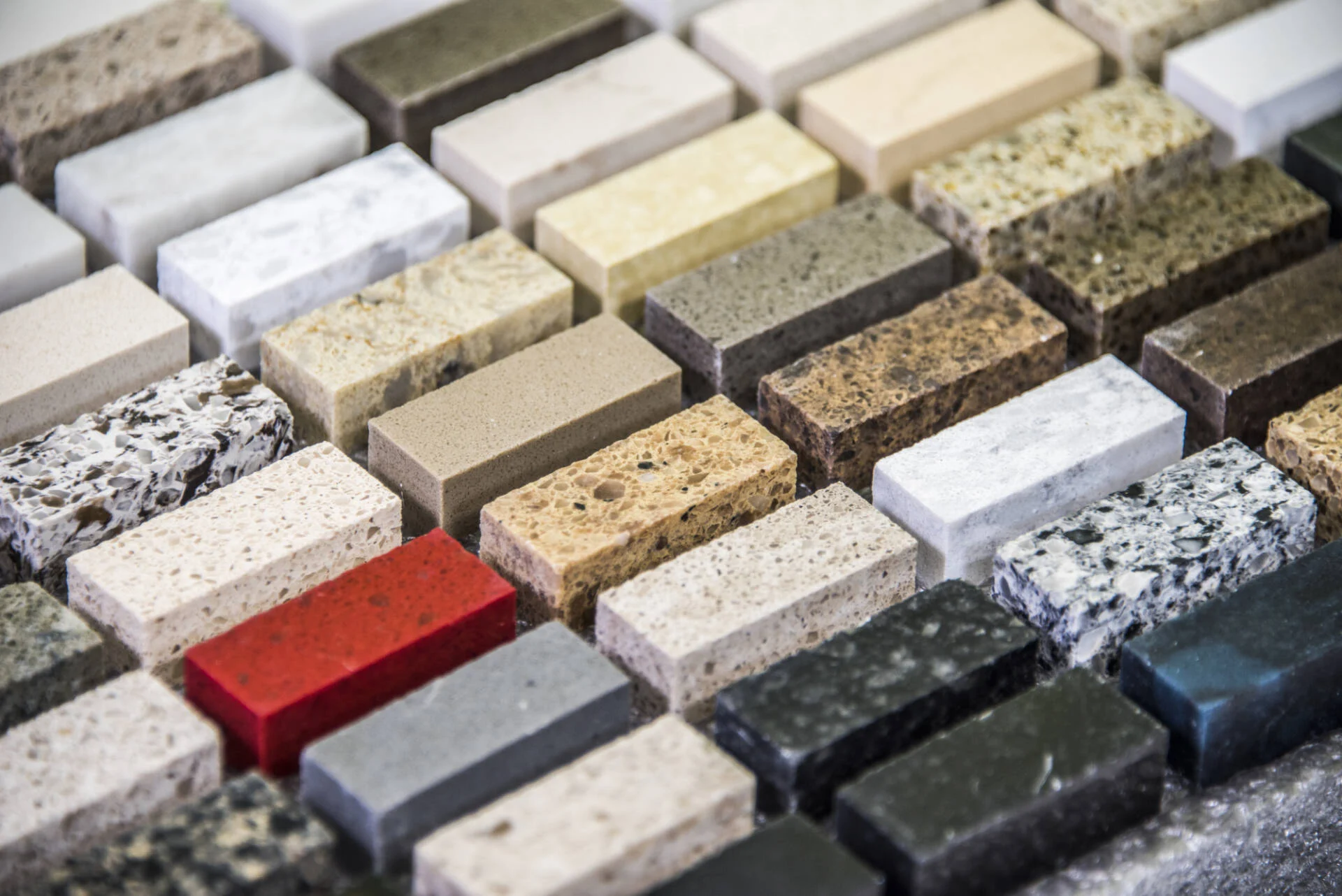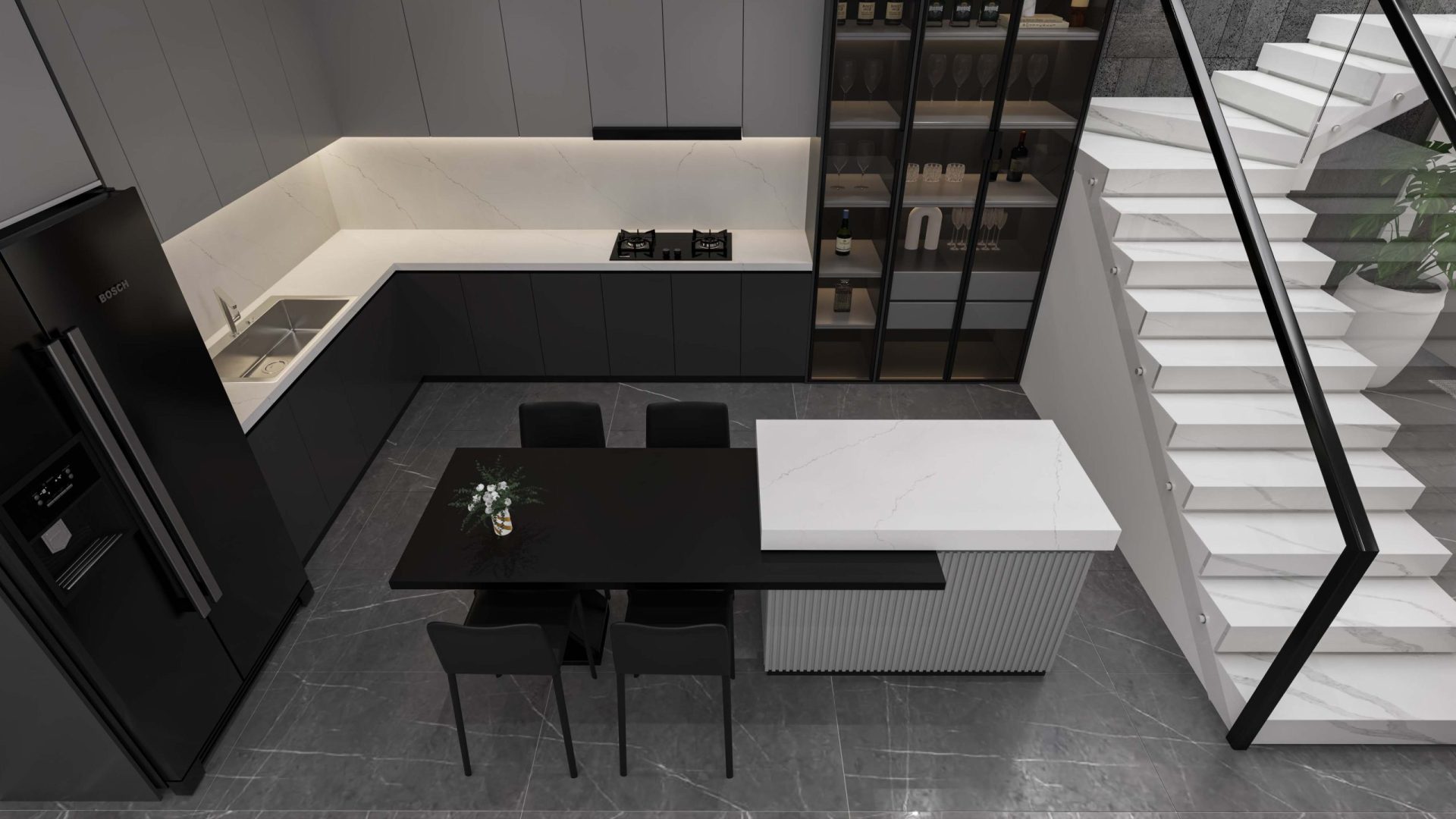
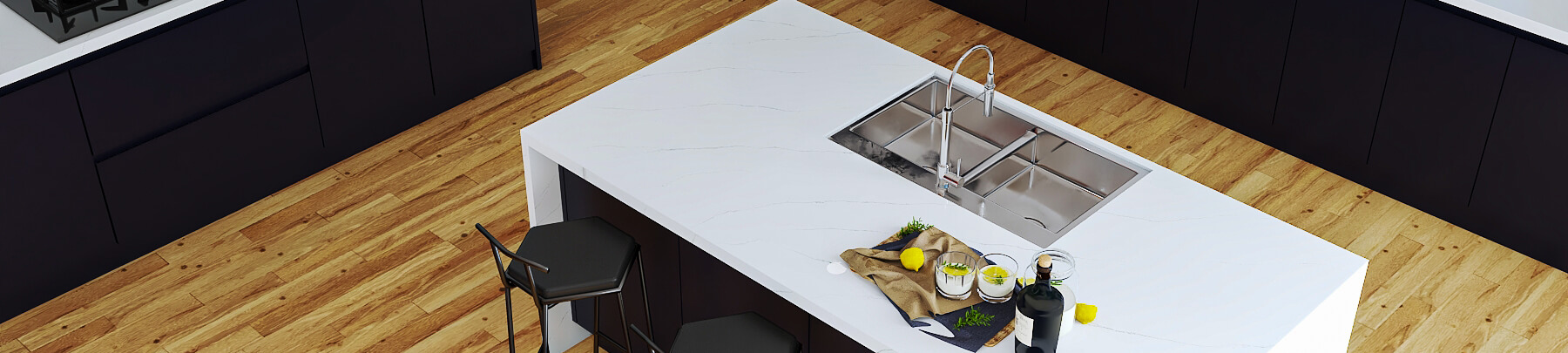
When it comes to choosing the perfect countertop material, the debate between quartz vs granite is one of the most common among fabricators, designers and homeowners. Both options are known for their durability, visual appeal, and ability to elevate the look of any kitchen or bathroom. However, despite their similarities, quartz and granite differ significantly in terms of composition, maintenance, performance, and overall cost.
Understanding these differences is essential to selecting the right surface for your space. In this guide, we’ll break down everything you need to know about quartz vs granite, from their key features and benefits to practical considerations like upkeep and long-term value, helping you make a confident and informed decision for your home.
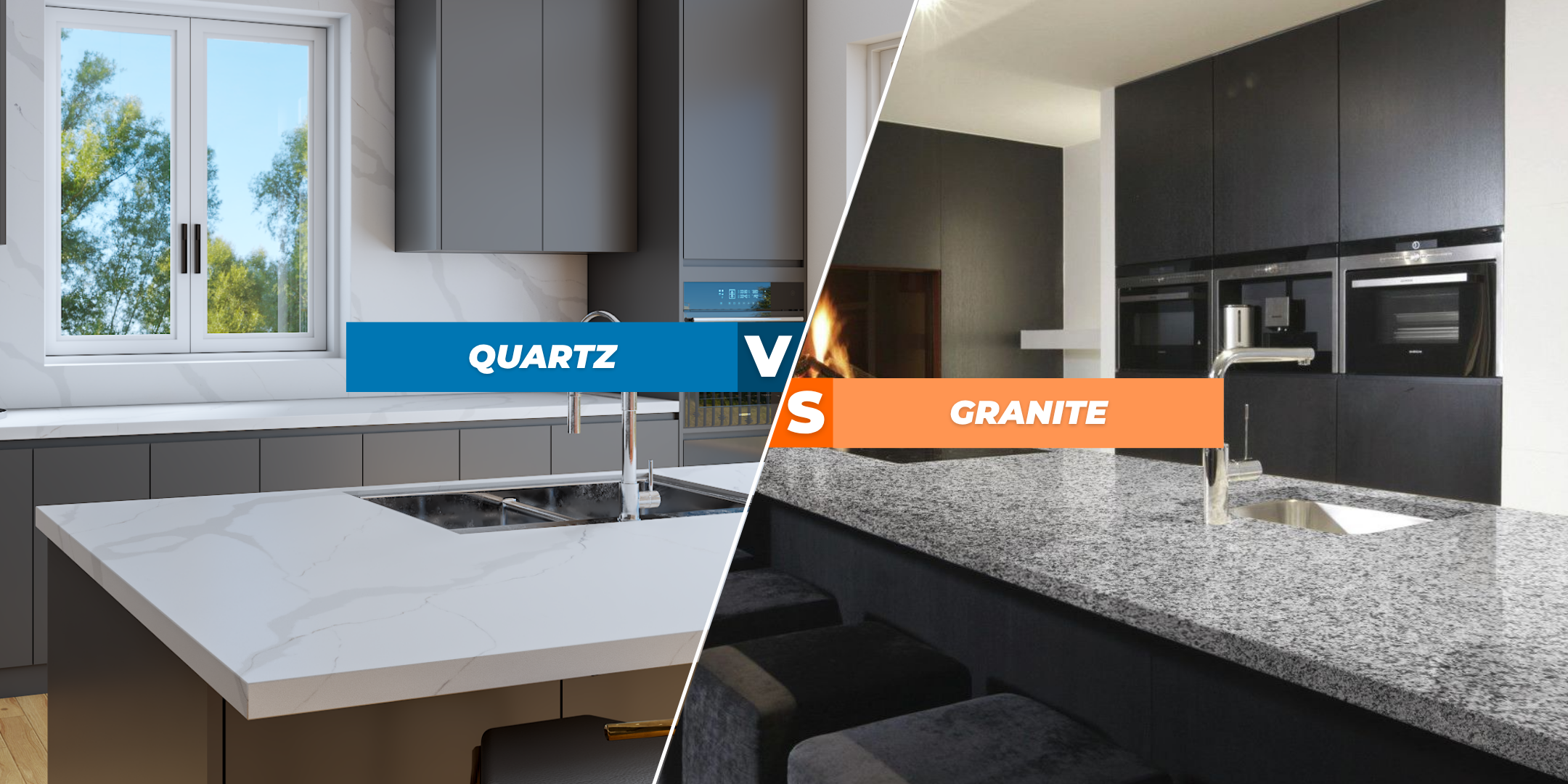
Quartz vs Granite: Quick Comparison
When comparing countertop materials, starting with a quick side-by-side overview can make the decision process much easier. While quartz and granite are often grouped together due to their popularity and durability, they differ in several key ways that can impact which option is best suited for your kitchen or bathroom.
The table below highlights the main differences between quartz and granite, including their origin, appearance, durability, maintenance needs, environmental impact, and cost. This quick comparison offers a clear snapshot to help you see how the two materials stack up before diving deeper into each factor in more detail.
| Feature | Quartz | Granite |
| Origin and Composition | Engineered stone | Natural stone |
| Appearance | Uniform, consistent colors and patterns; can mimic marble or other stones; ideal for modern, sleek designs | Unique, natural variations with distinct veining and mineral patterns; no two slabs are alike |
| Durability | Very durable, non-porous, resistant to stains, scratches, and bacteria; less heat-resistant (up to ~300°F) | Very durable, highly heat-resistant (up to ~1200°F); scratch-resistant but porous |
| Maintenance | Low maintenance; no sealing required; easy cleaning with soap and water | Requires periodic sealing; more maintenance to prevent stains and moisture absorption |
| Environmental Impact | Uses natural quartz with resins; may include recycled materials; less quarrying but involves manufacturing energy | Fully natural material; quarrying and transport can have higher environmental impact |
| Cost | More consistent pricing; typically mid-range to high-end depending on design and brand | Wider price range; affordable to very expensive depending on rarity and origin |
Below, we’ll break down each of these factors to better understand how quartz vs granite compare.
Quartz vs Granite: Key Differences
Choosing between quartz and granite countertops involves more than just appearance, it requires understanding how each material performs in everyday use. The following sections break down these differences to give you a clearer picture of how quartz and granite compare, helping you decide which option best fits your needs and lifestyle.
Origin and Composition
Quartz are engineered surfaces created by combining around 90–93% crushed natural quartz with resins and pigments. Instead of being cut directly from stone blocks, this material is manufactured under controlled conditions, resulting in slabs that are consistent in color and pattern. Thanks to the added resins, quartz surfaces are non-porous, which helps improve resistance to stains and moisture while maintaining a sleek, uniform appearance.
See more: How Engineered Quartz Countertops Are Made: The Complete Manufacturing Process
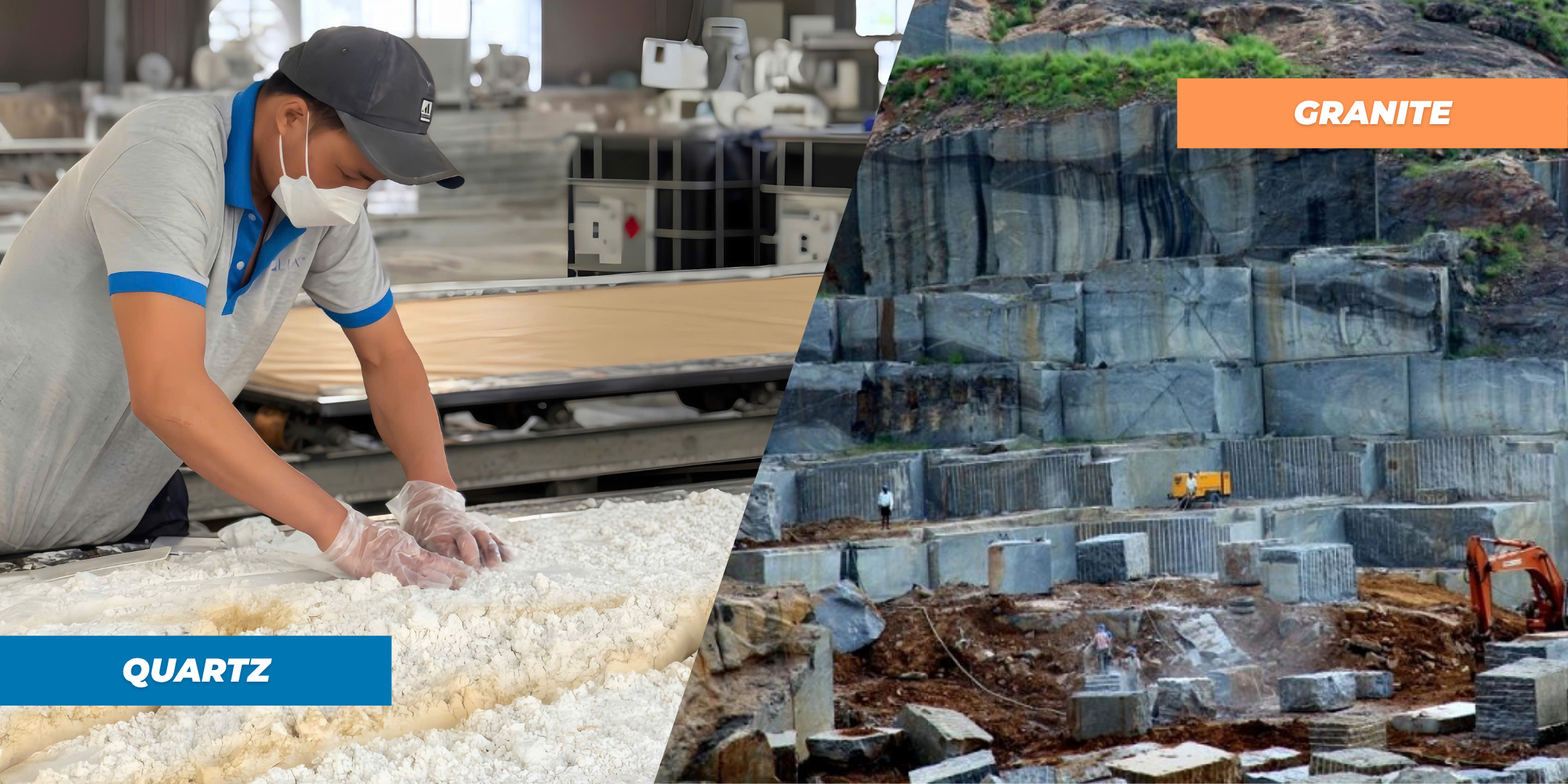
Granite, in contrast, are made from natural stone formed deep within the Earth over millions of years as molten rock slowly cools and solidifies. Large blocks of granite are quarried, then cut into slabs and polished for use in homes. Because it is entirely natural, each slab features unique veining, mineral patterns, and color variations, meaning no two countertops are exactly alike.
Appearance
Quartz offer a more uniform and controlled look since they are engineered rather than cut from natural stone. This manufacturing process allows for consistent colors and patterns across slabs, making it easier to match design elements in modern kitchens. Quartz can also replicate the appearance of marble or other natural materials while maintaining cleaner lines and a more polished, predictable finish. For those who prefer a sleek, contemporary aesthetic, quartz is often an appealing choice.
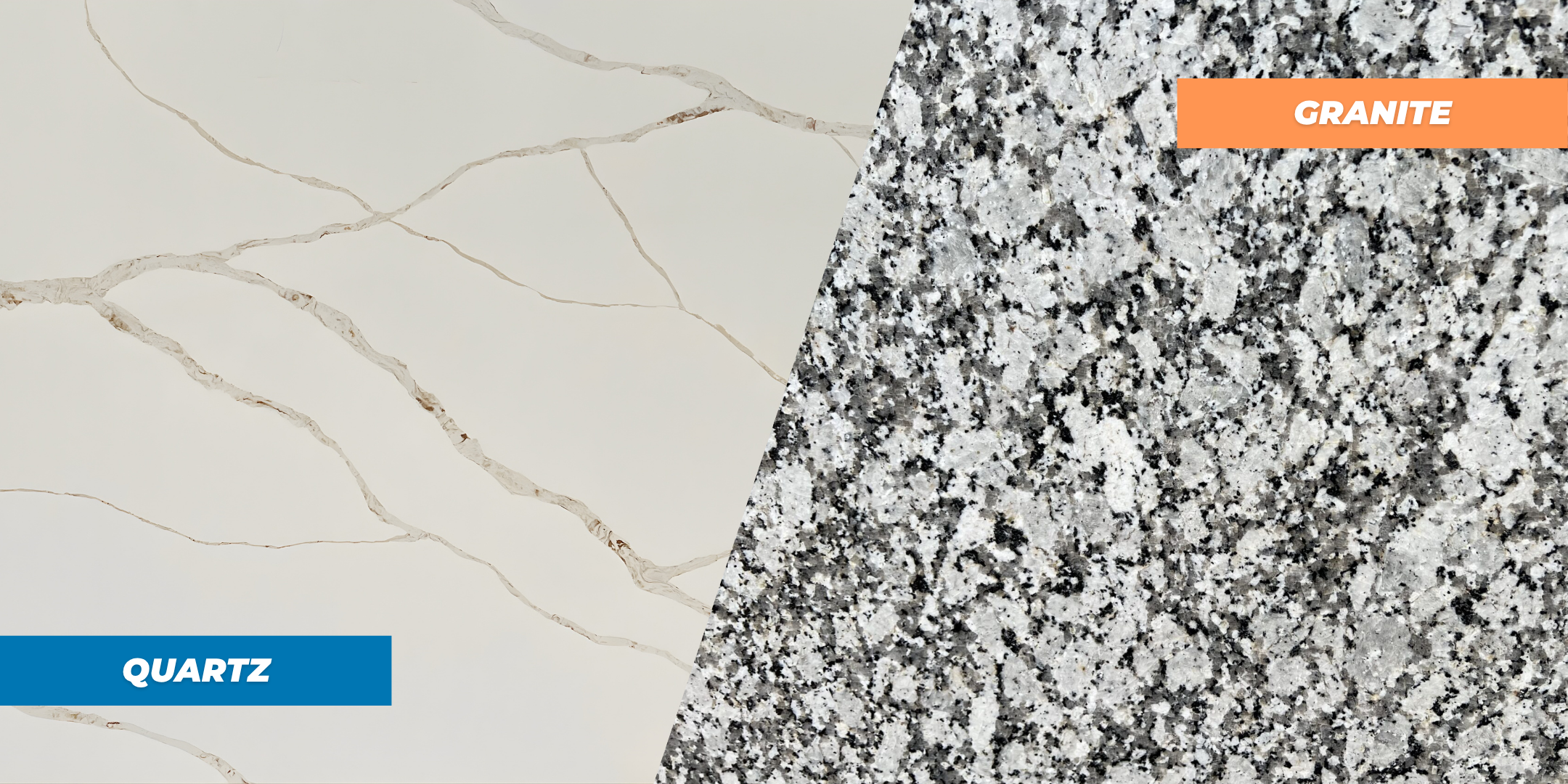
Granite, on the other hand, stand out for their natural beauty and uniqueness. Formed by geological processes over millions of years, each slab features distinct veining, mineral patterns, and color variations that cannot be replicated. This results in a rich, organic appearance full of depth and character. If you’re drawn to a more natural, one-of-a-kind statement piece, granite delivers a striking and timeless visual appeal.
Durability
Quartz countertops are highly durable thanks to their engineered composition. The material is dense and non-porous, making it resistant to scratches, stains, and bacteria without the need for sealing. Its uniform structure also reduces the risk of cracks caused by internal flaws. However, quartz is less tolerant of direct, high heat, while it can handle moderate temperatures, it typically resists heat up to around 300°F. Placing extremely hot pots or pans directly on the surface may cause scorching or discoloration, so using trivets or heat pads is recommended.
In terms of hardness, quartz ranks around 7 on the Mohs hardness scale, which makes it harder than many natural stones and highly resistant to everyday wear. This level of hardness helps prevent scratches from common kitchen use, though excessive force or cutting directly on the surface can still cause damage over time.
Granite countertops are equally strong but perform differently in certain conditions. As a natural stone, granite is extremely heat-resistant and can withstand temperatures up to about 1200°F without immediate damage. This means you can place hot cookware directly on the surface with far less risk. It also resists scratching well under normal use. However, granite is porous, so it requires periodic sealing to prevent stains and moisture from penetrating the surface. While durable overall, rare natural imperfections and sudden temperature changes can sometimes lead to cracking, though this is uncommon with proper care.
Regarding hardness, granite typically falls between 6 and 7 on the Mohs scale, depending on its mineral composition. This makes it very durable and scratch-resistant, though slightly more variable compared to engineered quartz.
Maintenance
Quartz countertops are known for being low maintenance and easy to care for. Because they are non-porous, they do not require sealing at any point. The resin content also makes quartz highly resistant to stains and less likely to harbor bacteria. In most cases, simple daily cleaning with mild soap and water is enough to keep the surface looking like new, without the need for special products or ongoing upkeep.
Granite countertops require a bit more attention to maintain their appearance and performance. As a naturally porous stone, granite needs to be sealed upon installation and resealed periodically to protect against stains and moisture. Without proper sealing, spills like oil or red wine can penetrate the surface and leave marks. While still durable and relatively easy to clean, granite demands more routine maintenance compared to quartz.
See more: Effective Quartz Countertops Care and Maintenance Tips
Environmental Impact
Both materials rely heavily on natural resources, but their environmental impact differs in how they are sourced and produced.
Quartz countertops are engineered using crushed natural quartz combined with resins and, in some cases, recycled stone byproducts. This manufacturing process can make use of leftover materials, helping reduce waste. Because quartz is produced in controlled facilities, it avoids the need for large-scale quarrying. However, the inclusion of polymer resins and the energy used in production mean it is not entirely natural.
Granite countertops are made from 100% natural stone that is quarried directly from the earth. This gives granite an edge in terms of natural composition, but the extraction process and transportation, often over long distances, can contribute to a larger environmental footprint. Despite past concerns, studies have shown that both granite and quartz countertops emit little to no radon, posing no meaningful risk in typical home environments.
In short, granite offers a completely natural option, while quartz can be seen as a more resource-efficient choice due to its use of recycled materials and reduced reliance on quarrying.
Cost
When it comes to cost, both quartz and granite fall into a similar general price range, but the final expense can vary depending on several factors such as quality, rarity, thickness, edge profiles, and installation complexity.
Quartz countertops are typically priced more consistently because they are engineered and manufactured under controlled conditions. This standardization keeps pricing relatively predictable, usually ranging from mid-range to high-end depending on the brand and design. More intricate patterns or premium finishes that mimic marble can increase the cost. Installation is often straightforward, which can help keep labor costs stable.
Granite countertops, on the other hand, have a wider price spectrum. Entry-level granite can be quite affordable, but rare colors, exotic patterns, and high-grade slabs can become significantly more expensive. Because each slab is unique, pricing is influenced by availability and origin. Additionally, fabrication and installation may cost more due to the natural variations and the need for careful handling.
Quartz vs Granite Countertops: Which is Right for You?
Choosing between quartz and granite countertops comes down to personal preference and how you plan to use your space. Both materials offer their own advantages in terms of style, performance, and upkeep, so the best option is the one that aligns with your needs and aesthetic.
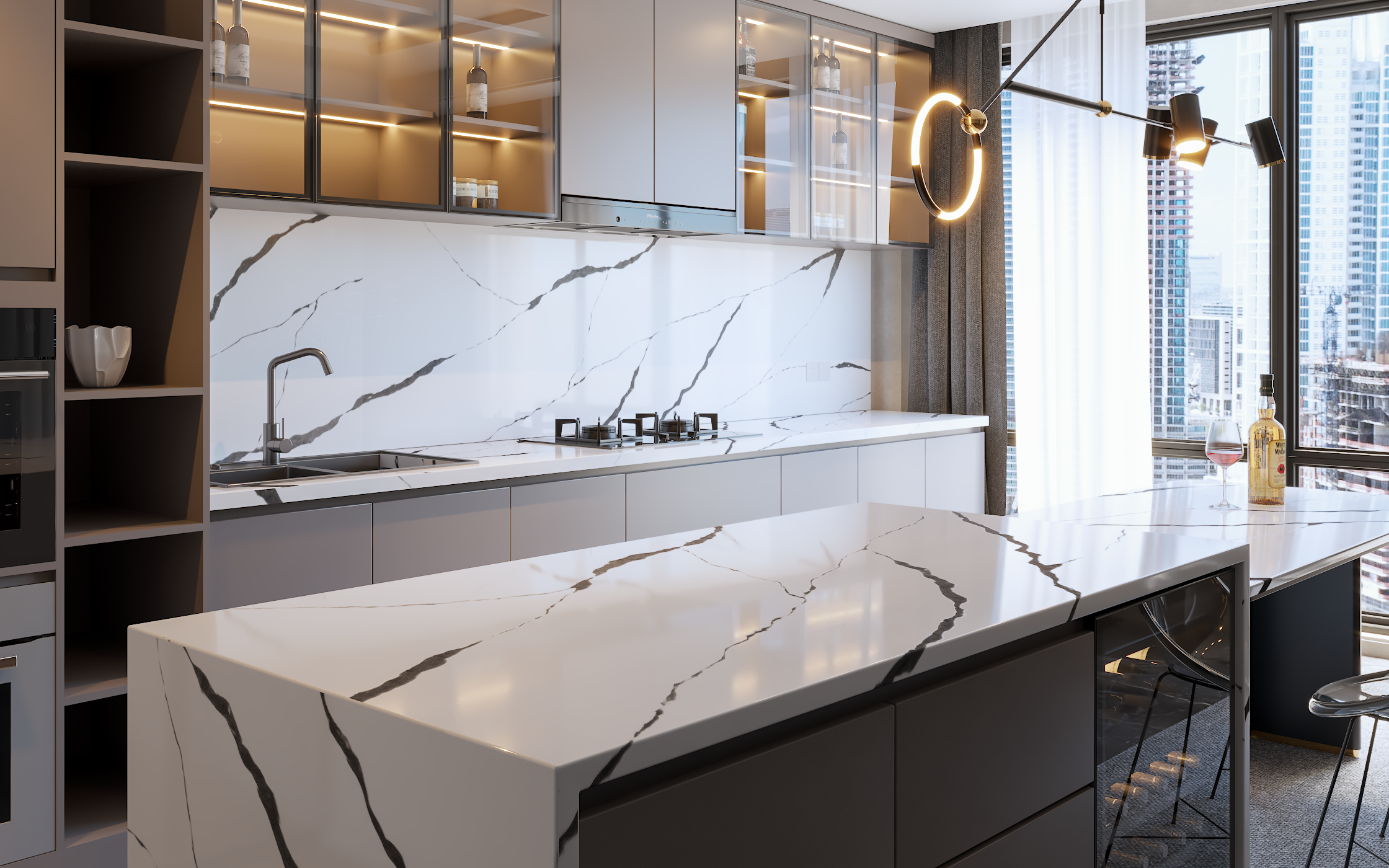
Choose Quartz Countertops If
- Low maintenance is a priority: You want a “set-it-and-forget-it” surface that never requires professional sealing.
- Stain resistance is essential: You have a busy household where spills (like wine, oil, or coffee) are common; its non-porous surface repels liquids naturally.
- You prefer design consistency: You want a uniform look across your kitchen or need multiple slabs to match perfectly for a large island.
- Hygiene is a top concern: You prioritize a bacteria-resistant surface for food prep; its non-porous structure leaves no place for mold or germs to hide.
- You want modern/minimalist style: You are looking for sleek lines, solid colors, or specific patterns that can be precisely engineered.
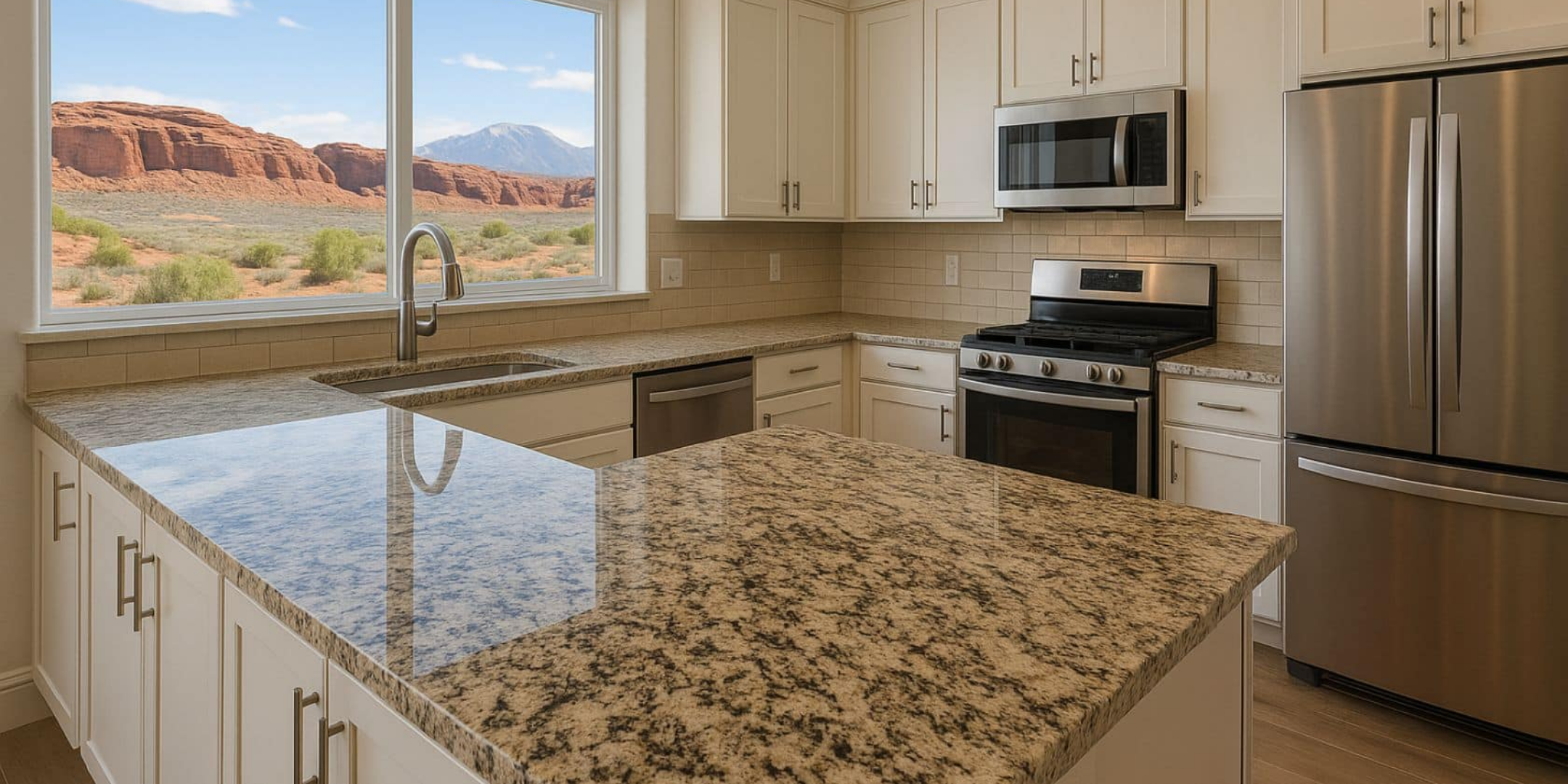
Choose Granite Countertops If
- You value natural uniqueness: You love the idea that no one else in the world has the exact same countertop pattern as your one-of-a-kind natural slab.
- Superior heat eesistance is needed: You frequently place hot pots and pans directly from the stove onto the counter without wanting to worry about scorching or “thermal shock.”
- You prefer timeless, organic beauty: Your home has a traditional, rustic, or farmhouse aesthetic that benefits from the “earthy” warmth of real stone.
- You are planning an outdoor kitchen: You need a material that is UV-stable and won’t fade or discolor when exposed to direct sunlight.
- Authenticity matters: You prefer 100% natural materials over engineered products that use synthetic resins and pigments.
Frequently Asked Questions About Quartz vs Granite
1. Quartz vs Granite: Which is More Durable?
Both are exceptionally durable, but quartz generally wins on practical day-to-day resilience because it is more flexible and less prone to chipping or cracking than the more brittle granite. Quartz is also non-porous, making it naturally resistant to bacteria and mold.
2. Which Material is More Heat-Resistant: Quartz or Granite?
Granite is the clear winner for heat resistance. It can withstand hot pans (up to 1,200°F) placed directly on its surface. Quartz contains resins that can scorch, discolor, or crack at temperatures as low as 300°F, so using trivets is mandatory.
3. Does Quartz Stain More Easily than Granite?
No, quartz is significantly more stain-resistant. Because it is non-porous, liquids like wine, oil, and coffee wipe away easily without being absorbed. Granite is naturally porous and can absorb liquids, leading to permanent stains if it is not sealed properly
4. How Often do Quartz and Granite Countertops Need to be Sealed?
- Quartz: Never needs sealing.
- Granite: Requires periodic sealing to maintain stain resistance, typically every 1 to 2 years. Some darker or denser granites may need less frequent sealing.
5. Which is More Expensive?
Costs are often comparable, but granite can be the more budget-friendly option at the entry-level (starting around $35–$40 per sq. ft.), while high-end exotic slabs can exceed $200 per sq. ft.. Quartz typically ranges from $50 to $150 per sq. ft..
6. Can I Use Quartz and Granite Outdoors?
- Quartz: No. Quartz is not recommended for outdoor use because UV rays from direct sunlight can cause the resins to yellow, fade, or degrade over time.
- Granite: Yes. Granite is the superior choice for outdoor kitchens because it is immune to UV damage.
7. Which Has Better Resale Value?
Both add significant value to a home. Granite appeals to those who value the “one-of-a-kind” luxury of natural stone, while quartz attracts buyers looking for modern aesthetics and low-maintenance living.
When comparing quartz vs granite countertops, both materials offer impressive durability and long-term value, making them excellent investments for modern homes. Quartz stands out for its low maintenance, consistent appearance, and strong resistance to stains and bacteria – ideal for busy households seeking convenience and a sleek, contemporary look.
Granite, on the other hand, brings unmatched natural beauty, superior heat resistance, and one-of-a-kind patterns that add character and timeless appeal to any kitchen. Ultimately, the right choice depends on your priorities. If you value ease of care and design consistency, quartz is a practical and stylish solution. If you prefer natural aesthetics and the ability to withstand high heat, granite may be the better fit.
At Lux Quartz Vietnam, we support fabricators, designers, and homeowners in selecting premium quartz surfaces that seamlessly combine style, durability, and practicality. Whether you’re working on a residential upgrade or a large-scale design and fabrication project, our team is here to guide you through material selection, color options, and design solutions tailored to your needs. Contact Lux Quartz Vietnam today to explore our collection and find the perfect quartz countertops for your next project.
See more: