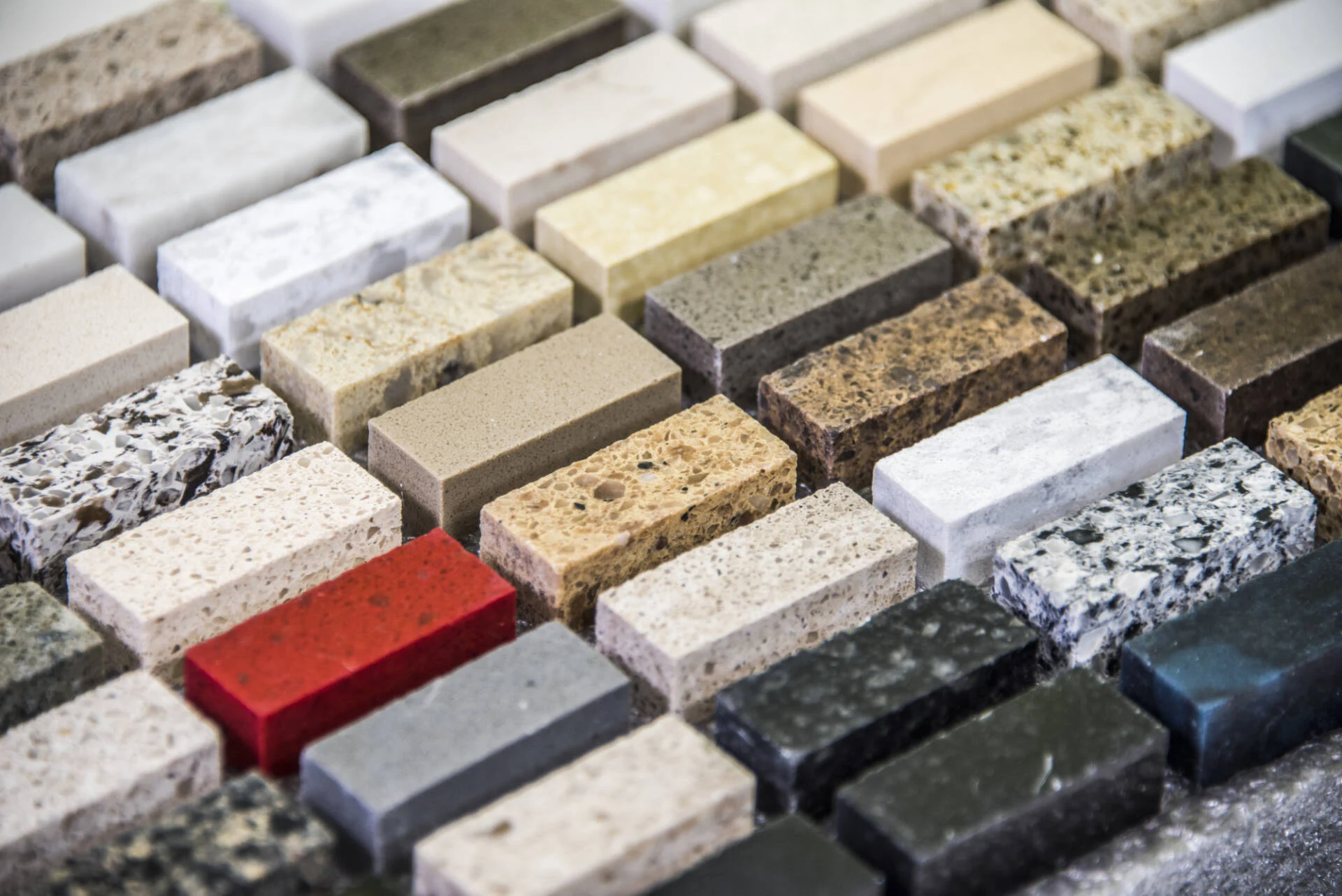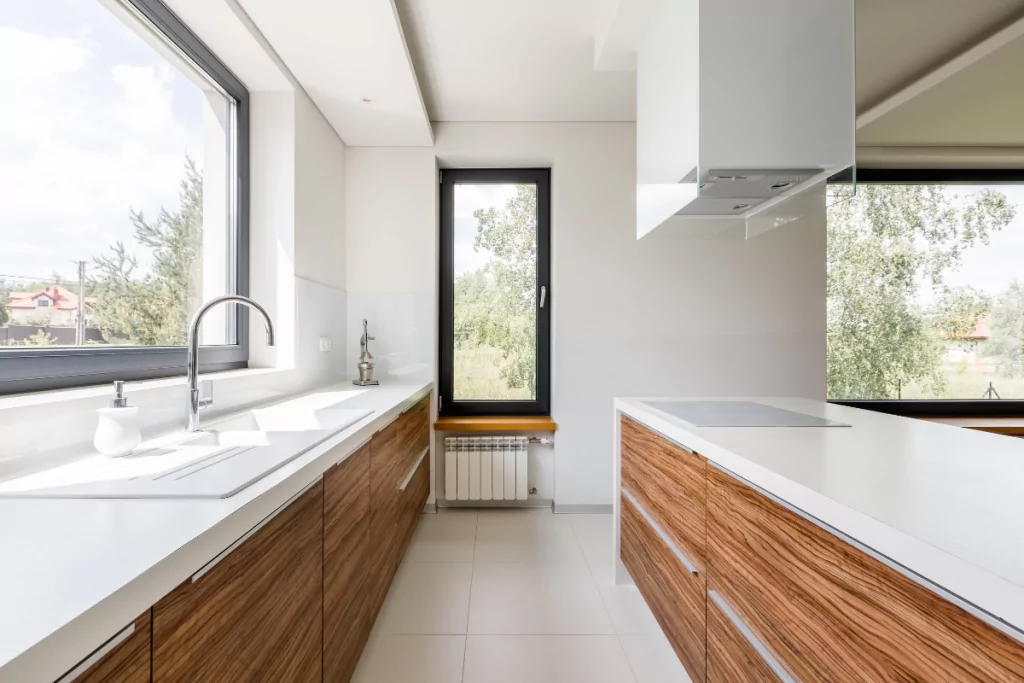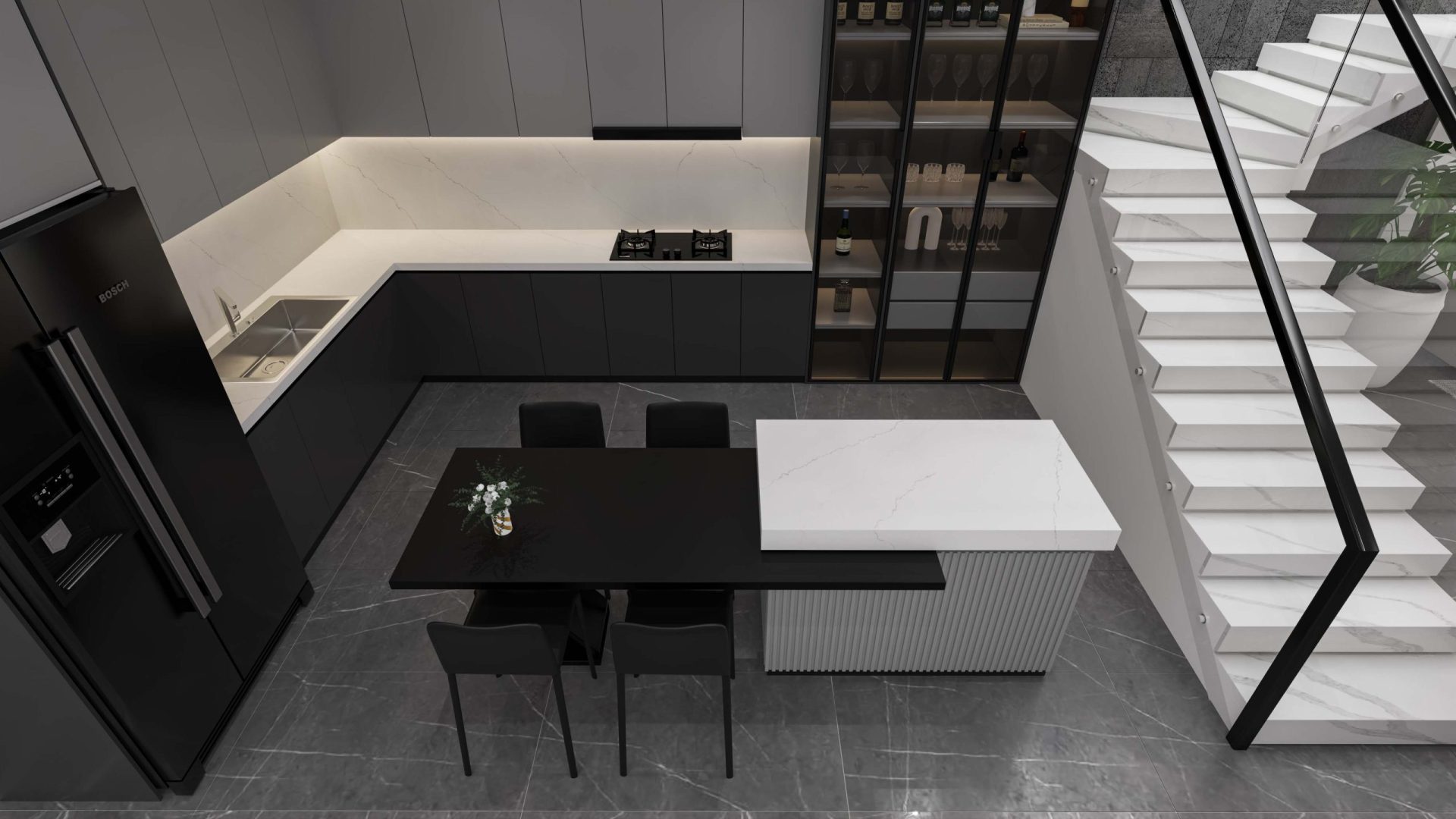
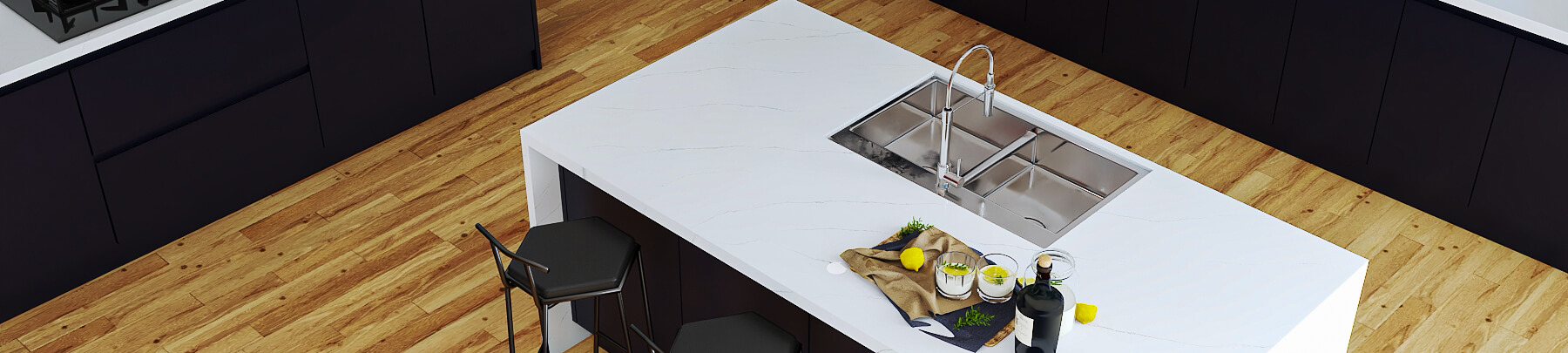
Printed quartz has become one of the fastest-growing choices for homeowners and designers looking for marble-inspired countertops with a more consistent appearance and easier maintenance than natural stone. As interior design continues to favor elegant white kitchens and marble-look surfaces, printed quartz offers a modern way to recreate luxurious stone patterns on engineered quartz slabs.
Unlike natural marble, these quartz countertops use digital printing technology to create realistic veining and decorative stone designs while maintaining the practical benefits of engineered quartz. This manufacturing method has made printed quartz increasingly popular for kitchen countertops, bathroom vanities, and commercial interiors where both aesthetics and consistency matter.
But is printed quartz the right material for every project? In this guide, Lux Quartz Vietnam will explain what printed quartz is, how it is manufactured, its advantages and limitations, and where it works best so you can make a more informed choice.
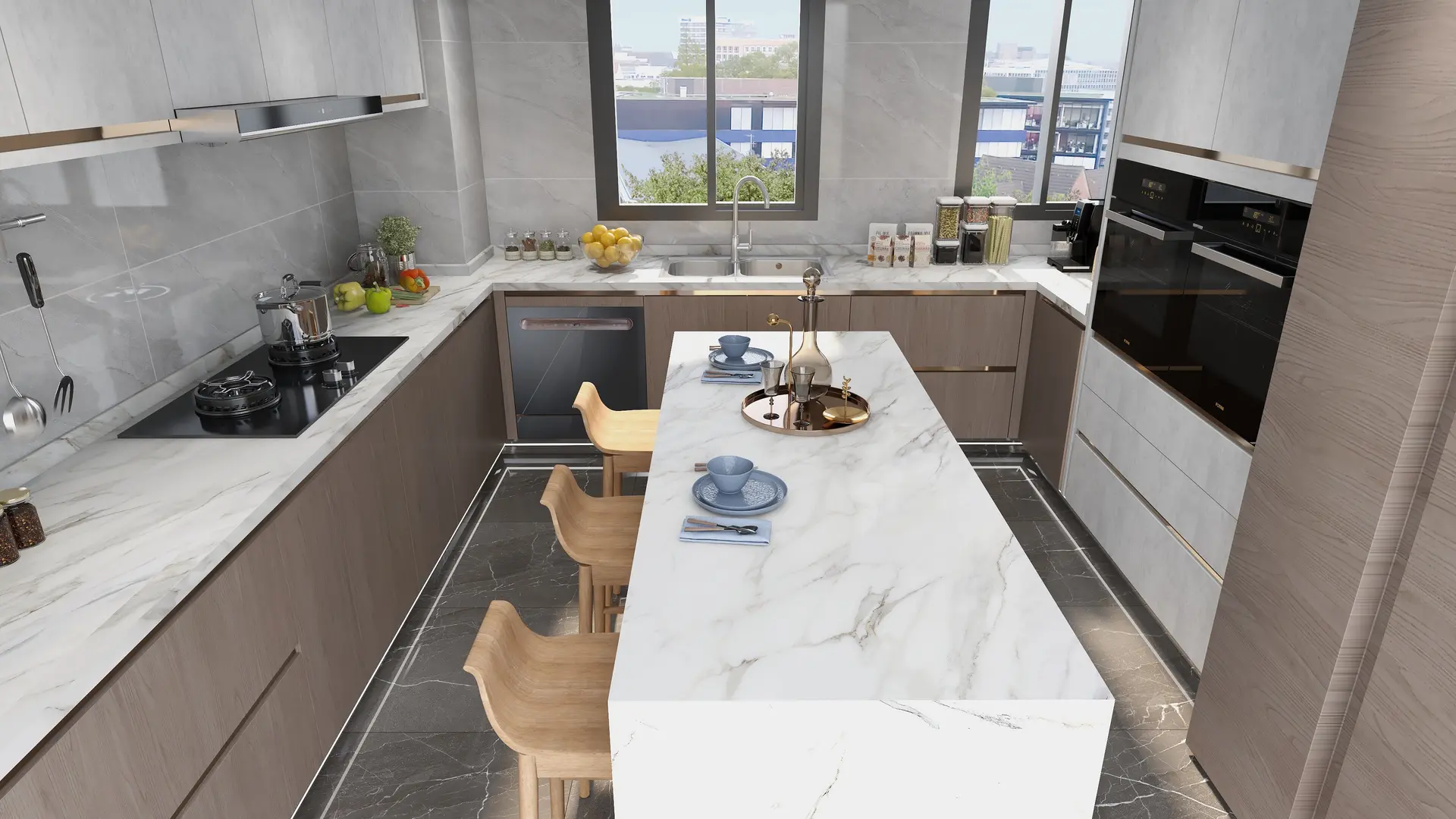
What is Printed Quartz?
Printed quartz is an engineered quartz surface that uses digital printing technology to apply decorative stone patterns onto the surface of a quartz slab. Instead of creating veining throughout the slab during manufacturing, the visual design is printed onto the finished surface and protected with a transparent finishing layer. The goal is to reproduce the appearance of premium natural stones such as Calacatta or Carrara marble, while maintaining the low-maintenance characteristics associated with engineered quartz.
Unlike natural marble, printed quartz offers greater visual consistency because the printed pattern is carefully controlled during production. This makes it easier to achieve a uniform appearance across multiple countertops or larger interior projects.
How is Printed Quartz Made?
The manufacturing process generally includes four main steps.
1. Producing the quartz slab: Manufacturers first produce a standard engineered quartz slab using crushed natural quartz, mineral pigments, and resin binders. The slab is compressed under high pressure and cured to create a dense, non-porous surface.
2. Preparing the surface: Once the slab is cured, its surface is polished and prepared for printing. A smooth surface helps the digital printing process produce detailed patterns with accurate color reproduction.
3. Printing the stone pattern: Industrial digital printers apply high-resolution marble or stone-inspired graphics directly onto the slab surface. This technology can reproduce intricate veining, soft color transitions, and complex natural stone visuals that would be difficult to achieve consistently through traditional pigmentation alone.
4. Applying a protective finish: After printing, manufacturers apply a protective coating and complete the slab with a polished or matte finish. This finishing layer helps protect the printed design during everyday use.
What Does Printed Quartz Look Like?
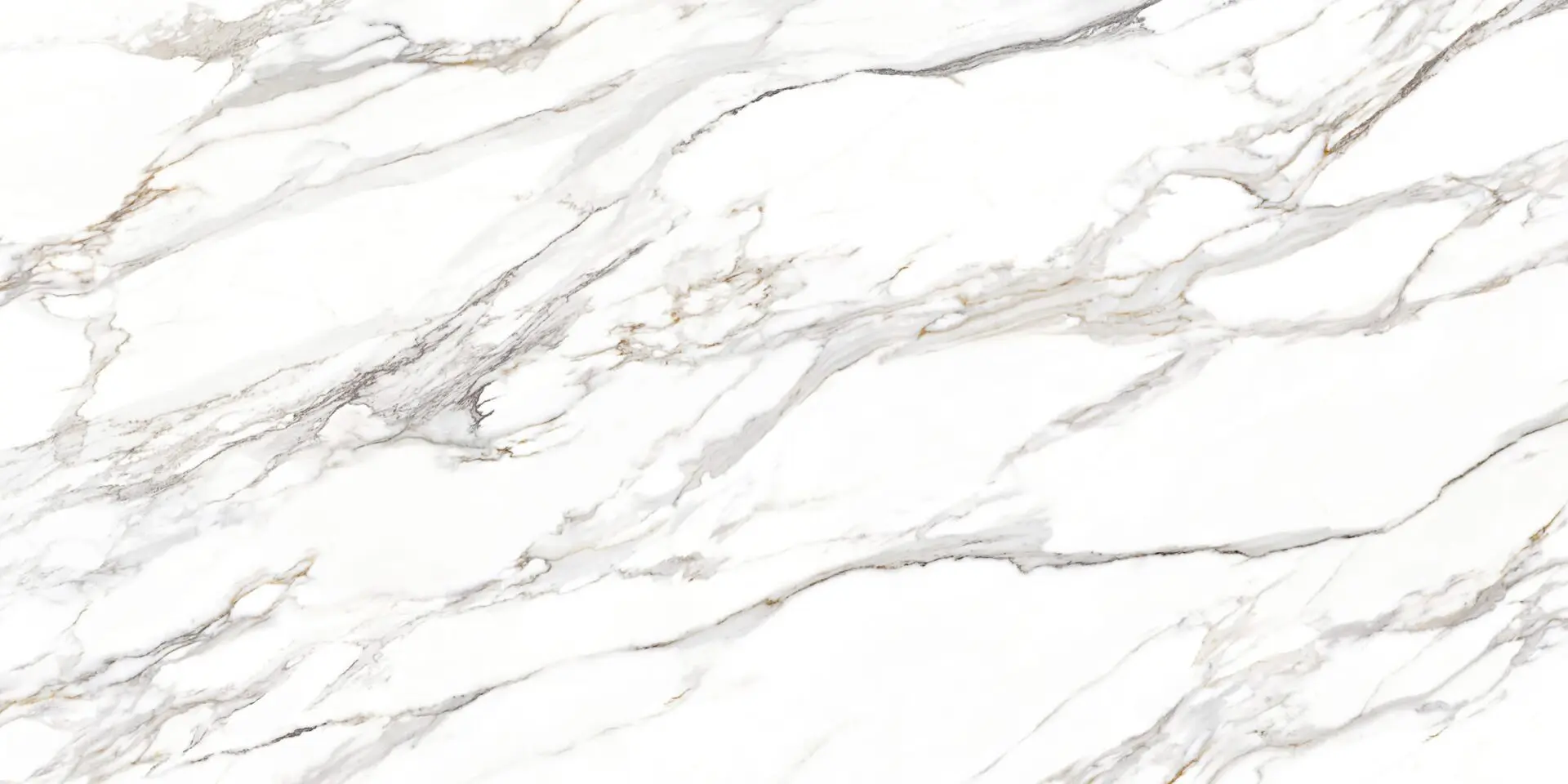
One reason this surface technology has gained popularity is its ability to imitate a wide variety of natural stones. Common printed quartz designs include:
- Calacatta marble with bold gray or gold veining.
- Carrara marble with softer linear veins.
- Statuario-inspired white marble patterns.
- Concrete and terrazzo-inspired finishes.
- Contemporary abstract stone textures.
Because the design is digitally created, manufacturers can produce highly consistent visuals across production batches.
See more: Traditional Quartz vs Printed Quartz: Exploring the Present and Future
Pros of Printed Quartz Countertops
Printed quartz countertops have become a popular option for homeowners and designers who want marble-inspired interiors with the convenience of engineered quartz. Here are some of the biggest advantages of printed quartz surfaces.
Realistic Marble-Look Designs
One of the biggest advantages of this engineered quartz surface is its ability to recreate the appearance of premium natural stone with impressive detail. Digital printing technology allows manufacturers to reproduce intricate veining, soft color transitions, and dramatic marble-inspired patterns that closely resemble materials such as Calacatta, Carrara, and Statuario marble.
This makes it an attractive choice for projects that want a luxurious stone look while maintaining a more consistent appearance from slab to slab. It also gives designers access to a wider selection of decorative patterns that may be difficult to achieve with natural stone alone.
Consistent Patterns Across Multiple Slabs
Unlike natural marble, where every slab has unique veining and color variation, printed quartz is manufactured with controlled digital patterns. This creates a more uniform appearance across multiple slabs, making it easier to achieve a cohesive design in larger kitchens or commercial interiors.
Pattern consistency is especially useful for apartment developments, hotels, restaurants, and retail spaces where several countertops or wall panels need to match. It can also simplify project planning by reducing unexpected visual differences between slabs.
Wide Variety of Design Options
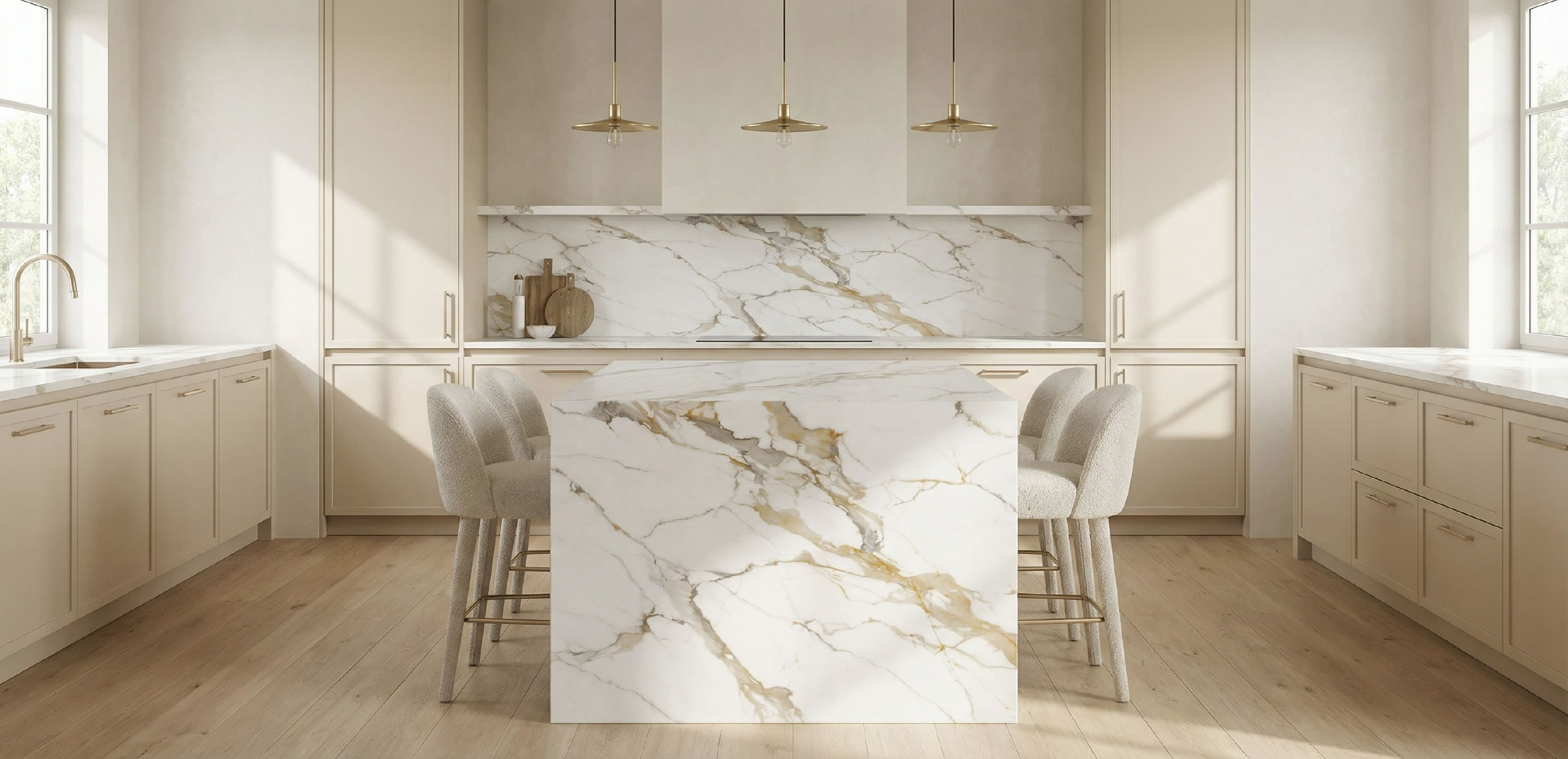
Printed quartz offers much more than traditional white marble designs. Digital printing technology can create a wide range of finishes, including soft Carrara veining, bold Calacatta patterns, terrazzo-inspired surfaces, concrete looks, and other contemporary stone textures.
This design flexibility allows architects, interior designers, and homeowners to choose surfaces that suit different interior styles without being limited to naturally occurring stone patterns. It also makes printed quartz a versatile material for both residential and commercial design projects.
Low-Maintenance Surface
A major benefit of these countertops is their easy everyday maintenance. Like other engineered quartz surfaces, it is generally non-porous and does not require periodic sealing.
For routine cleaning, a soft cloth with warm water and mild soap is usually enough to remove common household spills and food residue. This low-maintenance surface makes printed quartz a practical option for busy kitchens, bathrooms, and other indoor living spaces where easy cleaning is a priority.
Non-Porous and Stain-Resistant Performance
Printed quartz surfaces are designed to resist the absorption of common household liquids, helping reduce the risk of stains from coffee, tea, wine, cooking oil, or everyday food preparation.
While no countertop material is completely stain-proof, cleaning spills promptly and using appropriate cleaning products can help maintain the surface’s appearance over time. This stain-resistant performance is one reason engineered quartz remains a popular material for kitchen countertops and bathroom vanities.
Cons of Printed Quartz Countertops
Printed quartz offers many visual advantages, but it also has limitations that homeowners, designers, and fabricators should understand before selecting it for a project.
Surface Veining Doesn’t Continue Through the Slab
The defining characteristic of this type of quartz surface is that the decorative pattern is applied to the surface rather than running throughout the entire slab. As a result, when the slab is cut or fabricated, exposed edges may not display the same veining visible on the countertop surface.
This difference is usually most noticeable on thicker edge profiles or countertops with highly visible exposed edges, so it is an important consideration during design and fabrication.
Limited Edge and Waterfall Vein Continuity
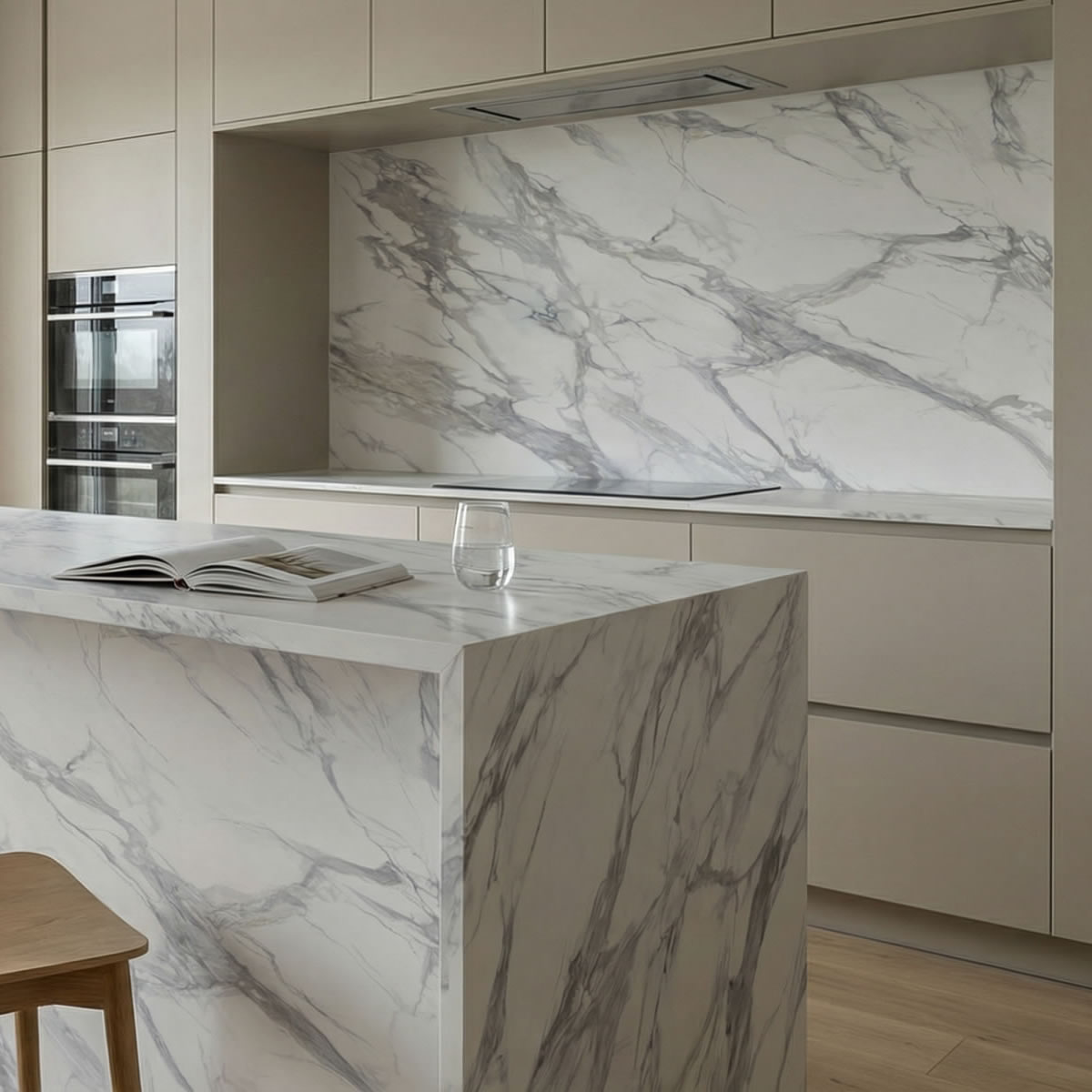
Waterfall kitchen islands and mitered countertop edges often rely on continuous veining to create a seamless marble-like appearance. Because printed quartz uses a surface-applied design, aligning veins across edges can be more challenging than with some other quartz manufacturing methods.
Careful slab layout and experienced fabrication can improve the final appearance, but projects with prominent waterfall edges should consider how the printed pattern will transition between surfaces before fabrication begins.
Sensitive to Direct UV Exposure
This material is designed primarily for indoor applications. Prolonged exposure to direct sunlight and UV radiation can gradually affect the surface appearance over time, potentially causing discoloration or changes to the decorative printed finish.
For that reason, printed quartz is not recommended for outdoor use. It is best suited for indoor kitchens, bathroom vanities, wall cladding, and other interior spaces where the surface is protected from continuous sunlight and weather exposure. Choosing printed quartz for indoor environments helps preserve its appearance and long-term performance.
Heat Resistance Has Limits
Printed quartz performs well under normal kitchen conditions, but it is not intended for direct contact with extremely hot cookware. Sudden or prolonged exposure to high temperatures may affect the resin or decorative finish used in engineered quartz products.
Using trivets or heat pads under hot pots, pans, and baking trays is a simple way to help protect the countertop surface and preserve its appearance over time.
Quality and Durability Vary by Manufacturer
Not all printed quartz countertops are manufactured using the same technology or materials. The quality of the quartz base, digital printing process, protective coating, and finishing method can all influence the final appearance and long-term performance of the slab.
Before choosing a printed quartz product, it is worth reviewing the manufacturer’s technical specifications, warranty, and recommended applications. Understanding these details helps ensure the material is appropriate for the intended residential or commercial project.
See more: Quartz Kitchen Countertops Pros and Cons
Frequently Asked Questions About Printed Quartz
Is printed quartz real quartz?
Yes. Printed quartz is made from an engineered quartz slab that contains natural quartz aggregates combined with resin binders. The difference is that its marble or stone pattern is created using digital printing technology on the surface, rather than being formed entirely through pigments distributed throughout the slab.
Is printed quartz durable enough for kitchen countertops?
Yes. Printed quartz is designed for everyday indoor applications, including kitchen countertops and bathroom vanities. It offers a dense, non-porous surface that is easy to clean and resistant to common household stains. However, using cutting boards and avoiding heavy impacts can help maintain its appearance over time.
Does printed quartz require sealing?
No. Like traditional engineered quartz, printed quartz is non-porous and does not require periodic sealing. Routine cleaning with mild soap, water, and a soft cloth is typically enough to keep the surface clean for everyday use.
Can printed quartz be used outdoors?
No. Printed quartz is not recommended for outdoor use. Prolonged exposure to direct sunlight, UV radiation, and changing weather conditions can affect the appearance of the printed decorative surface over time. It is best used for indoor kitchens, bathrooms, wall cladding, and other interior applications.
Is printed quartz heat resistant?
Printed quartz can handle normal kitchen use, but it is not designed for direct contact with extremely hot cookware. Placing hot pots or pans directly on the surface may damage the resin or decorative finish. Using trivets or heat pads is recommended to protect the countertop.
How do you clean printed quartz countertops?
Clean printed quartz countertops with a soft cloth, warm water, and a mild pH-neutral cleaner. Avoid abrasive scrubbers, harsh chemicals, bleach, or oven cleaners, as they may damage the surface finish. Wiping up spills promptly also helps keep the countertop looking its best.
See more: