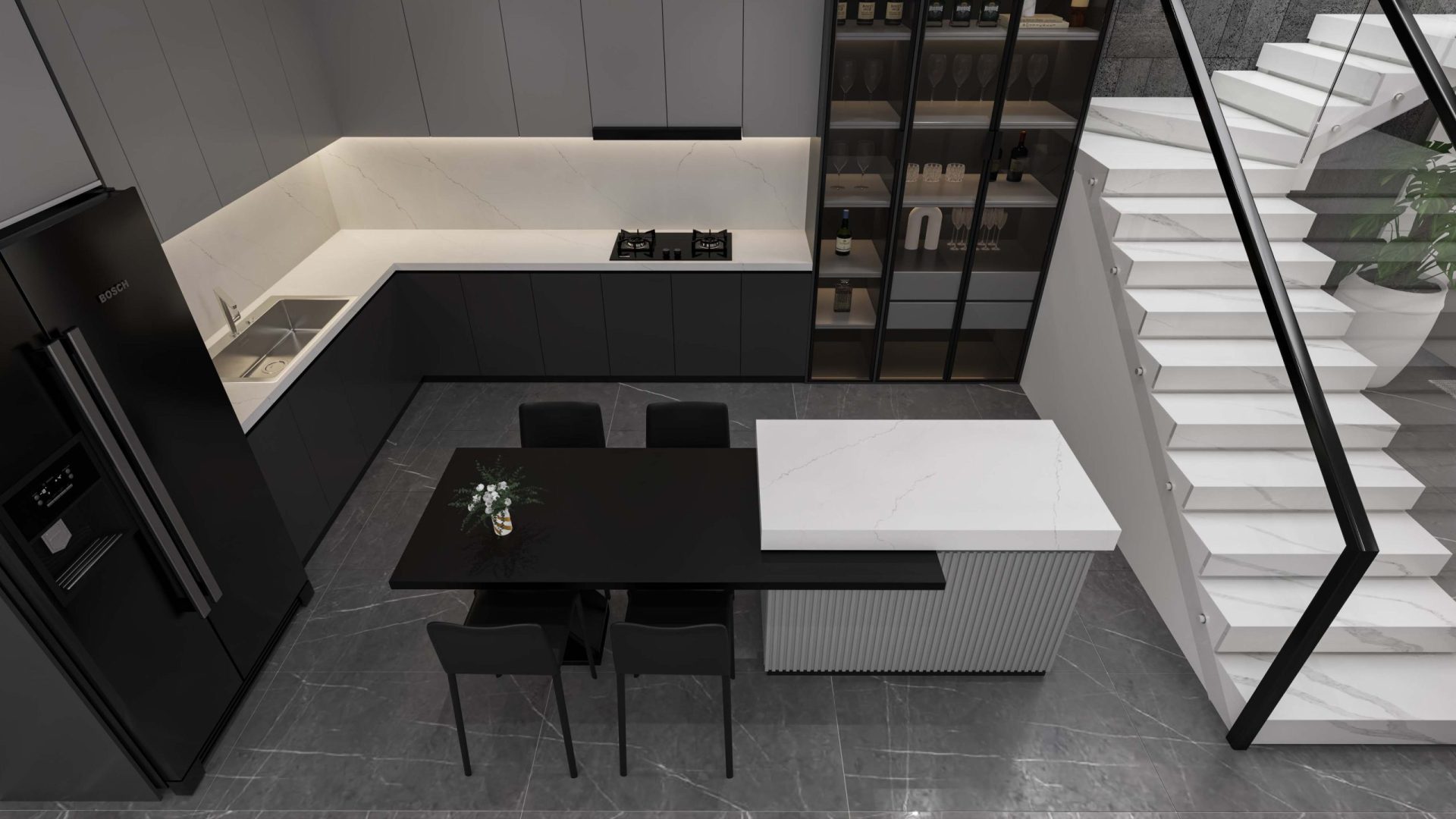
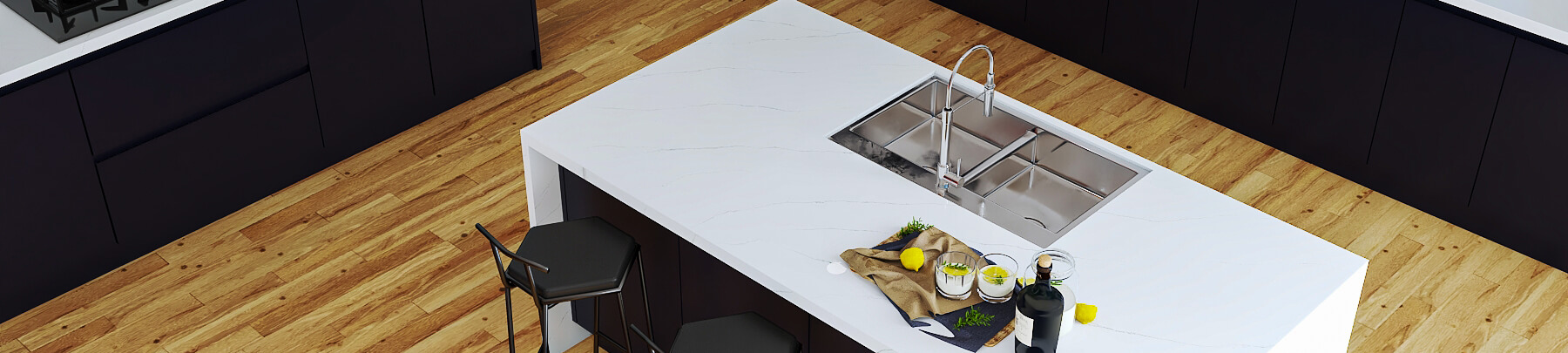
Quartz backsplash has become one of the most widely adopted surface solutions in modern kitchen design. Its rise in popularity is not driven solely by aesthetics but by a combination of practicality, durability, and long-term maintenance efficiency. For homeowners, architects, and contractors, quartz backsplash is often evaluated not just as a decorative element, but as a functional surface that must perform under daily cooking conditions.
In recent years, the trend has shifted toward seamless kitchen surfaces – where countertops and backsplashes are visually and physically integrated. Quartz plays a major role in this shift due to its engineered consistency and flexibility in fabrication. However, before selecting quartz backsplash for a project, it is important to understand how it behaves in real use, how it compares to alternatives, and what factors influence cost and installation outcomes.
This guide provides a comprehensive breakdown of quartz backsplash applications, design ideas, cost, and practical considerations to help you make an informed decision.
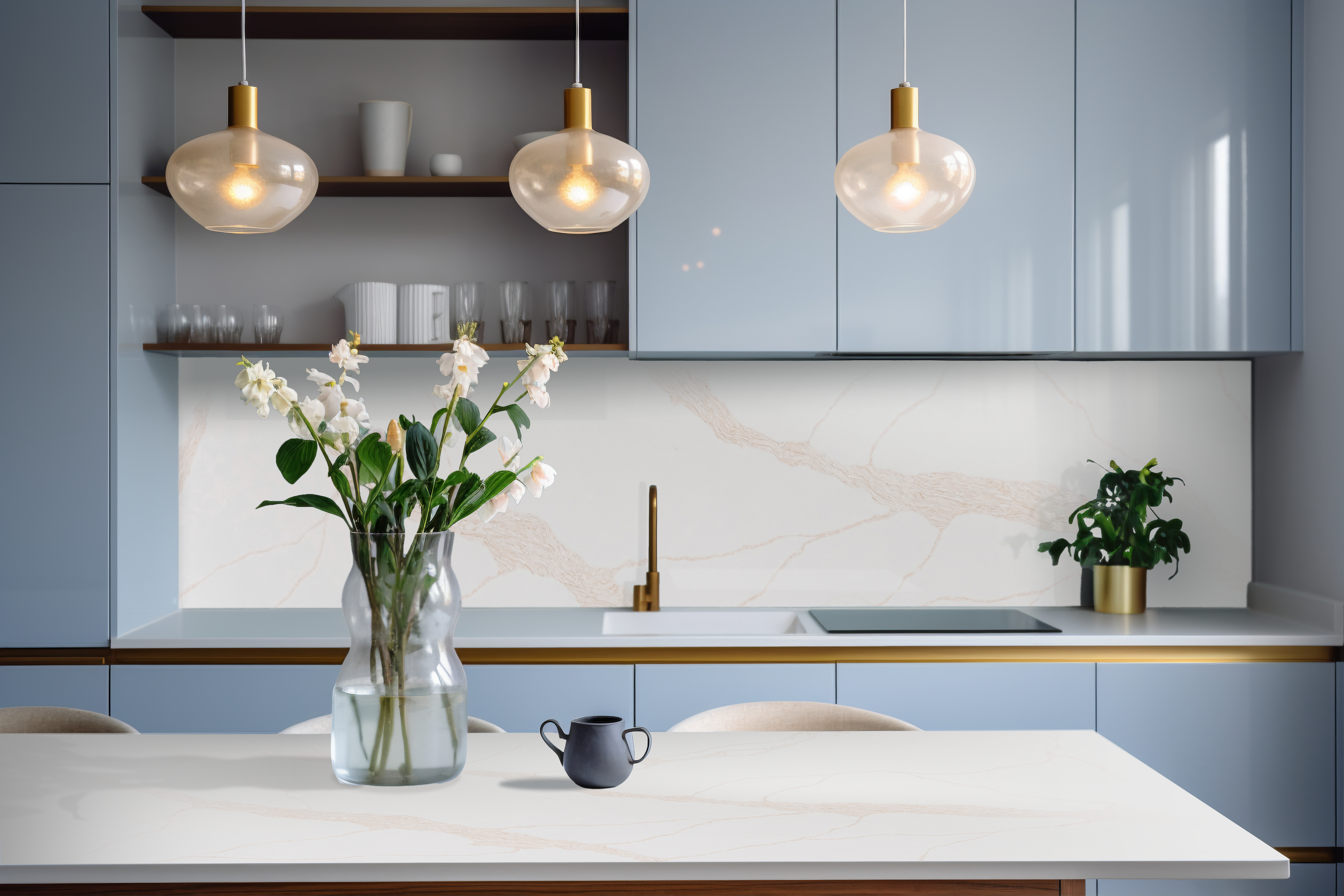
- 1. What Is a Quartz Backsplash?
- 2. Why Homeowners and Contractors Choose Quartz Backsplash?
- 3. Quartz Backsplash Ideas
- 4. Quartz Backsplash Cost: What Affects the Price?
- 5. Key Considerations Before Choosing Quartz Backsplash
- 6. Is Quartz Backsplash Right for Your Kitchen Project?
- 7. Frequently Asked Questions About Quartz Backsplash
1. What Is a Quartz Backsplash?
A quartz backsplash is a vertical surface made from engineered quartz slabs installed behind kitchen countertops, typically extending between the countertop and upper cabinets. Unlike traditional tile backsplashes that rely on grout lines and multiple small units, quartz backsplash is usually fabricated from large, continuous slabs.
Engineered quartz itself is a composite material consisting of approximately 90–93% natural quartz crystals combined with polymer resins and pigments. This manufacturing process results in a dense, non-porous surface that is highly resistant to stains, moisture, and bacteria.
One of the defining characteristics of quartz backsplash is its seamless appearance. Because it is installed in large panels rather than individual tiles, it significantly reduces visual interruptions and creates a more unified kitchen design.
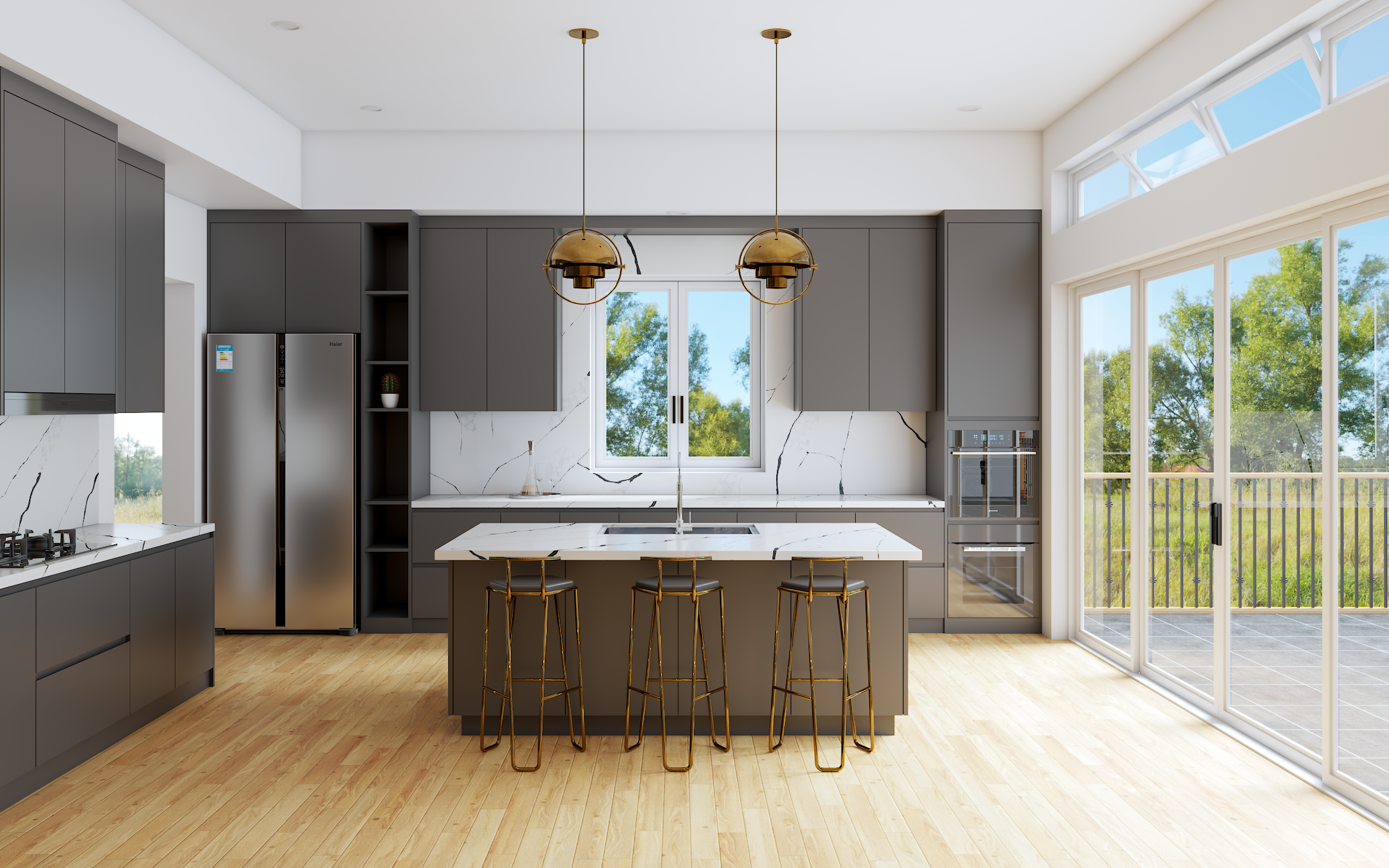
2. Why Homeowners and Contractors Choose Quartz Backsplash?
The increasing demand for quartz backsplash is closely tied to changes in modern kitchen usage patterns. Kitchens are no longer purely cooking spaces, they are social and design-focused environments where cleanliness and visual consistency matter.
Low Maintenance Requirements
One of the strongest reasons homeowners choose quartz backsplash is ease of maintenance. Because the surface is non-porous, it does not absorb liquids such as oil, wine, or sauces. Cleaning typically requires only a damp cloth and mild detergent.
Unlike natural stone or tile, there is no need for sealing or specialized cleaning products. Over time, this reduces both maintenance cost and effort.
Hygienic Surface Performance
In kitchens where food preparation happens frequently, hygiene is a key concern. Quartz surfaces inhibit the growth of bacteria and mold due to their lack of microscopic pores. This makes quartz backsplash particularly suitable for family kitchens and high-usage environments.
Long-Term Visual Stability
Many traditional backsplash materials tend to age unevenly. Tiles may discolor, grout lines may darken, and natural stone can develop surface variations. Quartz, on the other hand, maintains a consistent appearance over time, which is one of the reasons it is widely used in premium kitchen projects.
Design Flexibility and Coordination
Quartz backsplash is often selected because it can be matched directly with quartz countertops. This creates a continuous visual flow, which is a key principle in modern kitchen design. Instead of contrasting materials, many designers now prefer material continuity to create a more cohesive aesthetic.
Contractor Efficiency
From a contractor’s perspective, quartz backsplash reduces variability in installation outcomes. There are fewer joints, fewer alignment issues, and fewer post-installation maintenance complaints compared to tile systems. This makes it a more predictable material for large-scale projects.
3. Quartz Backsplash Ideas
Quartz backsplash designs have evolved alongside modern kitchen trends, where simplicity, functionality, and long-term usability are prioritized over heavy decoration. Instead of treating the backsplash as a separate visual element, many contemporary kitchens use quartz to create a more cohesive and integrated environment.
Full-Height Quartz Backsplash
One of the most popular quartz backsplash ideas is the full-height slab design. In this approach, the quartz extends continuously from the countertop to the bottom of the upper cabinets or even to the ceiling.
This design creates a cleaner visual line with minimal interruptions and significantly reduces the number of joints where grease or dust can accumulate. Full-height quartz backsplash is especially common in luxury kitchens and minimalist interiors because it enhances the sense of openness and continuity.
In addition to aesthetics, full-height installation also simplifies cleaning around high-use cooking areas.
Matching Countertop and Backsplash
Using the same quartz slab for both the countertop and backsplash remains one of the strongest trends in modern kitchen design. This approach creates visual consistency and avoids the challenge of coordinating multiple materials, colors, or textures.
Matching surfaces work particularly well in:
- Contemporary kitchens
- Scandinavian-inspired interiors
- Open-concept spaces
- Neutral color palettes
Because engineered quartz offers consistent patterns and tones, it is easier to achieve a balanced look compared to natural stone materials that may vary significantly between slabs.
White Quartz Backsplash
White quartz backsplash continues to dominate residential kitchen projects due to its versatility and timeless appearance. Bright surfaces help reflect natural and artificial light, making kitchens feel larger and cleaner.
Popular options include:
- Pure white quartz
- Soft off-white tones
- White quartz with subtle gray veining
- Warm ivory-based quartz surfaces
Compared to heavily patterned materials, subtle white quartz designs are easier to integrate into different cabinetry and flooring combinations over time.
Minimal Veining and Soft Patterns
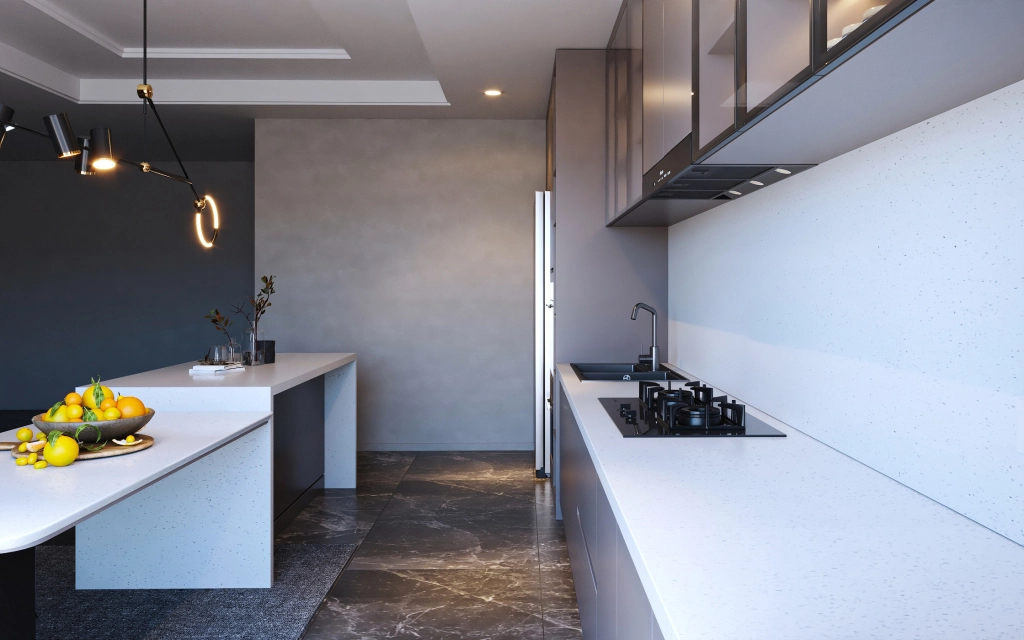
Modern quartz backsplash applications tend to favor restrained patterns instead of dramatic visual movement. Soft veining and fine textures create visual interest without overwhelming the kitchen space.
This is particularly important for large backsplash surfaces where bold patterns may appear visually heavy once installed vertically.
Contrast Backsplash Designs
While light quartz remains dominant, darker quartz backsplash designs are increasingly used to create contrast in kitchens with light cabinetry. Charcoal gray, deep black, and warm brown quartz surfaces can add depth while maintaining a clean and modern appearance.
This approach is often used in:
- Industrial-style kitchens
- Contemporary luxury homes
- High-contrast interior concepts
Partial Quartz Backsplash
For projects with tighter budgets or more flexible design goals, partial quartz backsplash installation is another practical option. Instead of covering the entire wall, quartz is installed only in high-exposure areas such as:
- Behind cooktops
- Around sinks
- Food preparation zones
This allows homeowners to gain the maintenance benefits of quartz while reducing overall material and fabrication costs.
Overall, the most successful quartz backsplash ideas are usually those that balance visual simplicity, functionality, and long-term adaptability rather than short-term design trends.
4. Quartz Backsplash Cost: What Affects the Price?
The cost of a quartz backsplash can vary significantly depending on design choices, fabrication requirements, and installation conditions. Rather than relying on a fixed price estimate, it is more practical to understand the factors that influence the total project cost.
In most kitchen projects, quartz backsplash pricing is determined not only by the material itself, but also by how the slab is fabricated, transported, and installed.
Material Usage and Backsplash Height
One of the biggest cost factors is the amount of quartz required for the project. A standard short backsplash uses considerably less material than a full-height quartz backsplash that extends from the countertop to the upper cabinets or ceiling.
Full-height slab backsplashes generally cost more because they require:
- Larger slab sections
- More precise slab layout planning
- Higher material yield
- Increased handling during transportation and installation
In addition, larger backsplash pieces increase the risk of breakage during fabrication and installation, which can also affect labor pricing.
Quartz Design and Surface Finish
Not all quartz surfaces are priced equally. Quartz collections with:
- Marble-inspired veining
- Bookmatched patterns
- Premium imported pigments
- Polished specialty finishes
typically cost more than simpler solid-color designs.
Surface finish also affects fabrication difficulty. While polished quartz is the most common option, matte or textured finishes may require additional production attention depending on the manufacturer.
Fabrication Complexity
Fabrication is often one of the most underestimated cost components in quartz backsplash projects. Unlike tile installations, quartz slabs must be custom-cut and finished according to the exact kitchen dimensions.
Additional fabrication work may include:
- Electrical outlet cutouts
- Window returns
- Corner joints
- Faucet openings
- Floating shelf integration
- Edge polishing and finishing
The more detailed the backsplash layout, the more labor-intensive the fabrication process becomes.
Matching Countertop and Backsplash
Many homeowners prefer using the same quartz slab for both countertop and backsplash to achieve a seamless appearance. While this creates stronger visual consistency, it may also increase material consumption depending on slab dimensions and cutting efficiency.
In some cases, fabricators may need an additional slab simply to maintain pattern continuity or directional veining alignment.
Installation Complexity
Quartz backsplash installation is more demanding than many traditional backsplash systems because engineered quartz slabs are heavy and require precise positioning.
Several conditions can increase installation cost:
- Uneven or unstable wall surfaces
- Tight kitchen layouts
- Limited installation access
- Large-format slab handling
- Complex seam alignment
Projects with full-height quartz backsplash installations often require additional support and alignment adjustments to ensure long-term stability.
Seam Placement and Layout Planning
Although quartz backsplash minimizes seams compared to tile, seams are sometimes unavoidable in larger kitchens. Proper seam placement requires careful planning to maintain both structural integrity and visual continuity.
More complex seam layouts may increase fabrication and installation time, especially when veining patterns must align across multiple sections.
Labor and Regional Market Conditions
Labor cost varies depending on:
- Project location
- Installer experience
- Kitchen accessibility
- Fabrication standards
- Project timeline requirements
Highly skilled quartz fabricators and installers may charge more, but professional workmanship is critical for minimizing long-term issues such as visible seams, poor alignment, or slab stress.
Long-Term Value vs Initial Cost
Quartz backsplash generally has a higher upfront cost than ceramic or porcelain tile. However, many homeowners consider it a long-term investment due to:
- Lower maintenance requirements
- No sealing needs
- Easier cleaning
- Longer visual lifespan
- Reduced grout-related issues
Over time, these practical benefits can help offset part of the initial installation expense.
Typical Cost Expectations
While pricing varies by region and project scope, quartz backsplash projects are commonly categorized as:
- Partial-height backsplash: Lower material and labor cost
- Standard backsplash: Moderate pricing for most residential kitchens
- Full-height quartz backsplash: Premium cost due to material size and installation complexity
Ultimately, quartz backsplash cost is influenced less by square footage alone and more by fabrication precision, installation requirements, and overall project design strategy.
5. Key Considerations Before Choosing Quartz Backsplash
Before choosing a quartz backsplash, it is important to evaluate more than just color or appearance. While quartz is known for its clean aesthetic and low maintenance, its long-term performance depends heavily on kitchen conditions, installation quality, and how the space is used on a daily basis.
Not every kitchen layout or cooking environment is equally suited to quartz backsplash applications, so understanding the practical considerations beforehand can help avoid unnecessary issues later.
Heat Exposure Around Cooking Areas
One of the most important considerations is heat exposure. Quartz is heat resistant, but it is not completely heat proof because engineered quartz contains polymer resins that can react to excessive temperatures over time.
Areas directly behind:
- Gas cooktops
- Professional cooking ranges
- High-output burners
may require additional spacing, ventilation, or protective design solutions.
Prolonged direct heat exposure can potentially lead to:
- Surface discoloration
- Resin damage
- Fading around concentrated heat zones
For kitchens with heavy daily cooking, especially high-temperature cooking styles, proper backsplash planning around stove areas becomes especially important.
Repair and Replacement Challenges
Unlike tile backsplashes, quartz backsplash is typically installed in large slab sections rather than small replaceable units. While this creates a cleaner and more seamless appearance, it also means repairs can be more complicated if damage occurs.
Cracks, edge chips, or accidental impact damage may require:
- Replacing an entire panel
- Reworking adjacent seams
- Reordering matching material
This becomes more difficult when the backsplash and countertop are fabricated from the same slab with continuous veining or pattern alignment.
For this reason, transportation, fabrication, and installation quality play a major role in the long-term reliability of quartz backsplash systems.
Wall Conditions and Structural Preparation
Quartz backsplash installation requires relatively flat, stable, and properly prepared wall surfaces. Because quartz slabs are rigid and heavy, uneven walls can create fitting problems during installation.
Poor wall conditions may result in:
- Visible gaps
- Uneven seams
- Alignment issues
- Increased installation time
In renovation projects, additional wall preparation or leveling may be required before installation begins, which can increase labor cost and project timelines.
Slab Size and Seam Planning
Although quartz backsplash minimizes grout lines and visible joints, seams may still be necessary in larger kitchens or around corners.
Proper seam planning is important for both:
- Structural support
- Visual continuity
Experienced fabricators often position seams in less visible areas and align veining patterns carefully to maintain a natural appearance.
For heavily veined quartz designs, seam placement becomes even more critical because inconsistent pattern flow can affect the final visual result.
Matching Countertop and Backsplash
Using the same quartz material for both countertop and backsplash is one of the most common modern kitchen design approaches. However, achieving a seamless look requires careful planning during slab selection and fabrication.
Important considerations include:
- Slab orientation
- Vein direction
- Material yield efficiency
- Future slab availability
If additional pieces are needed later, finding an exact match may become difficult due to batch variations or discontinued quartz collections.
Lighting and Color Perception
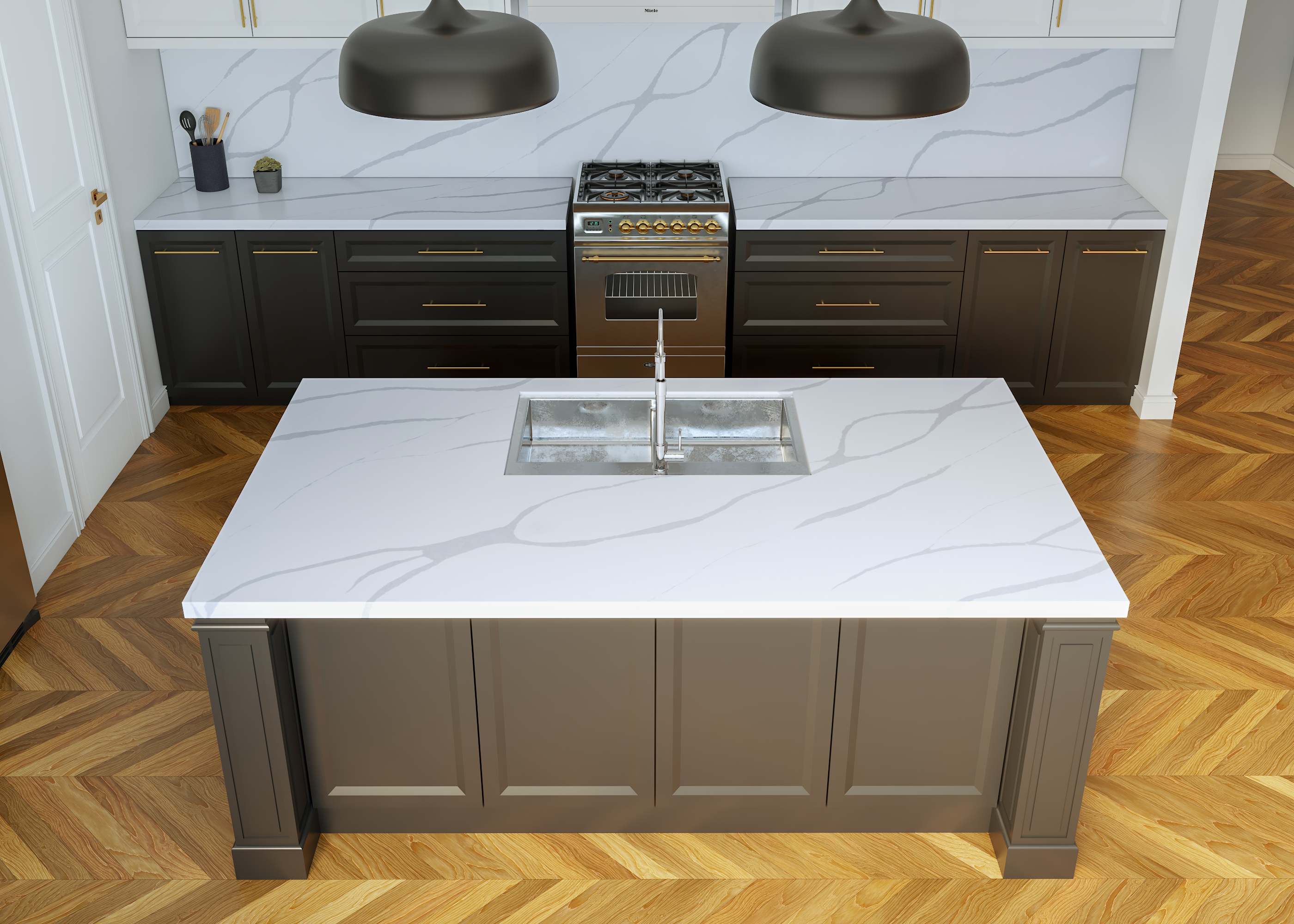
Quartz surfaces can appear different depending on lighting conditions. Natural daylight, warm interior lighting, and cool LED lighting can all affect how quartz color and veining are perceived.
For example:
- Cool lighting may make white quartz appear gray or blue-toned
- Warm lighting may emphasize beige or cream undertones
Reviewing quartz slabs under actual project lighting conditions is recommended before making a final selection.
Kitchen Style and Long-Term Design Flexibility
Quartz backsplash works particularly well in:
- Contemporary kitchens
- Minimalist interiors
- Transitional kitchen styles
- Open-concept living spaces
However, because backsplash surfaces are relatively permanent, highly trend-driven colors or dramatic patterns may feel visually outdated over time.
Neutral quartz surfaces with subtle movement generally offer better long-term design flexibility.
Daily Maintenance Expectations
Although quartz backsplash is considered low maintenance, proper care still matters. Harsh chemicals, abrasive cleaning pads, or prolonged exposure to grease buildup can gradually affect surface appearance.
For best long-term performance:
- Use mild cleaners
- Avoid abrasive materials
- Clean spills promptly
- Minimize prolonged heat exposure
Compared to tile backsplashes, quartz significantly reduces maintenance effort, but responsible usage still helps preserve surface quality over time.
Overall Kitchen Usage Patterns
Quartz backsplash performs best in kitchens where:
- Easy cleaning is a priority
- Modern visual consistency is desired
- Low maintenance is preferred
- Long-term durability matters
However, in kitchens with:
- Extremely heavy cooking activity
- Frequent remodeling plans
- Tight renovation budgets
- Highly decorative design goals
alternative backsplash materials may sometimes provide greater flexibility or cost efficiency.
Ultimately, choosing quartz backsplash should involve balancing aesthetics, functionality, installation conditions, and long-term practicality rather than focusing on appearance alone.
6. Is Quartz Backsplash Right for Your Kitchen Project?
Quartz backsplash is a strong solution for kitchens that prioritize durability, simplicity, and visual consistency. Its non-porous surface, seamless appearance, and low maintenance requirements make it particularly attractive for modern residential projects and large-scale developments alike.
For homeowners, quartz backsplash offers practical everyday benefits through easier cleaning and long-term visual stability. For contractors and designers, it provides a reliable and coordinated material system that integrates naturally with quartz countertops.
However, the best backsplash choice always depends on project priorities. Budget limitations, cooking habits, wall conditions, and overall kitchen style should all be evaluated carefully before making a final decision.
Quartz backsplash is not simply a trend-driven design feature. When selected appropriately, it becomes a long-term surface solution that combines functionality, durability, and modern aesthetics in a way that few traditional backsplash materials can fully achieve.
7. Frequently Asked Questions About Quartz Backsplash
Is Quartz Backsplash Better than Tile?
Quartz offers a more seamless look and easier maintenance, while tile provides greater design variety and lower upfront cost. The best choice depends on priorities.
Can Quartz Backsplash Be Used Behind a Stove?
Yes, but it should be installed with proper spacing to avoid direct heat exposure. Prolonged heat can affect surface stability over time.
How Long Does Quartz Backsplash Last?
With proper installation and care, quartz backsplash can last decades without significant deterioration in appearance or performance.
Does Quartz Backsplash Require Sealing?
No. Quartz is non-porous and does not require sealing, unlike natural stone surfaces.
Is Quartz Backsplash Suitable for Small Kitchens?
Yes. In fact, it is often preferred in small kitchens because its seamless surface helps create a more open visual effect.
Looking for high-quality quartz surfaces for your next kitchen project? Lux Quartz Vietnam offers engineered quartz solutions designed for modern countertops and quartz backsplash applications. Contact our team to explore quartz collections, request samples, or discuss your project requirements.
See more: