Choosing the right quartz countertop thickness is one of the most important decisions in any kitchen or bathroom renovation project. While many homeowners focus mainly on countertop color and pattern, thickness plays a major role in durability, visual appearance, installation requirements, edge design, and overall cost.
In this complete guide, Lux Quartz Vietnam explains everything you need to know about quartz countertop thickness, including the pros and cons of each option, installation considerations, design impact, and expert recommendations for different applications.
- 1. Recommended Quartz Countertop Thickness Options
- 2. 2cm Quartz Countertops
- 3. 3cm Thickness
- 4. 2 cm vs 3 cm Quartz Countertops: Key Differences
- 5. Key Factors To Consider When Choosing Quartz Countertop Thickness
- 6. Which Quartz Countertop Thickness Is Best?
- 7. Frequently Asked Questions About Choosing Quartz Countertop Thickness
1. Recommended Quartz Countertop Thickness Options
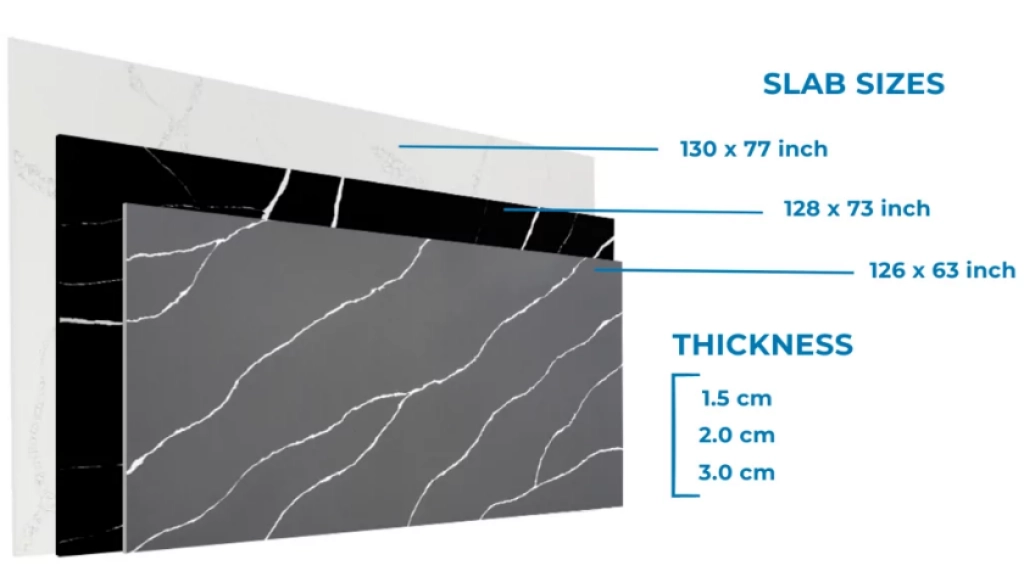
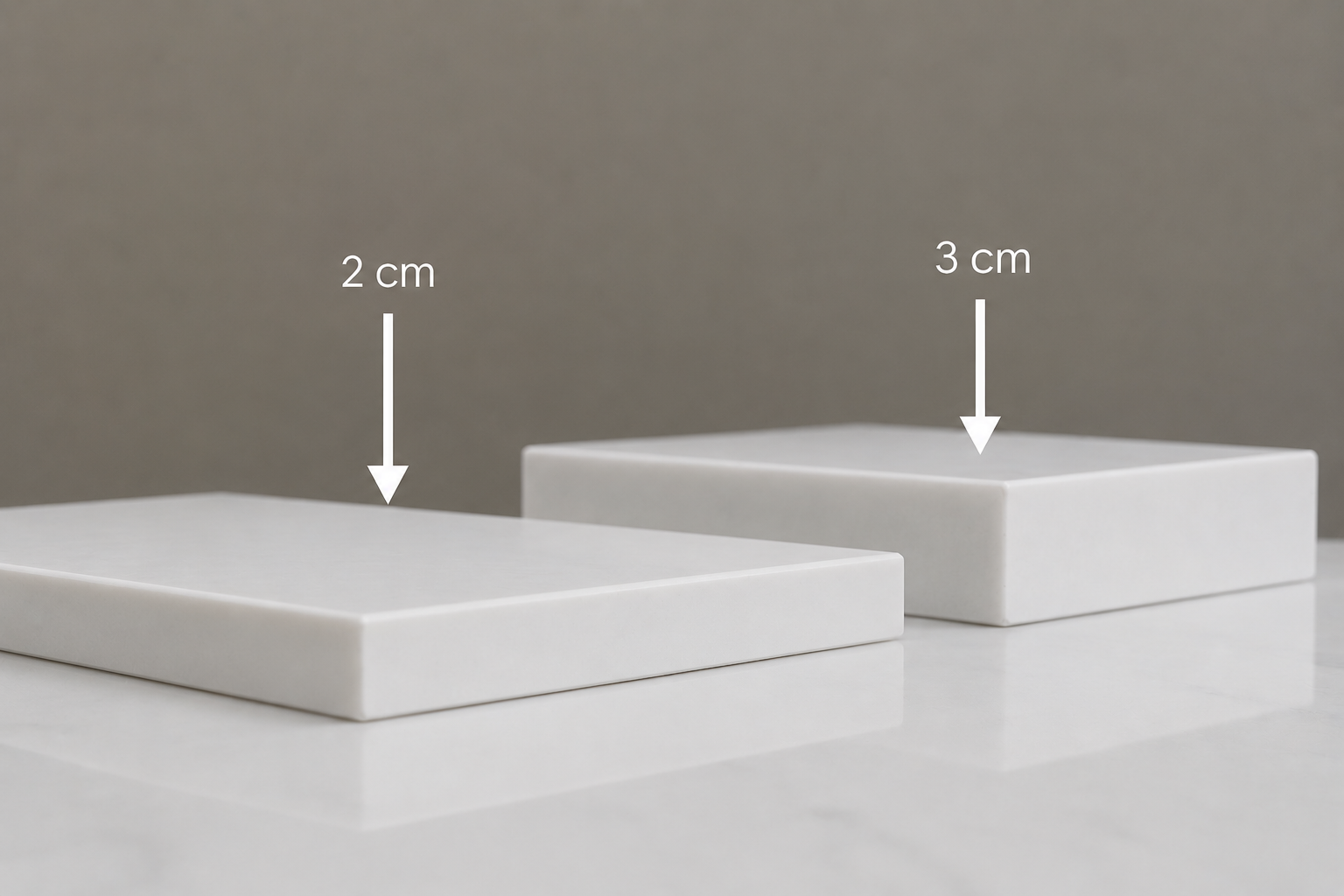
Quartz countertops are typically available in two standard thicknesses: 2 cm and 3 cm. While both options offer the durability, low maintenance, and aesthetic appeal that quartz is known for, they serve different design and functional purposes. The right thickness depends on factors such as the intended application, budget, structural requirements, and overall design style. Understanding the characteristics of each option will help you choose the most suitable quartz countertop for your kitchen, bathroom, or commercial project.
2. 2cm Quartz Countertops
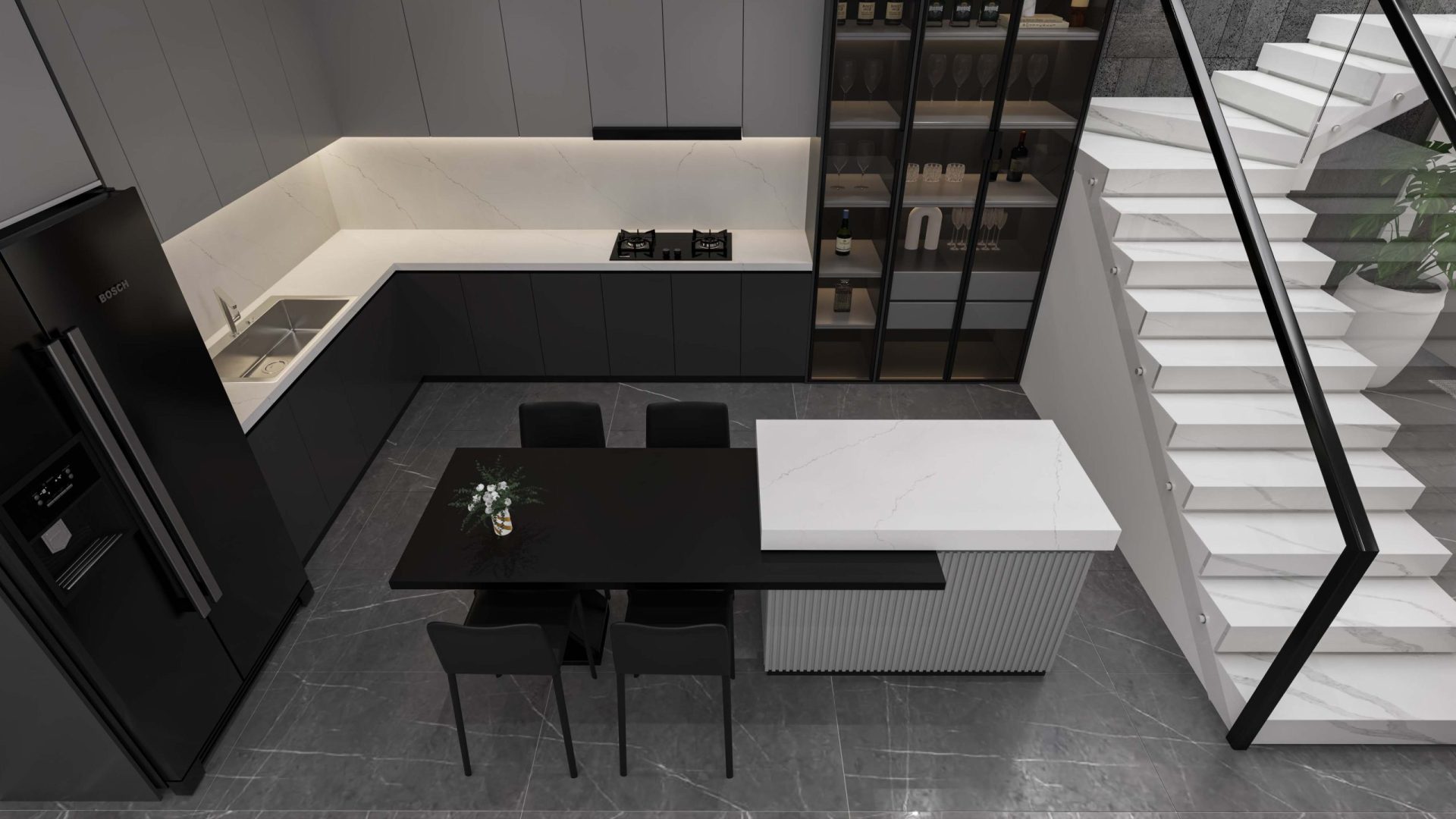
A 2 cm quartz countertop is known for its sleek, lightweight, and contemporary appearance. This thinner profile has become increasingly popular in modern homes that favor clean lines and minimalist aesthetics. Many designers prefer 2 cm quartz for bathrooms, apartment kitchens, wall cladding, and Scandinavian-inspired interiors because it creates a lighter and less bulky visual effect. It is also commonly used in projects where reducing material cost is important.
2.1 Advantages of 2 cm Quartz Countertops
Modern Minimalist Appearance
Many homeowners prefer 2 cm quartz for its sleek, modern appearance. The thinner profile creates a clean, refined look that pairs beautifully with flat-panel cabinetry, minimalist kitchens, contemporary interiors, and European-inspired designs.
More Affordable
Because 2 cm quartz slabs use less raw material, they are typically 15–30% cheaper than 3 cm slabs. They are also more cost-effective for large projects and less expensive to transport, making them an excellent choice for homeowners looking to balance style and budget.
Easier Transportation and Installation
The lighter weight of 2 cm quartz makes transportation, fabrication, and installation easier. This is particularly advantageous for high-rise apartments, renovation projects, and multi-story homes, where handling and logistics can be more challenging.
2.2 Considerations for 2 cm Quartz
Requires Plywood Support
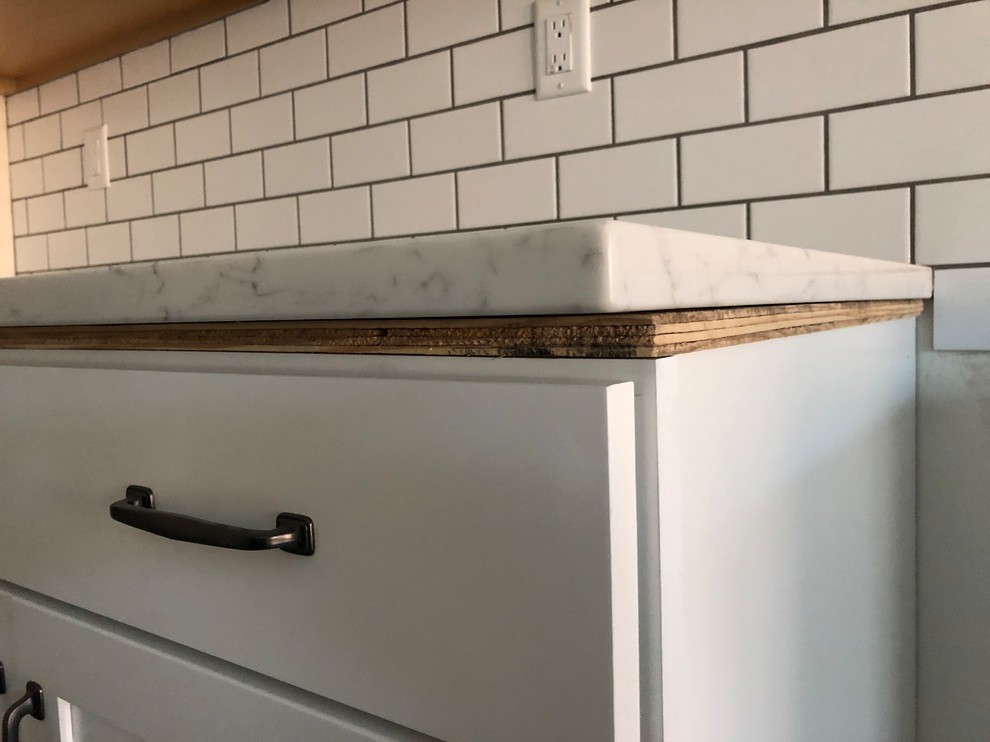
Unlike thicker slabs, 2 cm quartz typically requires additional support, such as plywood backing, reinforced cabinetry, or extra bracing for overhangs. Without proper reinforcement, it may be more susceptible to cracking over time.
Limited Edge Profile Options
Because 2 cm quartz is thinner, achieving certain decorative edge profiles may require techniques such as mitered, laminated, or build-up edges. These methods create the appearance of a thicker countertop while maintaining the lower material cost of 2 cm quartz.
2.3 Best Applications for 2 cm Quartz
2 cm quartz works especially well for:
- Bathroom vanities
- Laundry rooms
- Modern kitchens
- Vertical wall cladding
- Backsplashes
- Apartment renovations
- Budget-conscious projects
3. 3cm Thickness
A 3 cm quartz countertop is considered the premium standard for residential kitchens in many markets, especially in North America. Its thicker profile delivers greater strength, durability, and a more luxurious appearance. For homeowners designing a statement kitchen island or luxury cooking space, 3 cm quartz is often the preferred choice.
3.1 Advantages of 3 cm Quartz Countertops
Superior Strength and Durability
Thicker 3 cm quartz slabs offer greater strength, impact resistance, and long-term durability, making them less prone to cracking under daily use. They are especially well-suited for large kitchen islands, busy family homes, commercial kitchens, and spaces where heavy cookware is frequently used. For high-traffic kitchens, experts often recommend 3 cm quartz because it can withstand everyday wear and stress more effectively.
No Plywood Support Required
A key advantage of 3 cm quartz is that it is typically self-supporting, eliminating the need for a plywood substrate. This simplifies installation, improves cabinet alignment, and can reduce labor time. While 3 cm slabs are more expensive upfront, the savings on additional support materials may help offset installation costs.
Luxury Visual Appeal
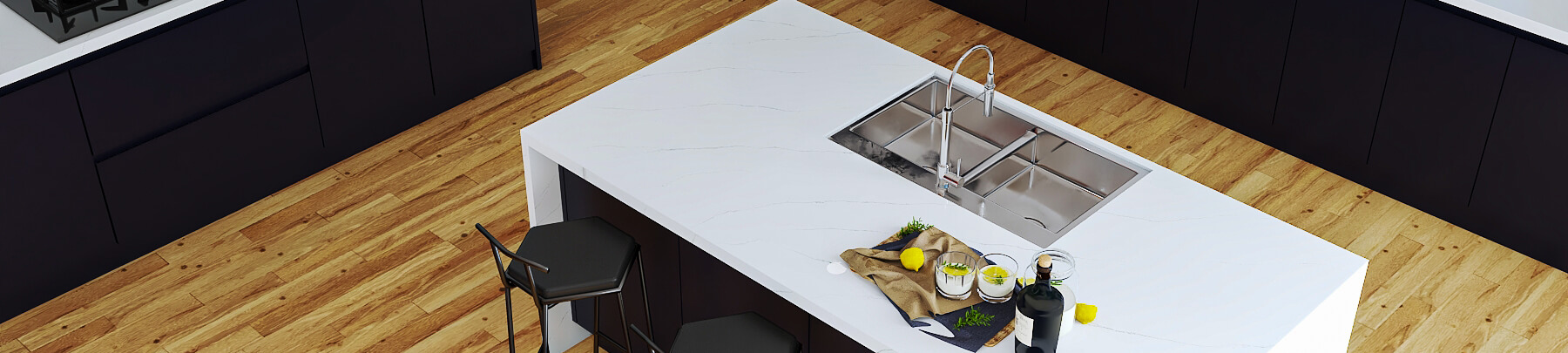
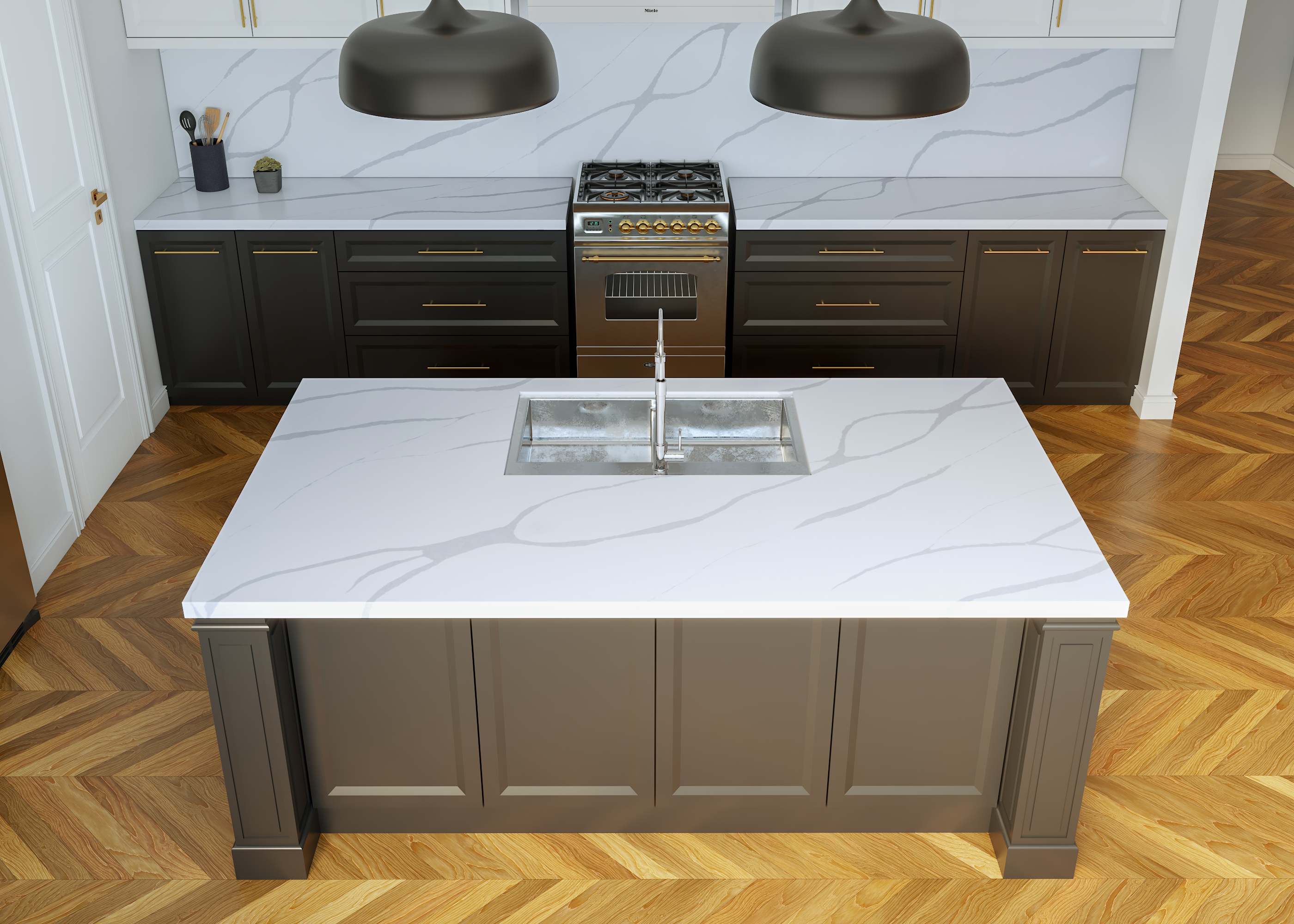
The thicker profile of 3 cm quartz creates a bold, luxurious appearance that is often associated with high-end kitchens, premium stone surfaces, and custom homes. It is especially popular for statement waterfall islands and showcases dramatic veining and large-format quartz designs beautifully.
More Flexible Edge Designs
Because of its greater thickness, 3 cm quartz supports a wider variety of edge profiles, including ogee, double bevel, full bullnose, and waterfall edges. This provides designers and homeowners with greater flexibility to create custom, high-end countertop designs.
3.2 Considerations for 3 cm Quartz
Higher Cost
Because 3 cm quartz uses more material and weighs more, it generally comes with higher slab, shipping, and installation costs. However, many homeowners view it as a worthwhile investment thanks to its superior strength, durability, and long-term performance.
Heavier Weight
The added thickness of 3 cm quartz increases its weight, often requiring professional installation, reinforced cabinetry, and specialized transportation or handling equipment.
3.3 Best Applications for 3 cm Quartz
3 cm quartz is ideal for:
- Kitchen countertops
- Large kitchen islands
- Waterfall islands
- Commercial spaces
- Luxury residential projects
- Open-concept kitchens
- High-traffic cooking areas
4. 2 cm vs 3 cm Quartz Countertops: Key Differences
| Feature | 2 cm Quartz | 3 cm Quartz |
|---|---|---|
| Thickness | 3/4 inch | 1 1/4 inches |
| Appearance | Sleek and modern | Bold and luxurious |
| Weight | Lighter | Heavier |
| Cost | More affordable | More expensive |
| Structural Strength | Requires support | Usually self-supporting |
| Edge Profile Options | Limited without lamination | More flexible |
| Best Use | Bathrooms, minimalist kitchens | Kitchens, islands, luxury spaces |
| Installation | More support required | Easier direct installation |
| Durability | Good | Excellent |
5. Key Factors To Consider When Choosing Quartz Countertop Thickness
Choosing the right quartz countertop thickness involves more than simply selecting a preferred look. The ideal thickness should align with your project’s functional requirements, structural conditions, and budget. Below are the key factors to consider before making a decision.
Durability and Strength
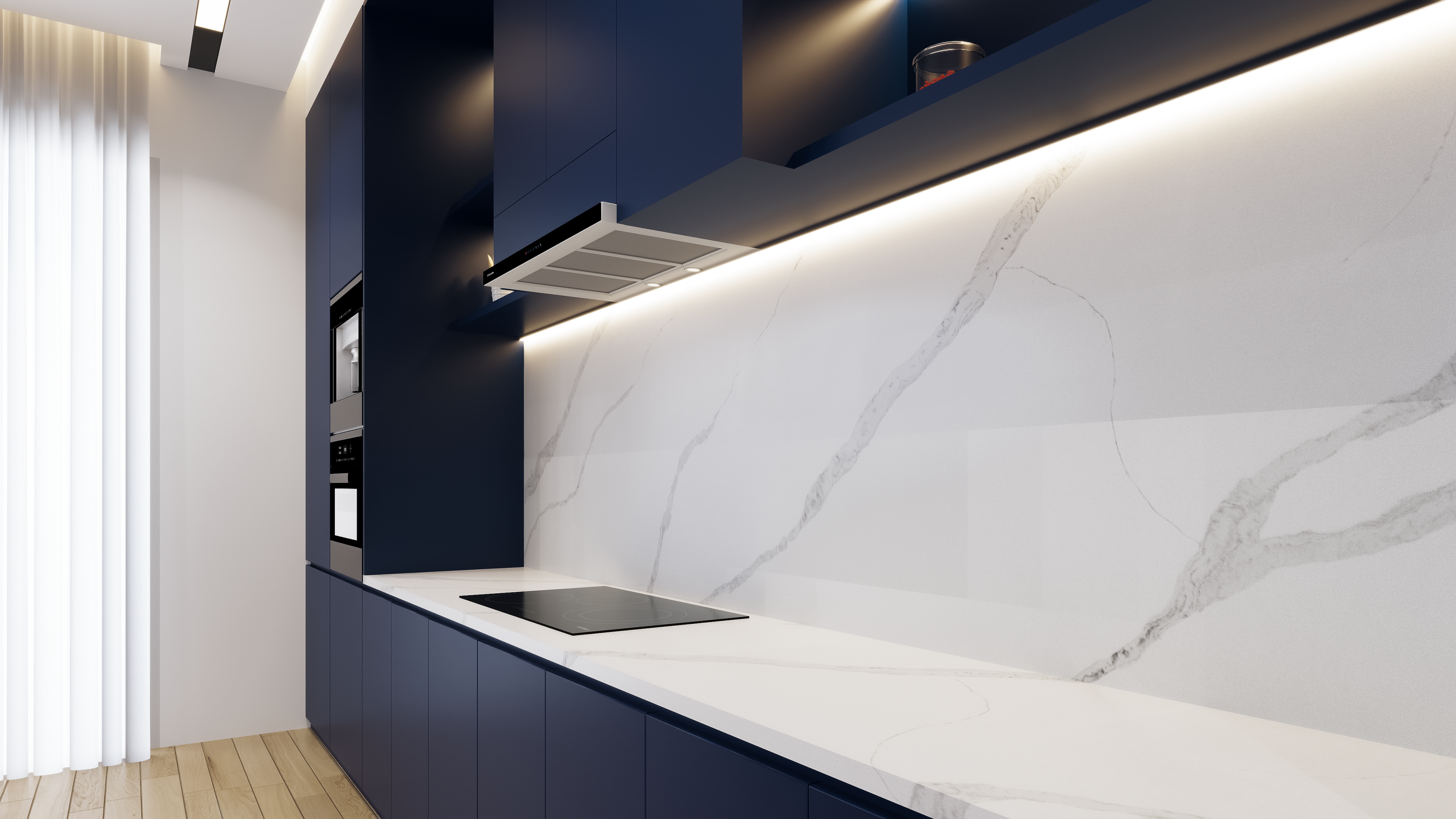
One of the most important considerations is how much daily wear and tear the countertop will experience. Thicker quartz countertops generally offer greater strength, impact resistance, and load-bearing capacity. They are particularly suitable for kitchen countertops, large islands, breakfast bars, and other areas that receive heavy daily use. A thicker slab can also better support overhangs without requiring additional reinforcement.
In contrast, thinner quartz countertops can perform well in lower-traffic areas such as bathroom vanities, laundry rooms, or decorative applications where heavy loads are less common.
Weight and Structural Requirements
The weight of the countertop can affect both installation and long-term structural performance. Because thicker quartz slabs are heavier, it is important to ensure that cabinets, support structures, and the overall installation area can safely accommodate the additional weight. In some renovation projects, especially in older homes or buildings with existing structural limitations, a lighter 2 cm quartz slab may be a more practical option.
Evaluating the strength of your cabinetry and support system beforehand can help prevent future issues and ensure a safe installation.
Budget Considerations
Countertop thickness has a direct impact on overall project cost. Thicker quartz slabs typically cost more because they require additional raw material and involve higher transportation and handling expenses. However, they may reduce the need for plywood underlayment or extra support structures, which can offset some installation costs.
Thinner quartz countertops are generally more affordable and can be an attractive option for budget-conscious homeowners. However, additional reinforcement, edge build-up treatments, or specialized installation requirements may increase the final project cost. Considering both material and installation expenses will help you determine the most cost-effective solution for your space.
6. Which Quartz Countertop Thickness Is Best?
There is no universal answer because the best quartz countertop thickness depends on your:
- Budget
- Design preference
- Lifestyle
- Installation conditions
- Structural requirements
Choose 2 cm Quartz If:
- You want a minimalist aesthetic
- You are renovating a bathroom
- You want to reduce project costs
- Your project includes proper support systems
Choose 3 cm Quartz If:
- You want maximum durability
- You are designing a busy kitchen
- You prefer a luxury appearance
- Your countertop includes large overhangs or waterfall edges
For most modern kitchens, industry professionals still consider 3 cm quartz the safest and most durable choice. However, 2 cm quartz continues to grow in popularity for contemporary and minimalist designs.
7. Frequently Asked Questions About Choosing Quartz Countertop Thickness
What is the Standard Thickness of Quartz Countertops?
The standard thickness of quartz countertops is 2 cm (3/4 inch) and 3 cm (1 1/4 inches). Quartz slabs 3 cm thick are common in kitchens, while 2 cm is often used for prefabricated slabs and bathroom countertops.
Are Thicker Quartz Countertops More Expensive?
Yes. Thicker slabs (3 cm) require more material and are heavier, increasing both material costs and labor for installation.
- 3 cm: Generally does not require plywood support.
- 2 cm: Usually requires plywood support and/or specialized edge detailing to prevent cracking, especially on spans longer than 24 inches.
What is the best thickness for bathroom vanities?
Both 2 cm and 3 cm work, but 2 cm is often chosen for bathrooms to be more budget-friendly.
Can I use 2 cm for my kitchen to save money?
Yes, but it is typically recommended to use a laminated edge (a second piece of quartz added to the edge) to make it appear thicker and stronger.
See more: