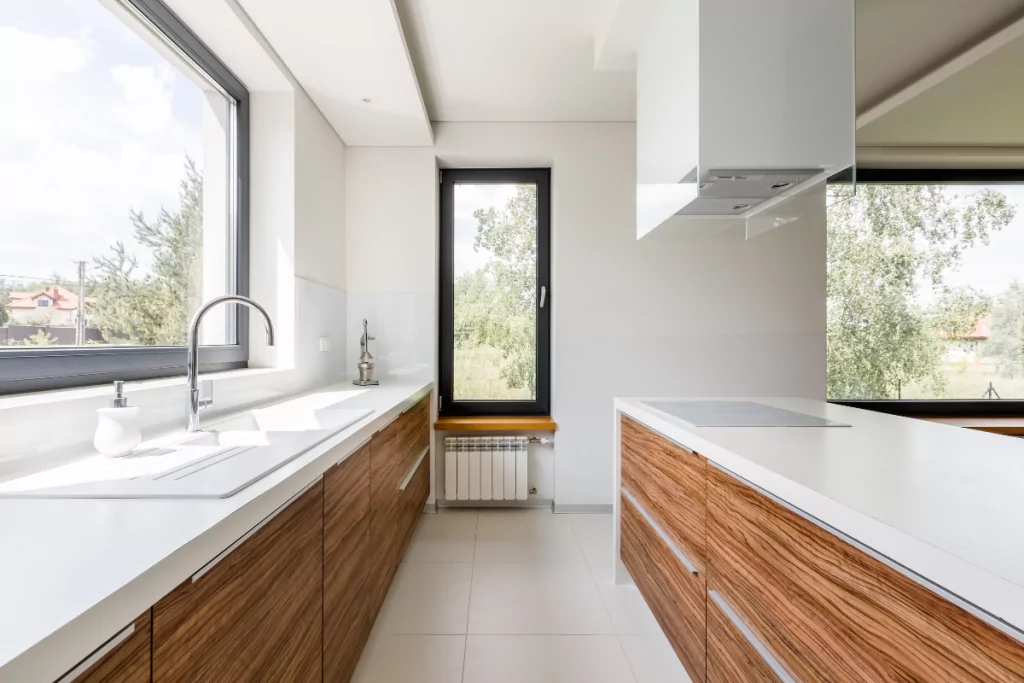
Quartz countertops have become one of the most sought-after surface materials in modern residential and commercial interiors. Combining beauty, durability, and low maintenance, quartz offers homeowners a practical solution that enhances both functionality and aesthetics. However, achieving a flawless result depends heavily on proper quartz countertops installation. Even the highest-quality quartz slab can underperform if measurements are inaccurate, supports are insufficient, or fabrication is poorly executed.
Whether you are renovating an existing kitchen, building a new home, or upgrading a bathroom vanity, understanding the installation process can help you make informed decisions and ensure a successful project. This comprehensive guide covers everything you need to know about quartz countertops installation, from planning and preparation to fabrication, installation, finishing, and cost considerations.
- How to Install Quartz Countertops
- 1. Planning for Quartz Countertops Installation
- 2. Preparing the Installation Area
- 3. Measurement and Templating
- 4. Quartz Slab Handling and Dry Fit
- 5. Quartz Countertops Installation Process
- 6. Cutouts and Fabrication Work
- 7. Seaming and Finishing
- 8. Backsplash and Edge Finishing
- 9. Final Inspection and Cleaning
- Key Considerations for Quartz Countertops Installation
- Cost of Quartz Countertops Installation
How to Install Quartz Countertops
1. Planning for Quartz Countertops Installation
Successful quartz countertops installation begins long before the slabs arrive on-site. Careful planning helps prevent costly mistakes and ensures the finished countertops align perfectly with the overall design vision.
Choosing Quartz Design
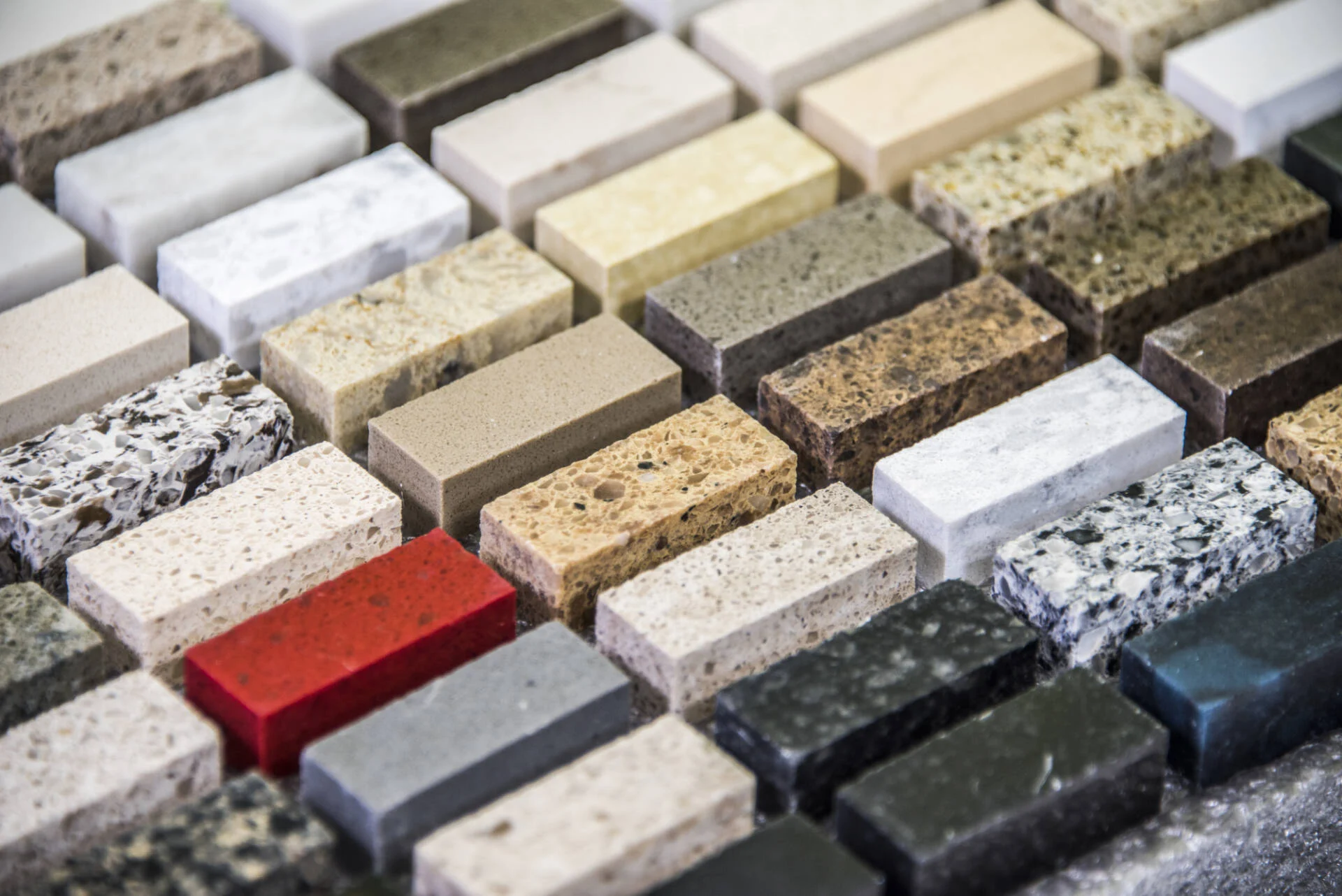
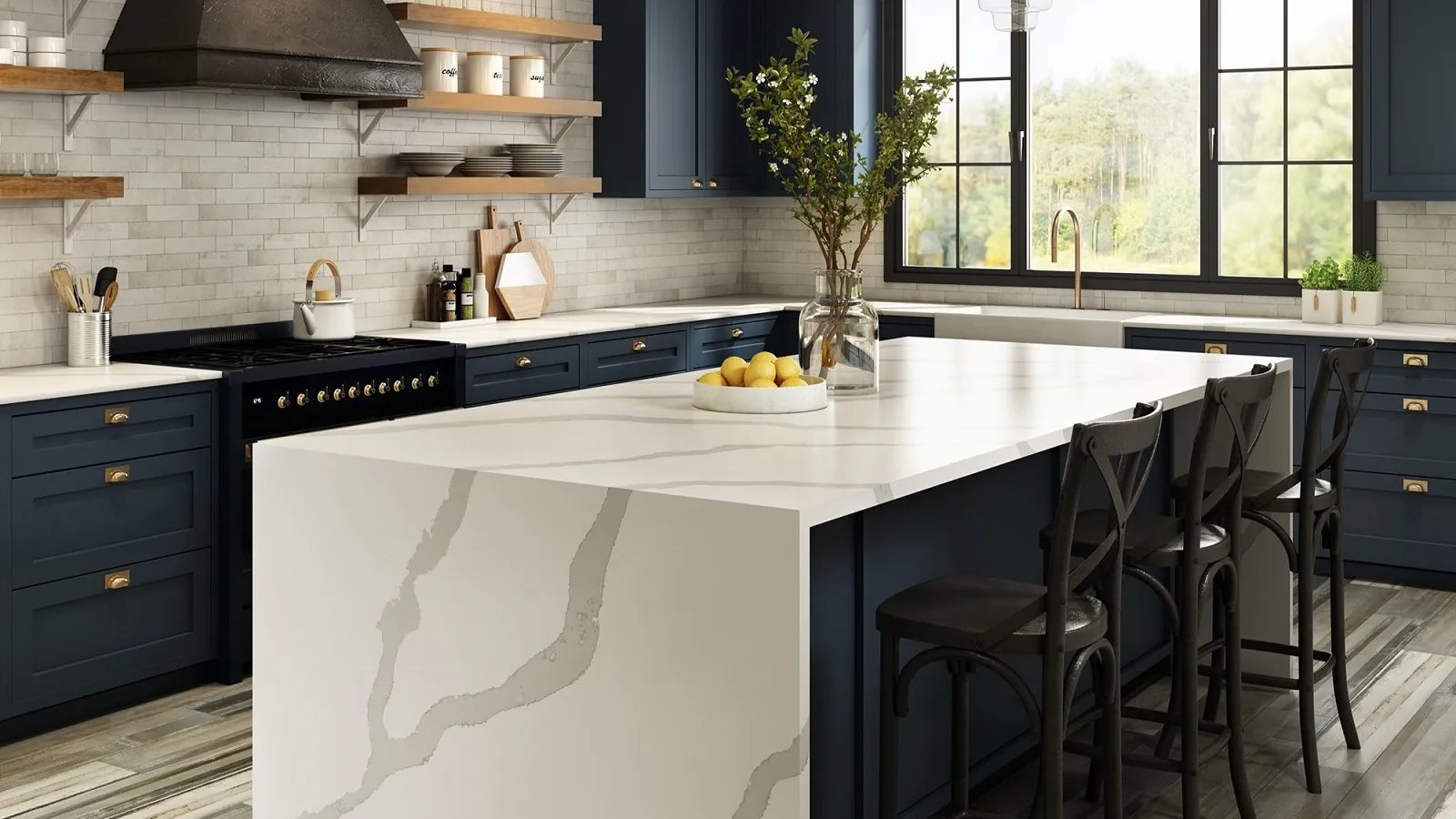
Selecting the right quartz design is one of the most exciting stages of the project. Quartz slabs are available in countless colors and patterns, ranging from subtle neutrals to dramatic marble-inspired designs. When choosing a slab, consider the overall style of your space, including cabinetry, flooring, wall colors, and lighting. Lighter quartz colors can create an open and airy feel, while darker surfaces add depth and sophistication. Veined quartz designs often replicate the elegance of natural marble while offering superior durability and lower maintenance requirements.
Beyond aesthetics, homeowners should also evaluate the slab finish. Polished surfaces provide a reflective appearance, while matte finishes offer a softer and more contemporary look. At this stage, it is beneficial to view full slabs whenever possible rather than relying solely on small samples. This allows you to see the complete pattern movement and veining distribution.
Edge Profiles and Layout Planning
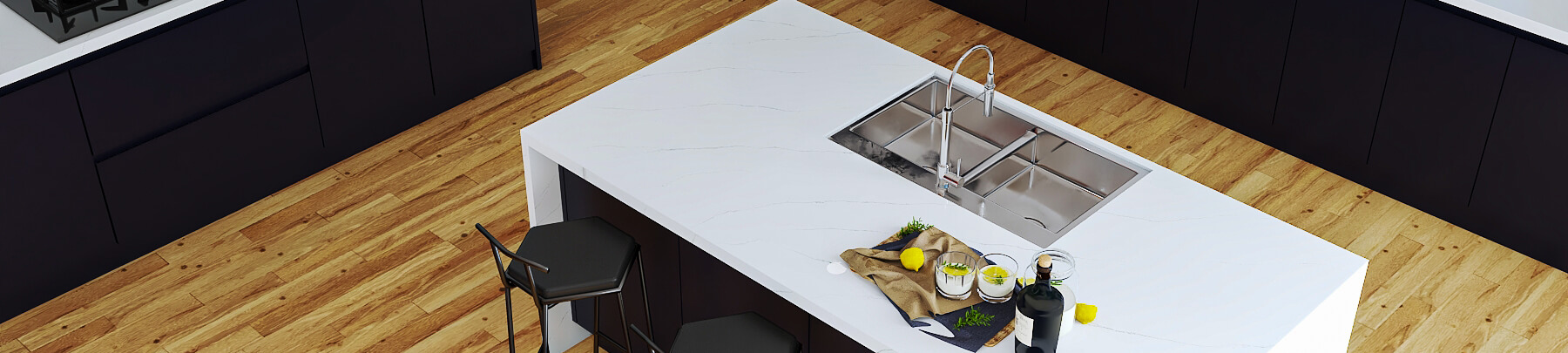
The edge profile significantly influences the final appearance of the countertop. Popular edge options include eased edges, bevel edges, bullnose edges, and mitered waterfall designs. Simpler profiles tend to complement modern interiors, while decorative edges can add elegance to traditional spaces.
Layout planning is equally important. Installers and fabricators must determine slab orientation, seam placement, overhang dimensions, and backsplash integration. Careful planning ensures that veins and patterns flow naturally throughout the installation while minimizing visible seams.
Planning Cutouts
Every sink, cooktop, faucet, and accessory requires precise cutouts during fabrication. The location and size of these openings must be confirmed before production begins. Any errors can result in expensive modifications or replacement slabs. Special consideration should be given to large sinks, cooktops, and waterfall islands, as these features often require additional structural support.
2. Preparing the Installation Area
A properly prepared installation area contributes significantly to a successful outcome. Before quartz countertops installation begins, cabinets should be fully installed, level, and securely anchored. Flooring should ideally be completed, and all major electrical and plumbing work should be finalized. Uneven cabinets can create stress points within the quartz slab, increasing the risk of cracking over time. Professional installers typically inspect cabinet alignment and make adjustments as necessary.
The work area should also be clean and free from obstructions. Removing appliances, decorative items, and unnecessary furniture helps create a safer environment for handling heavy quartz slabs. Because quartz is considerably heavier than many countertop materials, ensuring adequate support throughout the installation area is essential.
3. Measurement and Templating
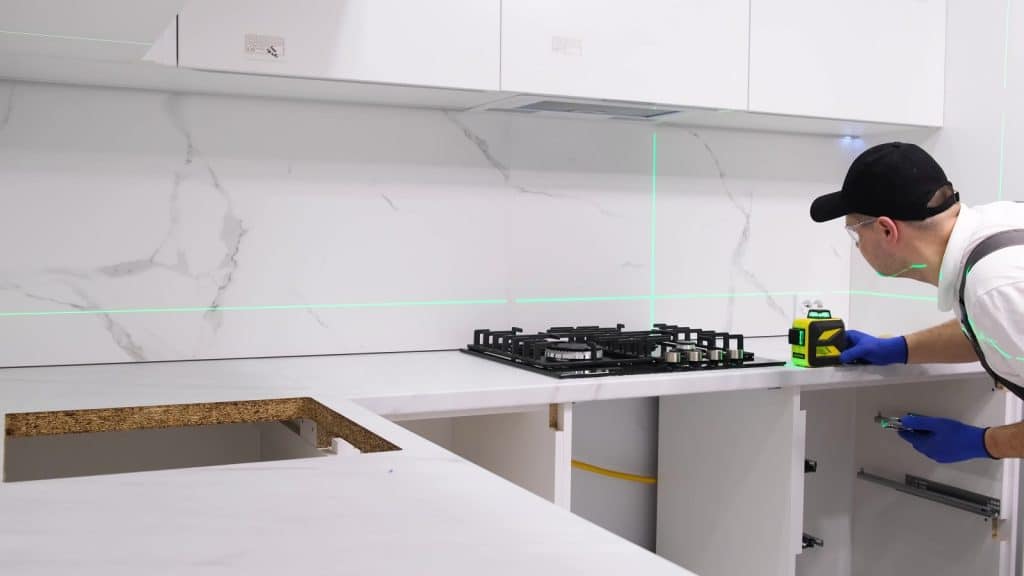
Measurement and templating are among the most critical phases of quartz countertops installation. Once cabinetry has been finalized, installers create a detailed template that serves as the blueprint for fabrication. Modern fabricators often use digital laser templating systems to achieve exceptional accuracy. These measurements capture every detail of the installation area, including wall irregularities, sink locations, cooktop openings, appliance clearances, and overhang requirements.
Precision during this stage is vital because quartz slabs are fabricated specifically for each project. Even minor measurement errors can lead to poor fitment, visible gaps, or costly delays. The templating process also allows homeowners to confirm seam locations, edge profiles, and design details before fabrication begins.
4. Quartz Slab Handling and Dry Fit
Quartz slabs are extremely heavy and require careful transportation and handling. Depending on thickness and size, a single slab can weigh several hundred pounds. Professional installers use specialized equipment such as suction cups, lifting clamps, transport frames, and dollies to move slabs safely.
Once the fabricated pieces arrive on-site, installers perform a dry fit. During a dry fit, each slab is carefully positioned on the cabinets without adhesive. This step verifies that all dimensions, cutouts, and seam alignments are accurate. Dry fitting also provides an opportunity to identify any minor adjustments before permanent installation begins. For projects involving multiple slabs, installers check pattern alignment and seam consistency to ensure a cohesive appearance across the entire countertop surface.
5. Quartz Countertops Installation Process
After preparation, templating, and dry fitting are completed, the actual quartz countertops installation can begin.
Applying Adhesive
The first step involves applying high-quality silicone adhesive to the cabinet tops. Silicone is commonly preferred because it creates a secure bond while allowing slight movement caused by temperature fluctuations and structural settling. Installers typically apply adhesive in evenly spaced beads along the cabinet framework. Care is taken to ensure consistent coverage without excessive application.
Painter’s tape may be used to protect cabinet finishes and simplify cleanup. Using the correct adhesive is important because it helps maintain long-term stability while preventing unnecessary stress on the quartz slabs.
Placing and Securing Quartz Slabs
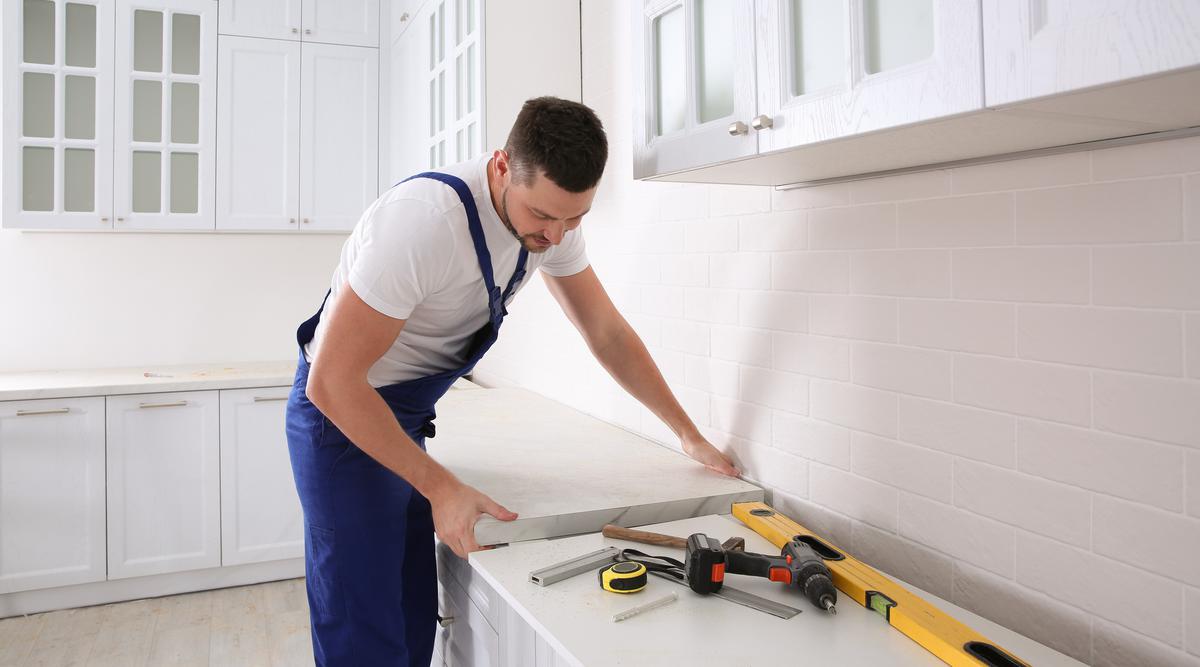
Once the adhesive has been applied, installers carefully lower the quartz slabs into position. Because of the slab’s weight and fragility, this stage requires multiple professionals working together. Each piece is aligned precisely according to the planned layout. Installers check overhangs, seam placement, wall alignment, and overall positioning before the adhesive begins curing.
Gentle pressure is applied to ensure full contact between the slab and supporting surfaces. Temporary supports, weights, or clamps may be used when necessary to maintain proper positioning while the adhesive sets. At this point, the overall shape and appearance of the countertop begin to take form.
6. Cutouts and Fabrication Work
Although many cutouts are completed during fabrication, final adjustments may occasionally be required on-site to ensure a precise fit. Sink openings, faucet holes, cooktop cutouts, and accessory placements must be accurately positioned to allow seamless installation and proper functionality. Professional fabricators use diamond-tipped cutting tools specifically designed for engineered stone, while water-cooled equipment helps reduce heat buildup and minimizes the risk of chipping or cracking during the cutting process.
Once all necessary cutouts have been completed, the edges are carefully polished to achieve a smooth and professional finish. Special attention is given to stress-prone areas, particularly around corners and openings, where rounded inside corners are often incorporated to distribute stress more evenly throughout the slab. High-quality fabrication not only enhances the overall appearance of the countertop but also plays a crucial role in ensuring its long-term strength, stability, and durability.
7. Seaming and Finishing
Many kitchens require more than one quartz slab due to their size, layout, or design complexity. In these cases, seams are carefully incorporated into the installation and positioned strategically to achieve the most natural appearance possible. Skilled installers precisely align adjoining slabs, paying close attention to pattern continuity, veining, and overall surface consistency before applying a color-matched epoxy or resin to the joint.
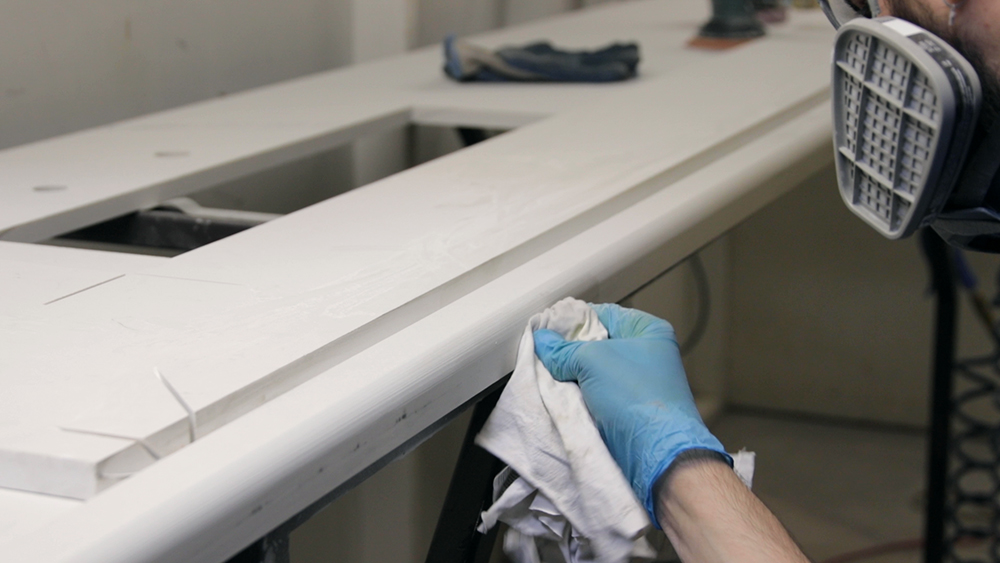
Once the bonding material has fully cured, the seam is leveled and polished to minimize its visibility and create a smooth transition between slabs. Experienced fabricators can often make seams nearly imperceptible under normal viewing conditions, allowing the countertop to maintain a cohesive and elegant look. After the seam work is completed, the entire surface undergoes a final polishing process to ensure a consistent finish and uniform gloss level across the countertop. These finishing details play a crucial role in achieving the refined, premium appearance that defines a high-quality quartz countertops installation.
8. Backsplash and Edge Finishing
Once the main countertop installation is complete, attention shifts to the finishing details that enhance both the appearance and functionality of the space. Quartz backsplashes are often installed to create a cohesive, seamless look, with options ranging from standard-height backsplashes to full-height quartz wall panels and striking waterfall features. Installers carefully position each piece using specialized adhesives, ensuring precise alignment with the countertop surface for a clean and refined finish.
During this stage, all joints between the countertop and backsplash are sealed with flexible caulk to help prevent moisture penetration and improve long-term durability. Fabricators also inspect and refine any exposed edges, ensuring they match the selected edge profile and maintain a smooth, polished appearance throughout. These final finishing touches not only protect the installation but also elevate the overall aesthetic, contributing to the sophisticated and luxurious appeal of quartz surfaces.
9. Final Inspection and Cleaning
Before the project is officially completed, installers conduct a thorough final inspection to ensure every aspect of the quartz countertops installation meets quality standards. This review includes evaluating seam quality, slab alignment, adhesive curing, edge consistency, and overall workmanship. Any minor adjustments or imperfections identified during the inspection are addressed before the installation team leaves the site, helping ensure a flawless finished result.
Once all checks have been completed, the countertop surface is carefully cleaned to remove dust, fingerprints, and any residue left from fabrication or installation. Homeowners are also encouraged to inspect the finished countertop and confirm that all design specifications, measurements, and features have been completed as planned. A properly installed quartz countertop should appear level, stable, and visually seamless, delivering both lasting performance and a refined aesthetic that enhances the overall space.
Key Considerations for Quartz Countertops Installation
A successful quartz countertops installation depends on more than just selecting a beautiful slab. Proper planning, preparation, and professional execution are essential to ensure long-term durability, structural integrity, and a flawless finished appearance. Below are some of the most important factors to consider before and during installation.
1. Precise Measurement and Layout Planning
Accurate measurements are the foundation of every successful quartz countertops installation. Because quartz slabs are fabricated specifically for each project, even minor measurement errors can result in poor fitment, uneven gaps, or costly delays. Templating should only be performed after cabinets have been fully installed and finalized to ensure all dimensions are correct.
Careful layout planning is equally important, particularly for kitchens with islands, waterfall edges, multiple sinks, or complex countertop configurations. Every cutout, seam location, and edge treatment should be determined during the planning stage to ensure a smooth fabrication and installation process.
2. A Stable and Level Cabinet Base
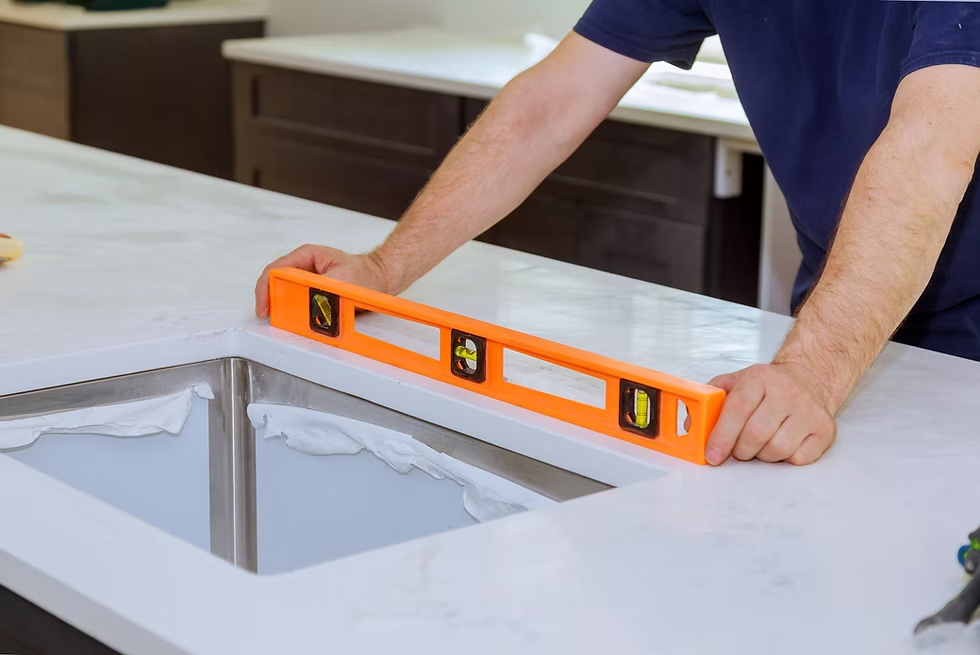
Quartz is a heavy surface material that requires a strong and level foundation. Before installation begins, cabinets should be inspected to ensure they are securely anchored, properly aligned, and capable of supporting the weight of the slabs. Uneven or unstable cabinets can create stress points that may lead to cracking or structural issues over time.
In some cases, additional reinforcement may be necessary. Installers may use plywood support layers, shims, or other structural solutions to create a flat and stable surface that evenly distributes the weight of the countertop. Taking the time to prepare the cabinet base properly helps maximize the lifespan of the installation.
3. Professional Handling and Installation
Unlike some countertop materials that may be suitable for DIY projects, quartz countertops typically require professional installation. Quartz slabs are extremely heavy and can be difficult to transport, maneuver, and position without specialized equipment and experienced installers.
Professional fabricators have the expertise and tools needed to make precise cuts, handle slabs safely, and install them without damaging the material. Their experience also helps minimize the risk of costly mistakes, delays, and potential injuries during the installation process. For most homeowners, working with qualified professionals is the safest and most reliable approach.
4. Proper Cutouts and Structural Reinforcement
Cutouts for sinks, cooktops, faucets, and other accessories require careful planning and precise fabrication. Each opening adds complexity to the installation and can affect both project costs and structural performance. Accurate measurements are essential to ensure every fixture fits correctly and functions as intended.
Additional reinforcement may also be required around cutout areas, particularly when installing large undermount sinks or heavy appliances. Because these sections experience greater stress, installers often strengthen surrounding cabinet structures or add support systems to help prevent cracking and ensure long-term durability. Proper reinforcement is a critical step in maintaining the strength and stability of the quartz surface.
Cost of Quartz Countertops Installation
The cost of quartz countertops installation varies depending on factors such as slab quality, kitchen size, design complexity, and labor rates. On average, homeowners can expect to spend between $2,500 and $5,000 for a standard kitchen installation, while larger projects with premium quartz designs or custom features may exceed $6,000. Quartz is typically priced per square foot, with entry-level options starting around $50 per square foot and premium designs reaching $150 per square foot or more.
Labor is another significant component of the overall investment. Professional installation generally includes templating, fabrication, transportation, edge polishing, cutouts, seam finishing, and slab placement. Costs may increase for kitchens with complex layouts, waterfall islands, custom edge profiles, multiple seams, or additional fabrication requirements. Features such as sink cutouts, matching backsplashes, and the removal of existing countertops can also add to the final project budget.
While quartz may have a higher upfront cost than materials such as laminate or tile, it offers exceptional durability, low maintenance, and long-term value. Its non-porous surface, consistent appearance, and wide range of design options make it a worthwhile investment for homeowners seeking a stylish and long-lasting countertop solution. Obtaining detailed quotes from experienced suppliers and installers can help ensure accurate budgeting and a successful installation project.

Quartz countertops continue to be one of the most valuable investments for modern kitchens and living spaces, offering a unique combination of durability, sophistication, and ease of maintenance. Although installation costs may vary, choosing the right quartz surface and a professional installation team can ensure exceptional long-term results. At Lux Quartz Vietnam, we are committed to providing premium quartz surfaces that combine innovative design, reliable performance, and lasting beauty. Explore our collections to find the perfect quartz solution for your next residential or commercial project.
See more: