
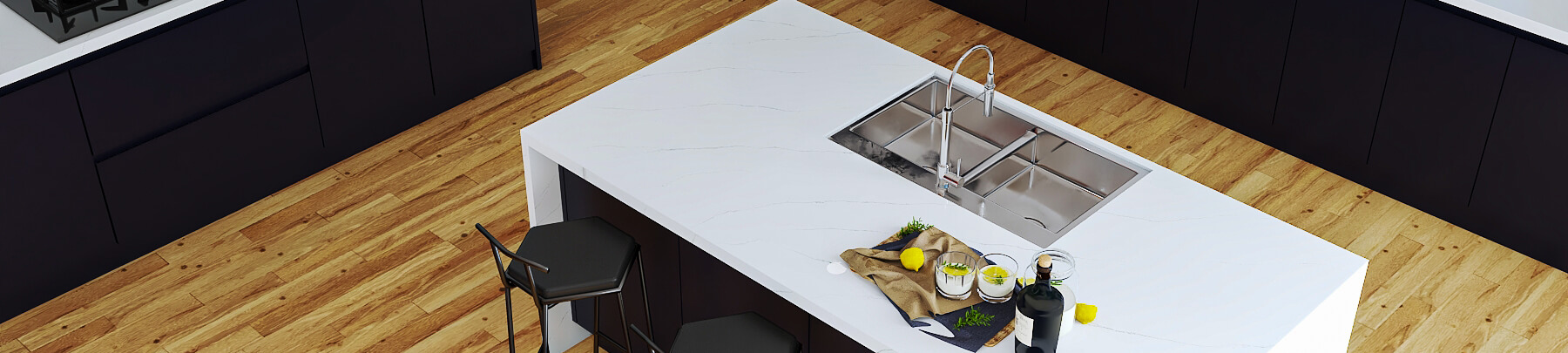
Quartz countertops are widely appreciated for their durability, elegant appearance, and low maintenance requirements. They have become a top choice in modern kitchens and bathrooms because they combine the beauty of natural stone with enhanced performance. However, keeping them in pristine condition still depends on proper care. Understanding how to clean quartz countertops correctly will not only preserve their shine but also prevent long-term damage and extend their lifespan.
Although quartz is often marketed as “low maintenance”, that doesn’t mean it is completely maintenance-free. Dirt, grease, and everyday spills can still affect the surface over time if not cleaned properly. With the right approach and a consistent routine, maintaining quartz surfaces can be simple, effective, and stress-free while ensuring they remain a focal point in your home.
- 1. Why Proper Cleaning Is Important
- 2. Daily Cleaning Routine for Quartz Countertops
- 3. How to Remove Common Stains
- 4. What NOT to Use on Quartz Countertops
- 5. Deep Cleaning Quartz Countertops
- 6. How to Disinfect Quartz Surfaces Safely
- 7. Preventive Care Tips
- 8. Common Mistakes to Avoid
- 9. Best Products for Cleaning Quartz Countertops
- 10. Frequently Asked Questions About How to Clean Quartz Countertops
1. Why Proper Cleaning Is Important
Quartz is a non-porous material, which means it does not absorb liquids easily and is naturally resistant to stains, mold, and bacteria. This makes it more hygienic compared to many natural stone surfaces. However, improper cleaning habits can still lead to issues over time, especially in high-traffic areas like kitchens.
Residue from grease, soap, or everyday spills can gradually build up, leaving the surface looking dull or cloudy. Over time, this buildup can reduce the natural shine that makes quartz so appealing. In addition, using harsh or incorrect cleaning products may damage the resin that binds the quartz together, weakening the surface and causing discoloration.
Proper cleaning is not just about aesthetics—it plays a key role in maintaining the durability and long-term performance of the material. Following the right quartz countertop care routine helps protect your investment and ensures your surfaces continue to look as good as new.
2. Daily Cleaning Routine for Quartz Countertops
What You Need
One of the biggest advantages of quartz is how easy it is to clean. You don’t need expensive or specialized products for daily maintenance. In most cases, simple household items are more than enough:
- Mild dish soap
- Warm water
- Soft cloth or sponge
- Microfiber towel (for drying)
These gentle tools are ideal for cleaning quartz surfaces because they effectively remove dirt without scratching or damaging the finish.
Step-by-Step Cleaning Process
If you’re wondering exactly how to clean quartz countertops daily, the process is quick and easy:
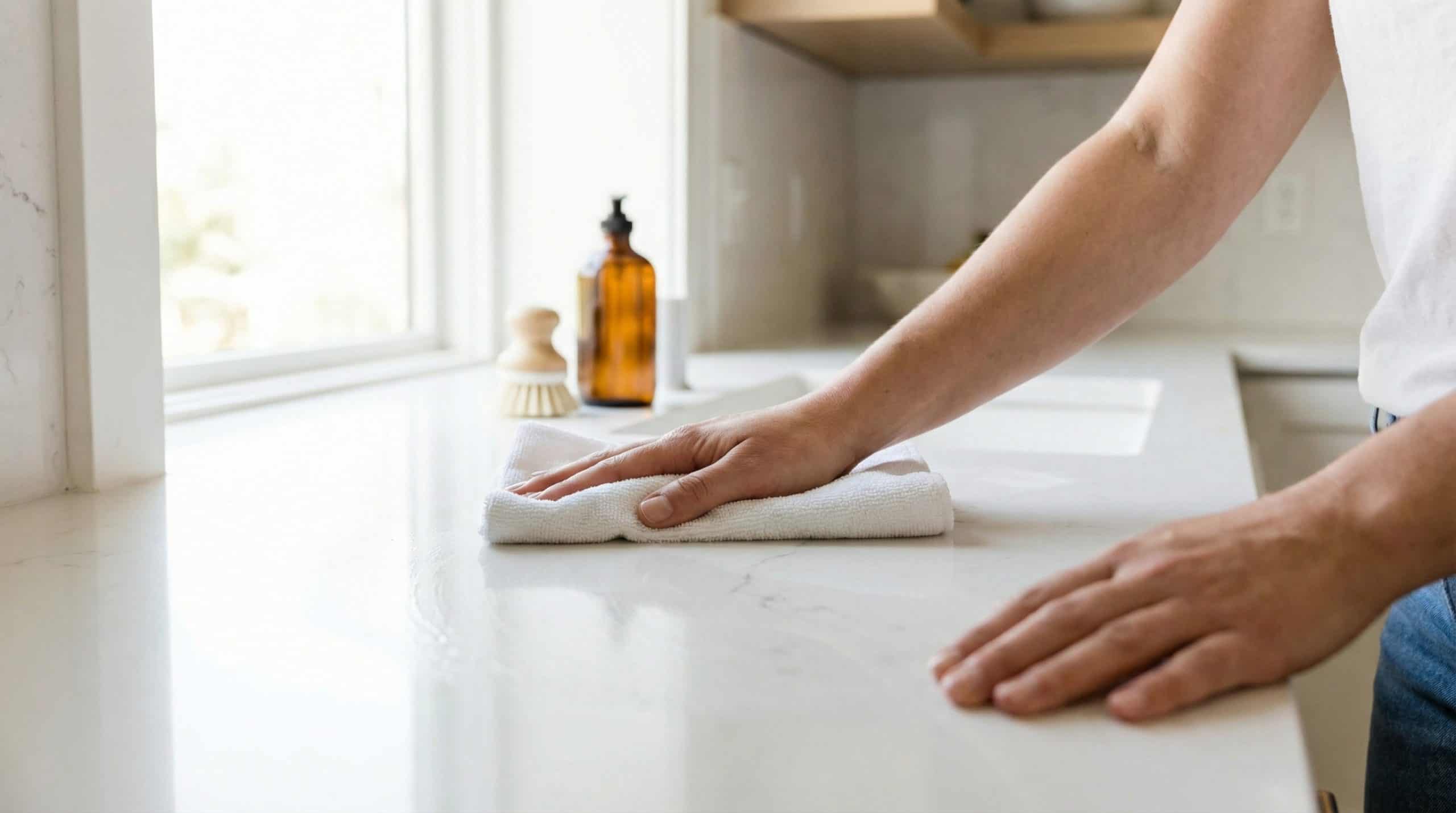
- Wipe the surface with warm water to remove crumbs and loose debris
- Apply a small amount of mild dish soap to a damp cloth or sponge
- Gently clean the surface using circular motions
- Rinse with clean water to remove any soap residue
- Dry thoroughly with a microfiber cloth to prevent streaks and water spots
This routine not only keeps your countertops clean but also helps maintain their natural shine without the need for harsh chemicals.
Everyday Maintenance Tips
In addition to cleaning, small daily habits can significantly improve the longevity of your countertops:
- Wipe up spills immediately to prevent buildup or staining
- Avoid letting liquids sit on the surface for extended periods
- Do a quick wipe-down at the end of each day
- Keep a soft cloth nearby for easy and frequent cleaning
These simple practices are essential parts of effective quartz countertop maintenance and help reduce the need for deep cleaning.
3. How to Remove Common Stains
Even though quartz is highly stain-resistant, it is not completely stain-proof. Knowing how to clean quartz countertops stains properly will help you deal with everyday messes more effectively.
Grease and Oil Stains
Grease is one of the most common issues in kitchens. It can leave a thin film that dulls the surface and makes it look dirty even after cleaning.
- Use a degreasing dish soap
- Wipe the area with a damp cloth
- Repeat if necessary until the residue is completely removed
Dried Food or Sticky Residue
Spills that are left too long can harden and stick to the surface. These require a slightly different approach:
- Use a plastic scraper to gently lift the residue
- Avoid metal tools to prevent scratches
- Clean the area afterward with soap and water
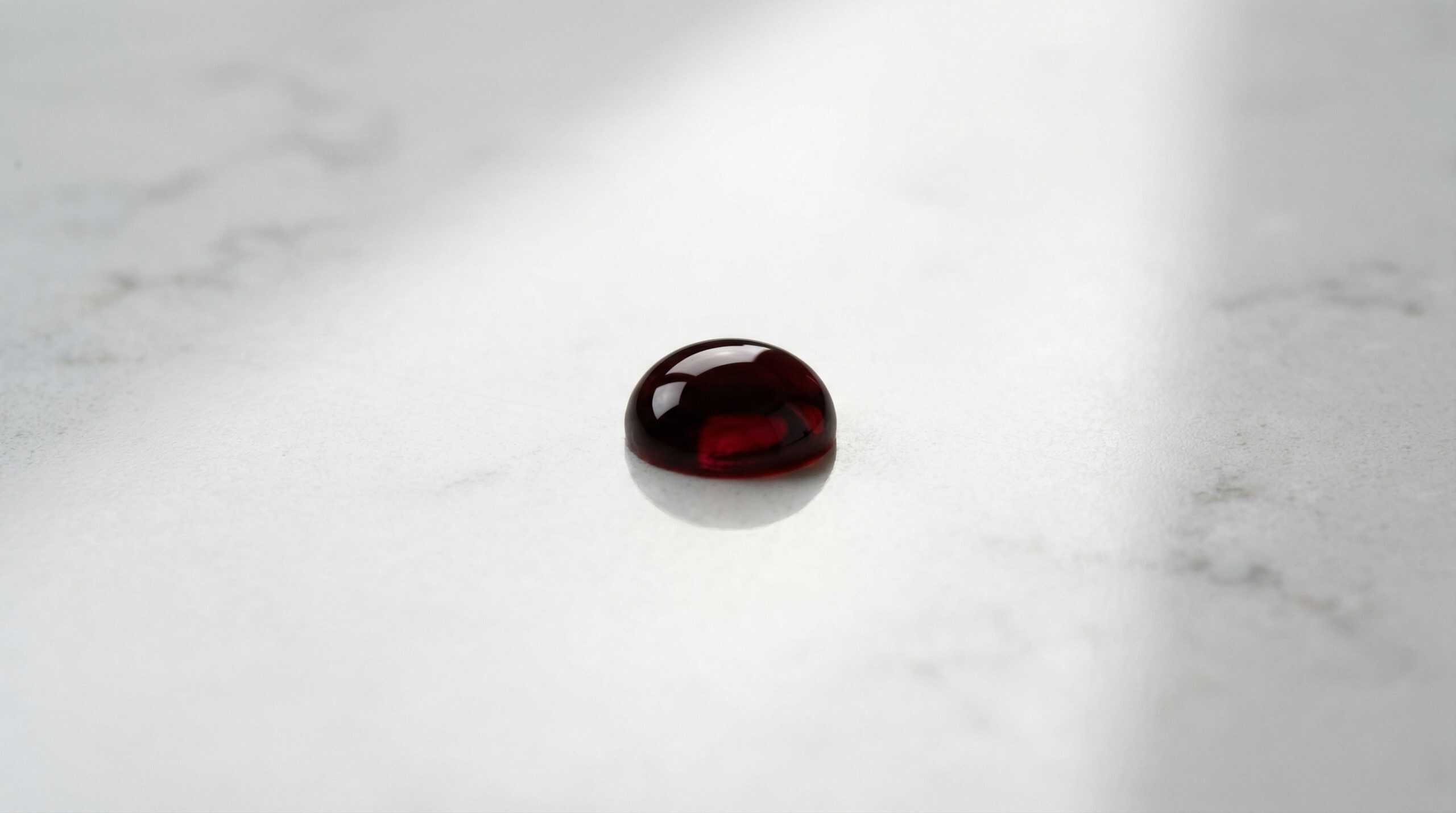
Tough Stains (Coffee, Wine, Ink)
Some substances can leave more noticeable stains if not cleaned quickly. In these cases:
- Apply a best cleaner for quartz countertops that is non-abrasive
- Let it sit briefly to break down the stain
- Wipe gently with a soft cloth
- Rinse and dry thoroughly
Acting quickly is always the best way to prevent stains from setting in.
4. What NOT to Use on Quartz Countertops
Understanding what to avoid is just as important as knowing how to clean quartz countertops properly. Using the wrong products can cause permanent damage.
You should avoid:
- Harsh chemicals (bleach, ammonia, oven cleaners)
- Abrasive scrubbers (steel wool, rough pads)
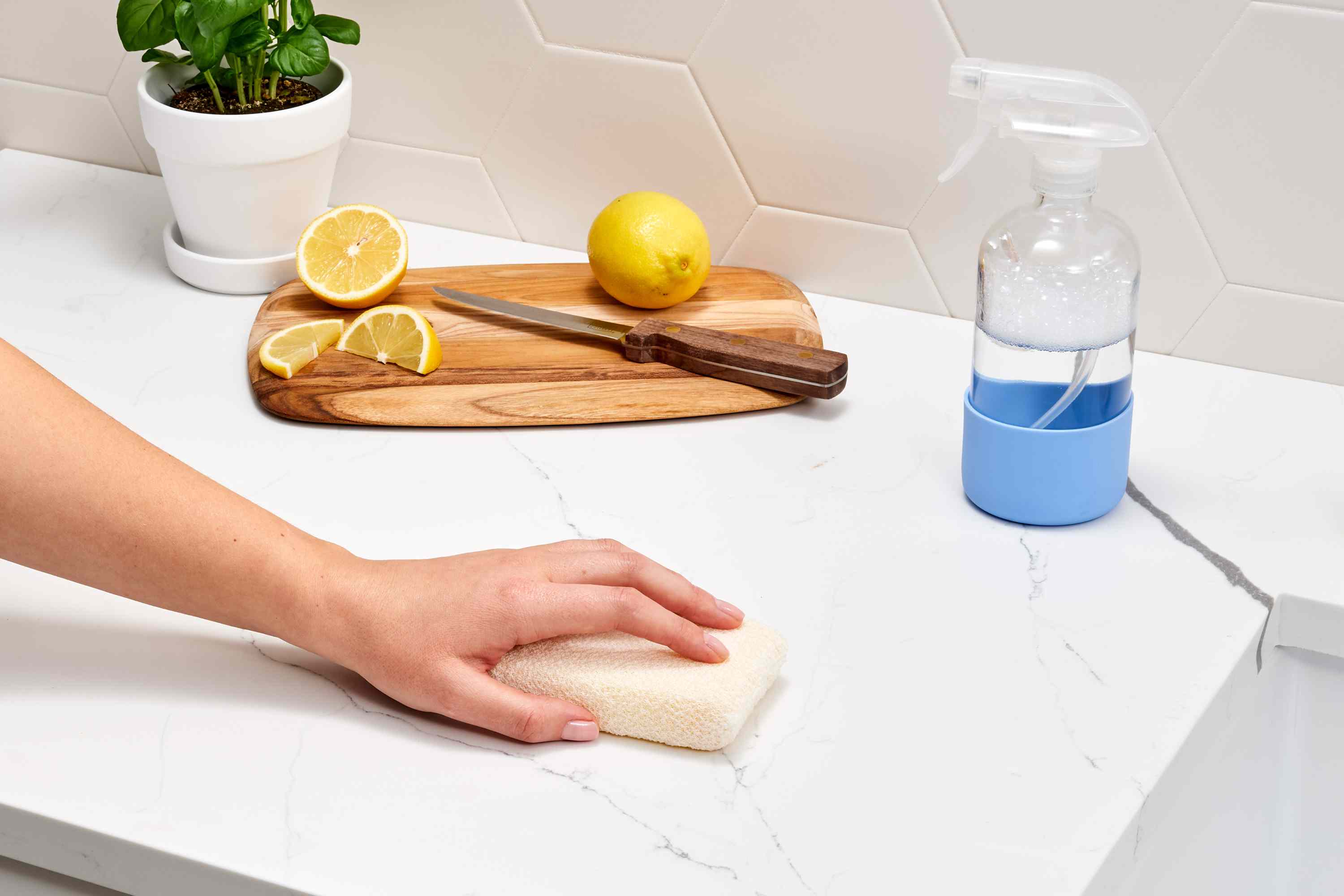
- Strong acidic cleaners (such as vinegar or lemon-based solutions)
- Paint removers or solvent-based products
These substances can damage the resin, cause discoloration, and reduce the smooth, polished finish of quartz surfaces. Choosing safe cleaners for quartz countertops is essential for long-term care.
5. Deep Cleaning Quartz Countertops
When to Deep Clean
Even with regular maintenance, quartz countertops benefit from occasional deep cleaning. This helps remove invisible buildup such as grease film or cleaning residue that daily wiping may not fully eliminate.
Deep cleaning is typically recommended:
- Once a week for frequently used kitchens
- Every 2–4 weeks for lighter use areas
How to Deep Clean
A proper deep cleaning routine can restore shine and improve overall appearance:
- Use a non-abrasive cleaner designed for quartz
- Spray the cleaner evenly across the surface
- Let it sit for a few minutes to break down residue
- Wipe with a soft cloth
- Rinse with clean water
- Dry thoroughly to prevent streaks
This step is essential if you want to maintain the glossy finish associated with high-quality quartz.
6. How to Disinfect Quartz Surfaces Safely
Maintaining hygiene is especially important in kitchens and bathrooms. However, many people make the mistake of using overly strong disinfectants.
A safer method for disinfecting quartz countertops includes:
- Mix isopropyl alcohol (70%) with water in a 1:1 ratio
- Lightly spray the solution onto the surface
- Let it sit for 1–2 minutes
- Wipe clean with a soft cloth
- Dry the surface completely
This method effectively kills bacteria without damaging the quartz. Avoid overusing disinfectants, as frequent exposure to strong chemicals can reduce the surface’s shine.
7. Preventive Care Tips
Preventive care is one of the most effective ways to reduce cleaning effort and protect your countertops. Good habits can prevent damage before it happens.
- Use cutting boards instead of cutting directly on the surface
- Place hot pots and pans on trivets or heat-resistant pads
- Avoid prolonged exposure to direct sunlight
- Clean spills as soon as they occur
- Avoid dragging heavy objects across the surface
These practices are essential for long-term quartz surface care and help maintain both appearance and functionality.
8. Common Mistakes to Avoid
Many homeowners unintentionally damage their countertops by following incorrect cleaning practices. Avoiding these mistakes can make a big difference:
- Using vinegar or acidic cleaners
- Scrubbing too aggressively
- Letting stains sit for too long
- Using abrasive cleaning tools
- Relying on harsh disinfectants too frequently
By avoiding these errors, you can preserve the smooth, glossy finish that makes quartz so attractive.
9. Best Products for Cleaning Quartz Countertops
Choosing the right products is an important part of learning how to clean quartz countertops effectively. Not all cleaners are suitable for this material.
Look for:
- Non-abrasive formulas
- pH-neutral cleaners
- Products specifically labeled for quartz surfaces
While there are many commercial options available, simple dish soap and water remain one of the safest and most effective solutions for everyday cleaning. Investing in the best cleaner for quartz countertops can be helpful for deep cleaning or stubborn stains.
10. Frequently Asked Questions About How to Clean Quartz Countertops
Can I Use Vinegar on Quartz Countertops?
No, vinegar is acidic and can damage the resin, leading to dullness over time.
Can Quartz Countertops Stain?
Quartz is highly stain-resistant but not completely stain-proof. Prompt cleaning is still necessary.
How Often Should I Clean Quartz Countertops?
Daily cleaning is recommended, with deep cleaning performed weekly or as needed.
Can I Use Disinfecting Wipes?
They can be used occasionally if they are free from harsh chemicals, but overuse should be avoided.
How Do I Restore Shine to Quartz?
Use a quartz-safe cleaner and buff the surface with a microfiber cloth to restore its natural shine.
Learning how to clean quartz countertops properly is not complicated, but it does require consistency and the right approach. By following a gentle cleaning routine, using safe products, and practicing preventive care, you can maintain the beauty and durability of your quartz surfaces for many years. With regular maintenance and attention to detail, quartz countertops will continue to look polished, hygienic, and visually stunning – making them a long-lasting investment in any home.
See more: