When selecting quartz slabs for a residential or commercial project, color and pattern are often the first things designers consider. However, slab size can be just as important. The dimensions of a quartz slab affect how a surface is fabricated, how many seams are required, how efficiently material can be used, and how well a design’s veining flows across the finished installation.
As modern interiors increasingly feature oversized kitchen islands, waterfall countertops, full-height backsplashes, and expansive commercial surfaces, larger-format quartz slabs have become increasingly valuable. Jumbo and Super Jumbo Quartz Slabs can provide greater design flexibility and help fabricators create larger surfaces with fewer joints.
However, bigger is not automatically better for every project. The right choice depends on the dimensions of the installation, fabrication requirements, transportation conditions, design objectives, and budget. This guide compares regular, jumbo, and super jumbo quartz slabs, explains where each size works best, and provides practical considerations for choosing the right format for your project.
Why Quartz Slab Size Matters?
Quartz slab size influences much more than the amount of surface material available. It can affect the design, fabrication process, material efficiency, logistics, and final appearance of a project. For fabricators and distributors, choosing the appropriate slab format can also influence material yield, inventory planning, cutting efficiency, and overall project costs. Meanwhile, architects and designers can benefit from larger formats when creating expansive surfaces with fewer seams and better pattern continuity.
Fewer Visible Seams
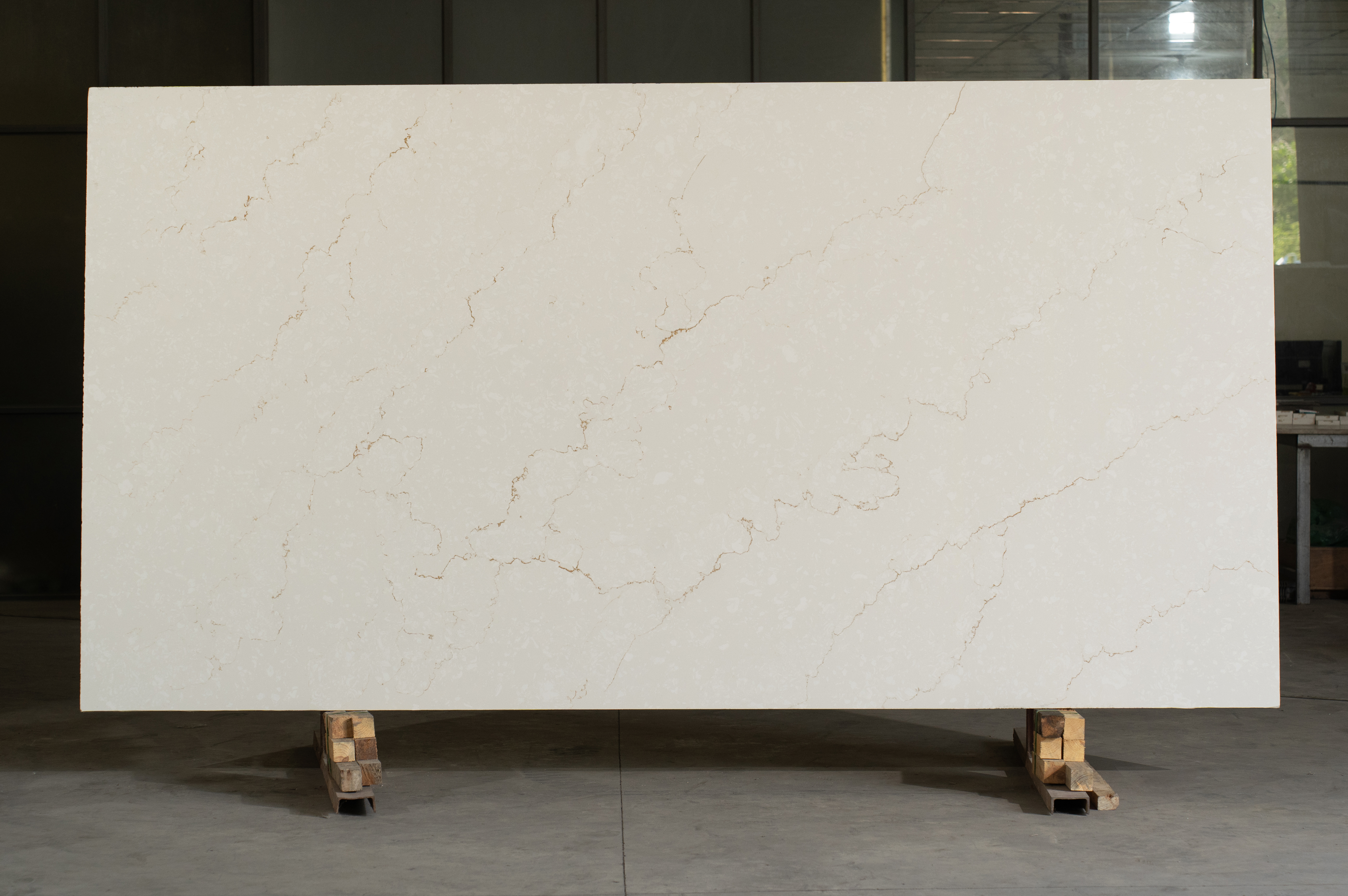
Larger quartz slabs can help reduce the number of seams required across a countertop or other surface. This is particularly valuable for large kitchen islands, long countertops, and commercial applications where a continuous appearance is important. Fewer seams create a cleaner and more cohesive surface while allowing the quartz pattern to flow more naturally. For projects featuring marble-look or heavily veined designs, choosing a larger slab can also minimize visual interruptions and create a more refined, high-end finish.
Better Vein Continuity
Slab size plays an important role in preserving the visual continuity of quartz patterns, especially for marble-inspired designs with prominent veining. A larger slab provides more surface area for fabricators to align veins across countertops, backsplashes, and waterfall edges. This can help create a more natural stone-like appearance and improve the overall visual balance of the space. For designs that require vein matching or bookmatching, larger-format quartz slabs also provide greater flexibility during the fabrication and layout process.
Improved Material Utilization
Choosing the right slab size can help fabricators make more efficient use of the available quartz material. A larger slab may allow multiple countertop components or a larger island to be cut from the same piece, potentially reducing offcuts and the number of slabs required. However, material efficiency depends on the project’s dimensions, shape, cutouts, and cutting layout. Careful slab planning before fabrication is therefore essential to maximize material yield and minimize unnecessary waste.
Greater Design Flexibility
Larger quartz slabs give architects and designers greater freedom when creating expansive surfaces. They are particularly useful for oversized kitchen islands, waterfall countertops, full-height backsplashes, feature walls, reception desks, and other large applications. Instead of limiting the design to the dimensions of a standard slab, jumbo and super jumbo formats can accommodate larger components with fewer joints. This makes them especially suitable for contemporary and luxury interiors where seamless surfaces and strong visual impact are key design priorities.
More Efficient Fabrication and Installation
The appropriate slab size can also improve efficiency during fabrication and installation. When larger components can be produced from fewer slab pieces, fabricators may spend less time cutting, joining, and finishing multiple sections. Fewer seams can also simplify installation and reduce the amount of seam work required on site. However, larger slabs require careful handling and transportation planning because of their increased dimensions and weight. Working with experienced fabricators is essential to ensure safe handling, accurate cutting, and proper installation.

What Are the Common Quartz Slab Sizes?
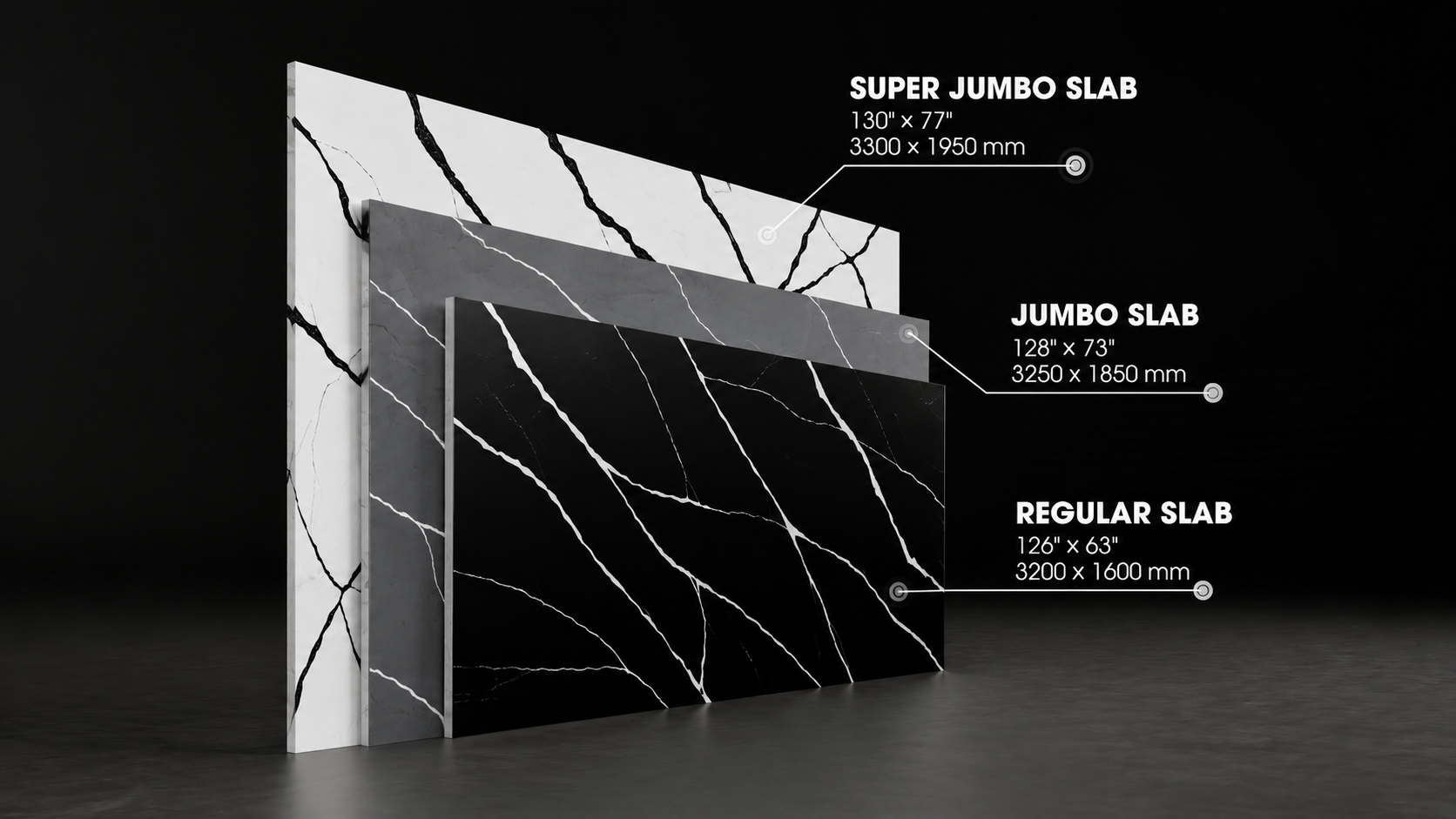
Although quartz manufacturers may offer different dimensions, quartz slabs are generally available in three common formats: regular, jumbo, and super jumbo. The exact dimensions can vary by manufacturer, so fabricators should always confirm the available slab size before planning a cutting layout.
At Lux Quartz Vietnam, these three formats provide different levels of surface coverage for projects ranging from standard residential applications to large-scale luxury and commercial installations.
1. Regular Quartz Slabs
Dimensions: 126″ × 63″ (3200 × 1600 mm)
Surface Area: ~55.1 sq. ft.
Regular quartz slabs are suitable for standard-sized applications such as kitchen countertops, bathroom vanities, laundry areas, and smaller residential surfaces. Their more manageable dimensions also make them practical for transportation, handling, and fabrication.
2. Jumbo Quartz Slabs
Dimensions: 128″ × 73″ (3250 × 1850 mm)
Surface Area: ~64.7 sq. ft.
Jumbo quartz slabs provide greater surface coverage than regular formats, making them suitable for larger countertops, kitchen islands, backsplashes, and wall applications. The additional surface area can provide more flexibility for larger components and help reduce the number of seams required.
3. Super Jumbo Quartz Slabs
Dimensions: 130″ × 77″ (3300 × 1950 mm)
Surface Area: ~69.3 sq. ft.
Super Jumbo Quartz Slabs offer the largest format in the Lux Quartz range. They are particularly suitable for oversized kitchen islands, luxury residential projects, commercial counters, feature walls, and other applications where greater surface coverage and minimal seams are important.
Quartz Slab Size Comparison: Regular vs Jumbo vs Super Jumbo
The differences between regular, jumbo, and super jumbo slabs go beyond their dimensions. Each format offers a different balance of surface coverage, fabrication flexibility, handling requirements, and design possibilities.
| Slab Size | Dimensions | Approx. Surface Area | Ideal Applications | Key Benefits |
| Regular | 126″ × 63″ (3200 × 1600 mm) | ~55.1 sq. ft. |
|
Easy to handle and fabricate; practical for standard applications |
| Jumbo | 128″ × 73″ (3250 × 1850 mm) | ~64.7 sq. ft. |
|
Greater coverage, fewer seams, more design flexibility |
| Super Jumbo | 130″ × 77″ (3300 × 1950 mm) | ~69.3 sq. ft. |
|
Maximum coverage, minimal seams, enhanced pattern continuity |
The surface area figures are calculated from the nominal slab dimensions. The actual usable area may be slightly different depending on slab tolerances, edge finishing, cutouts, design requirements, and fabrication layout. When choosing between the three formats, fabricators should consider the actual dimensions of each countertop component, rather than comparing slab area alone. A well-planned cutting layout can help determine which format provides the best material yield for a particular project.
Why Are Jumbo and Super Jumbo Quartz Slabs Popular?
The growing popularity of jumbo and super jumbo quartz slabs is closely connected to the evolution of modern interior design. Larger kitchen islands, open-plan layouts, full-height backsplashes, and statement commercial surfaces increasingly require greater slab coverage.
Fewer Seams for Large Surfaces
One of the main advantages of larger quartz slabs is their ability to cover wider surfaces with fewer individual pieces. This can create a cleaner and more continuous appearance, particularly on large islands and long countertops. For marble-look quartz, reducing the number of seams also helps minimize interruptions in the veining and creates a more cohesive visual effect.
Better Vein Continuity
Large-format slabs provide more space for fabricators to plan the orientation and alignment of prominent quartz patterns. This is especially valuable for Calacatta, Carrara, and other marble-inspired designs with directional veining. When multiple surfaces need to visually connect, a larger slab can provide greater flexibility for vein matching and bookmatching.
Ideal for Oversized Kitchen Islands
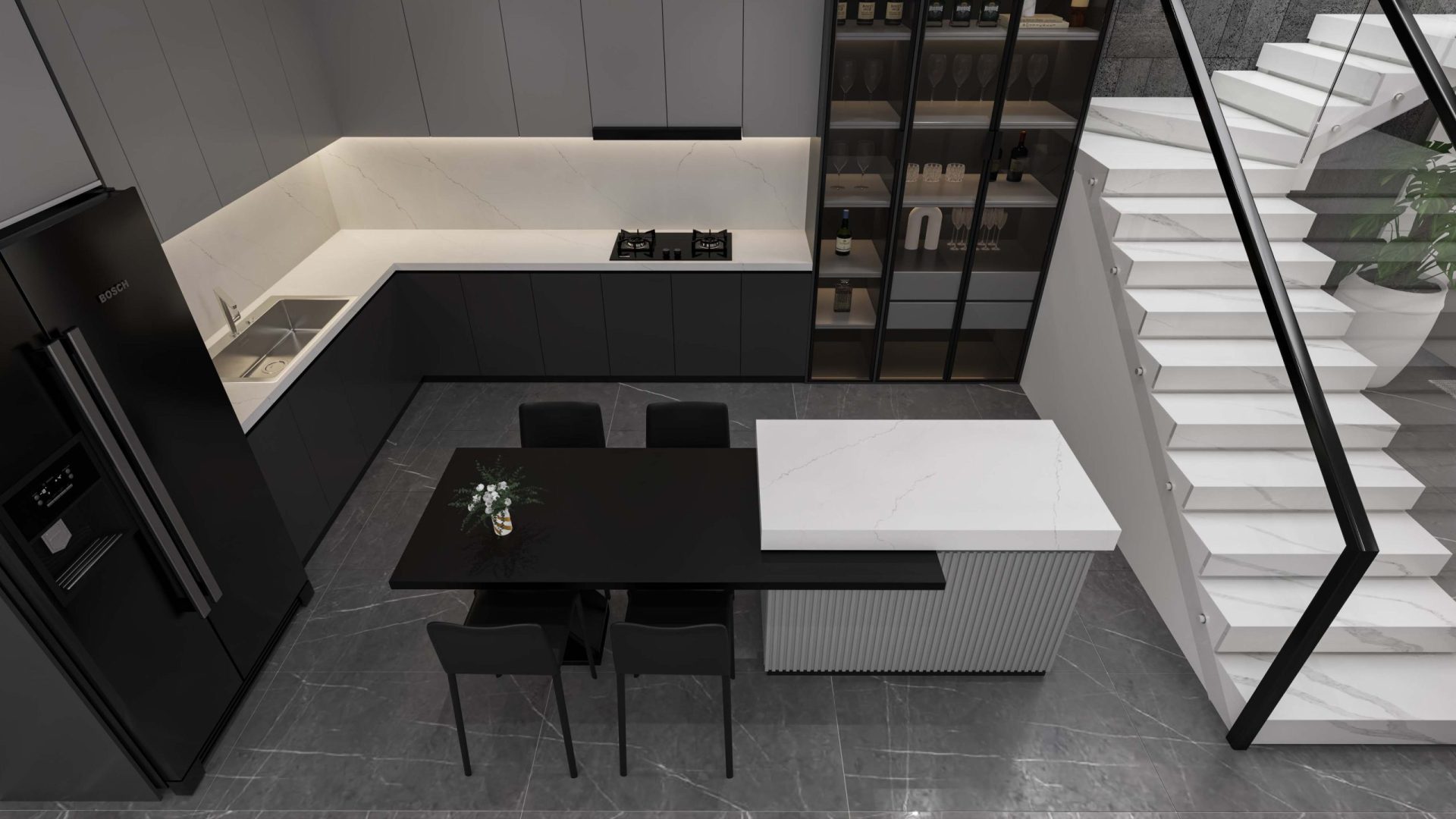
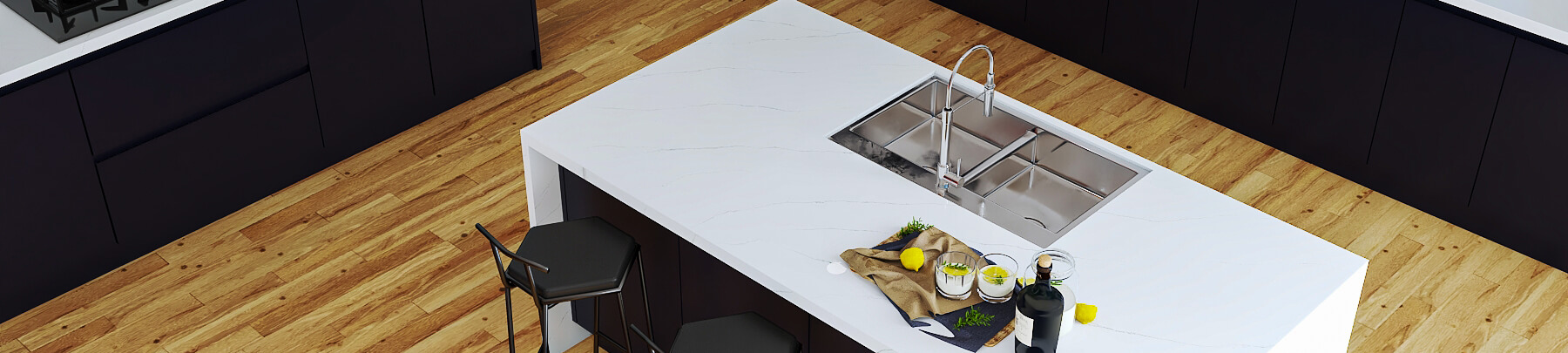
Kitchen islands are becoming larger and more multifunctional, often combining food preparation, dining, storage, and social areas in a single feature. Jumbo and super jumbo slabs are well suited to these designs because their larger dimensions can accommodate wider and longer island surfaces while helping minimize seams.
Greater Design Flexibility
Large slabs allow designers to explore applications beyond conventional countertops, including waterfall edges, full-height backsplashes, fireplace surrounds, feature walls, and commercial reception counters. This makes jumbo and super jumbo formats particularly attractive for contemporary and luxury interiors where large, uninterrupted surfaces are part of the overall design concept.
Potentially Better Material Utilization
A larger slab can provide more flexibility when arranging multiple components within a single cutting layout. Depending on the project dimensions and shape, this may reduce offcuts and the number of slabs required. However, the largest slab is not always the most efficient option. Material yield depends on the specific cutting layout, component dimensions, cutouts, edge profiles, and pattern direction. Fabricators should therefore optimize the layout before determining the final slab quantity.
Which Quartz Slab Size Is Right for Your Projects?
The ideal slab size depends on your project dimensions, design goals, fabrication requirements, transportation conditions, and budget. Instead of automatically choosing the largest available format, consider how efficiently each slab can accommodate the required components.
| Project Type | Recommended Slab Size | Why |
|---|---|---|
| Bathroom vanity | Regular | Efficient for compact surfaces |
| Standard kitchen | Regular | Suitable for typical countertop layouts |
| Large kitchen countertop | Jumbo | Greater coverage with fewer seams |
| Medium kitchen island | Jumbo | Good balance between coverage and handling |
| Large waterfall island | Jumbo / Super Jumbo | Better surface continuity |
| Oversized luxury island | Super Jumbo | Maximum coverage and fewer joints |
| Full-height backsplash | Jumbo / Super Jumbo | Better pattern continuity |
| Hotel reception desk | Super Jumbo | Suitable for expansive surfaces |
| Restaurant or bar counter | Jumbo / Super Jumbo | Greater continuous coverage |
| Feature wall | Jumbo / Super Jumbo | Supports large-format applications |
Choose Regular When
A regular slab is generally appropriate when the project involves standard-sized countertops, bathroom vanities, or other relatively compact surfaces. It can also be a practical choice when easy handling, transportation, and cost efficiency are priorities.
Choose Jumbo When
Jumbo slabs are a good option when a regular slab does not provide enough coverage but the project does not require the maximum available format. They offer additional flexibility for larger kitchens, islands, backsplashes, and medium-sized commercial applications.
Choose Super Jumbo When
Super jumbo slabs are best suited to projects where large uninterrupted surfaces, minimal seams, and pattern continuity are major priorities. They are particularly valuable for oversized kitchen islands, luxury residential interiors, commercial counters, and large feature surfaces.
Before selecting a large-format slab, it is also important to confirm that the slab can be transported and handled safely at the project site. Doorways, elevators, staircases, corridors, loading areas, and available handling equipment should all be considered during the planning stage.
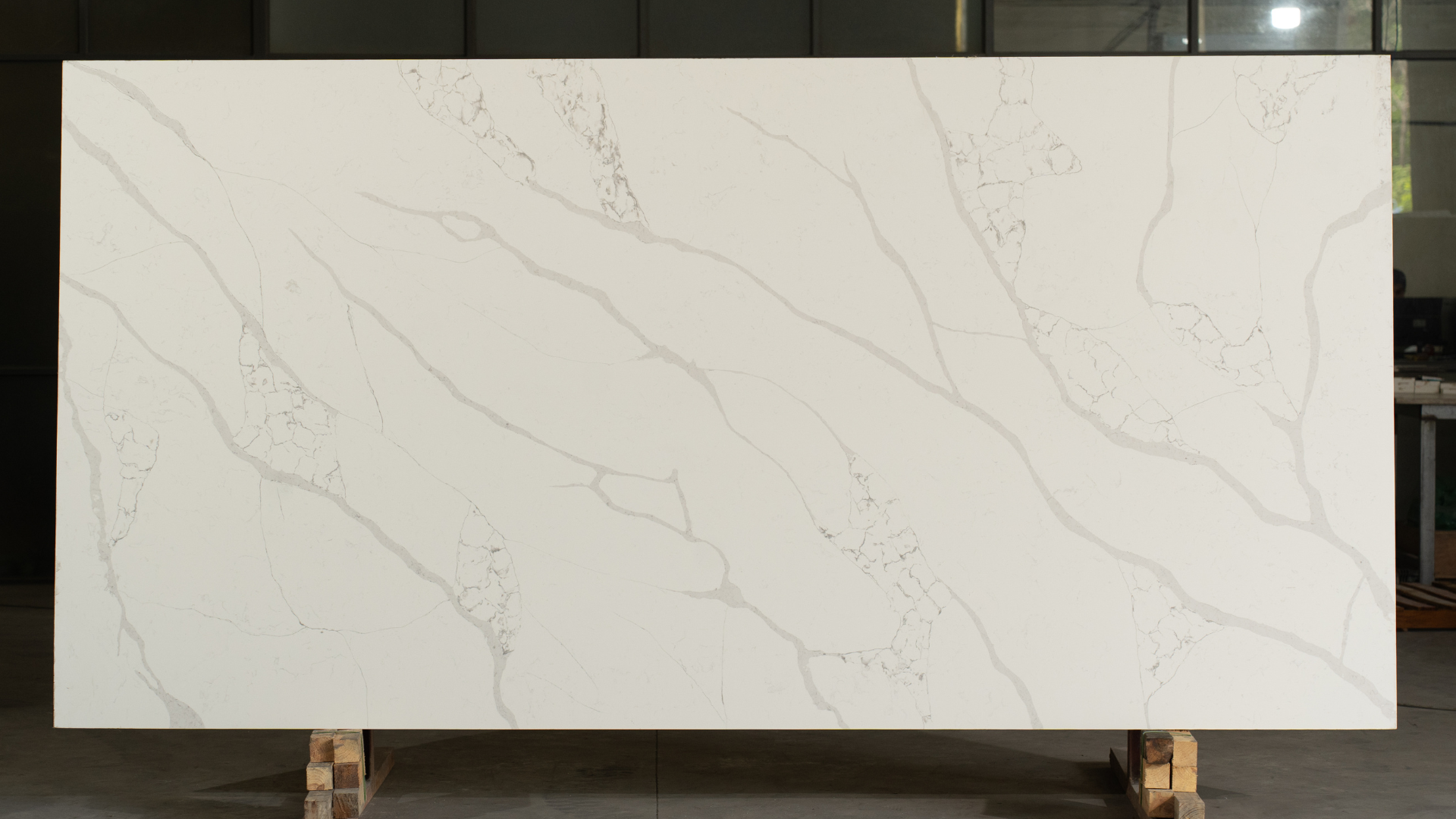
At Lux Quartz Vietnam, we offer regular, jumbo, and super jumbo quartz slabs in a range of colors and designs to meet the needs of residential, commercial, and large-format projects. Whether you are an architect, designer, fabricator, distributor, or project developer, our team can help you identify the right slab format for your application. Looking for the right quartz slab size for your next project? Contact Lux Quartz Vietnam to explore available slab sizes and find a solution that fits your design and fabrication requirements.
Frequently Asked Questions About Quartz Slab Sizes
What is the Difference Between Regular, Jumbo, and Super Jumbo Quartz Slabs?
The primary difference is slab dimensions. Larger slabs provide more usable surface area, allowing fabricators to reduce seams and create larger continuous installations.
Are Super Jumbo Quartz Slabs Worth the Investment?
For large kitchen islands, commercial counters, and premium residential projects, yes. They deliver a cleaner appearance, fewer joints, improved vein continuity, and greater design flexibility.
Do Larger Quartz Slabs Require Professional Installation?
Yes. Jumbo and super jumbo slabs are significantly heavier than standard slabs and require experienced fabricators, specialized handling equipment, and proper structural support during installation.
Which Quartz Slab Size is Best for Kitchen Islands?
Jumbo and super jumbo slabs are generally the best options because they can often cover large islands with little or no visible seams.
Can Super Jumbo Slabs Reduce Installation Costs?
While the slab itself typically costs more, fewer seams can reduce fabrication time, simplify installation, and minimize additional finishing work. The overall project cost depends on the design complexity and slab utilization.
Does Slab Size Affect Quartz Durability?
No. Regardless of size, high-quality engineered quartz offers the same excellent resistance to scratches, stains, and everyday wear. Slab size primarily influences fabrication possibilities and visual appearance rather than the material’s inherent performance.
See more: