
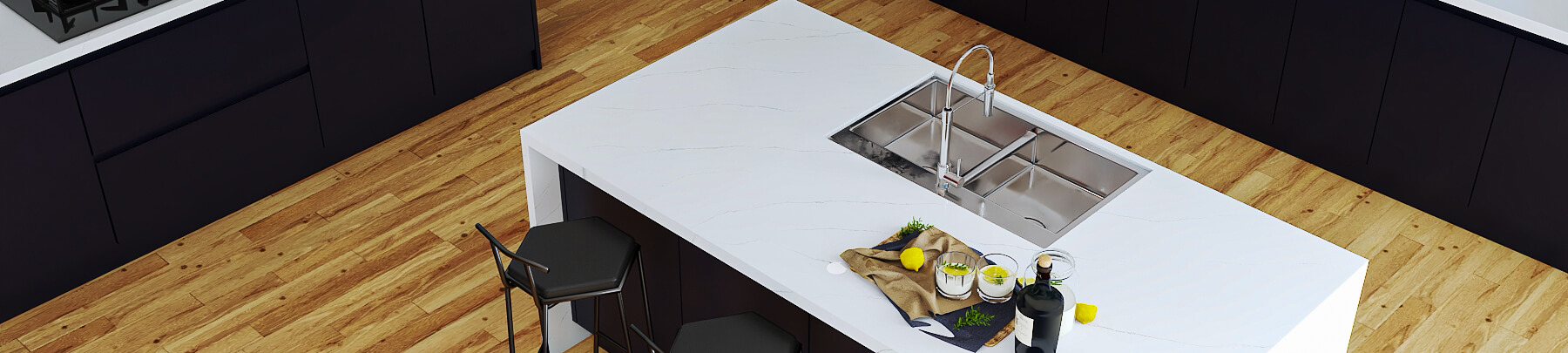
Turmeric is a common ingredient in many dishes, but its distinctive yellow pigment can leave stubborn stains on kitchen countertops. If not cleaned promptly, these stains can become increasingly difficult to remove.
So, how can you remove turmeric stains from countertops without damaging the surface? In this guide, Lux Quartz Vietnam shares five methods for cleaning turmeric stains, from everyday household ingredients to specialized cleaning solutions, along with essential tips to help you care for your countertop properly.
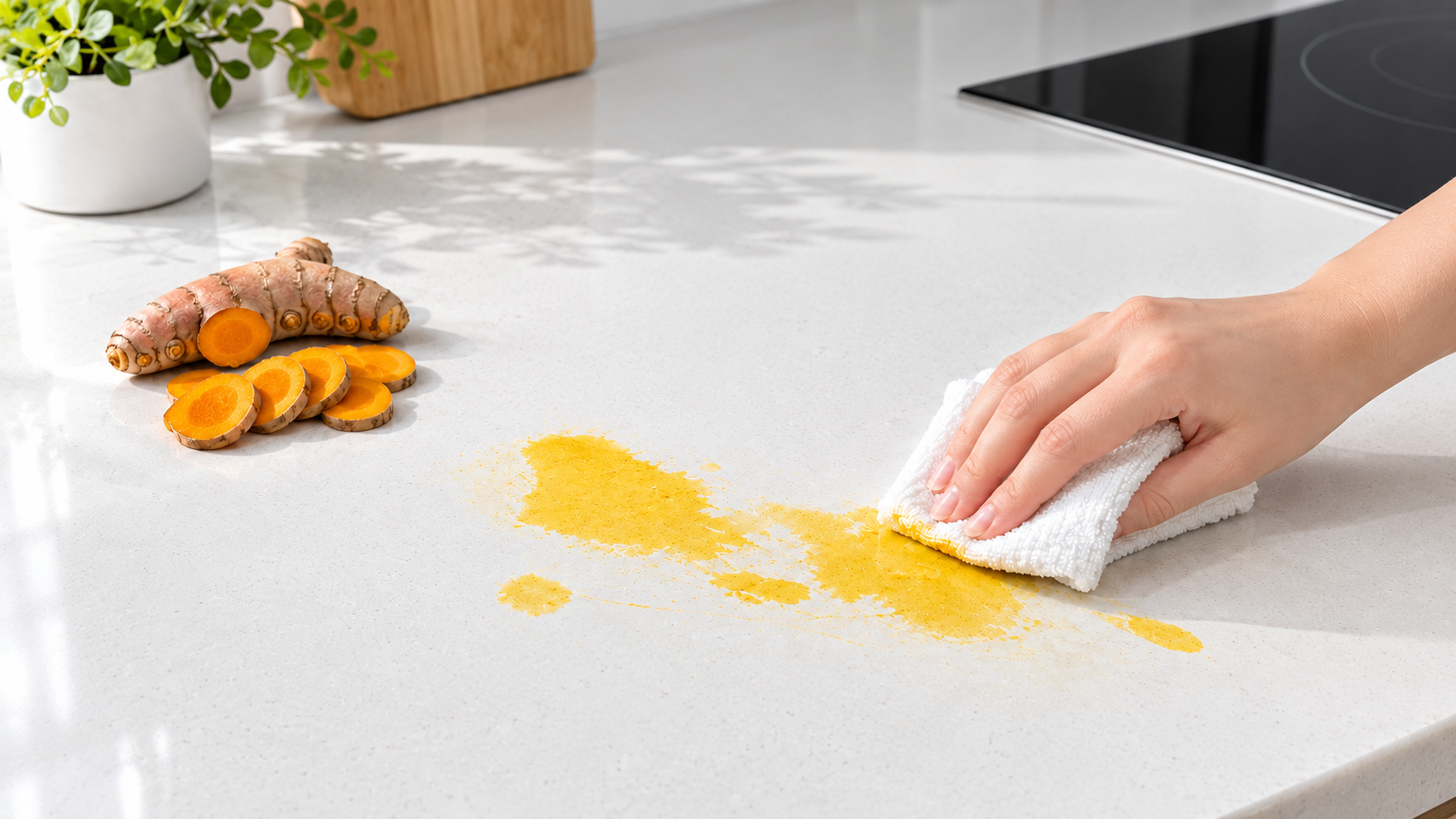
1. Can Baking Soda Remove Turmeric Stains from Countertops?
Baking soda is commonly used in household cleaning because it can help remove grease, dirt, certain stains, and unpleasant odors. Thanks to its mild abrasive properties, it may help clean some types of stains on kitchen countertops. However, baking soda is alkaline, and its particles may affect certain countertop finishes if rubbed too vigorously or used improperly. Before applying it, consider the characteristics of your countertop material.
Here are two methods you can try to remove turmeric stains from countertops using baking soda.
1.1 How to Use Baking Soda to Remove Turmeric Stains from Countertops
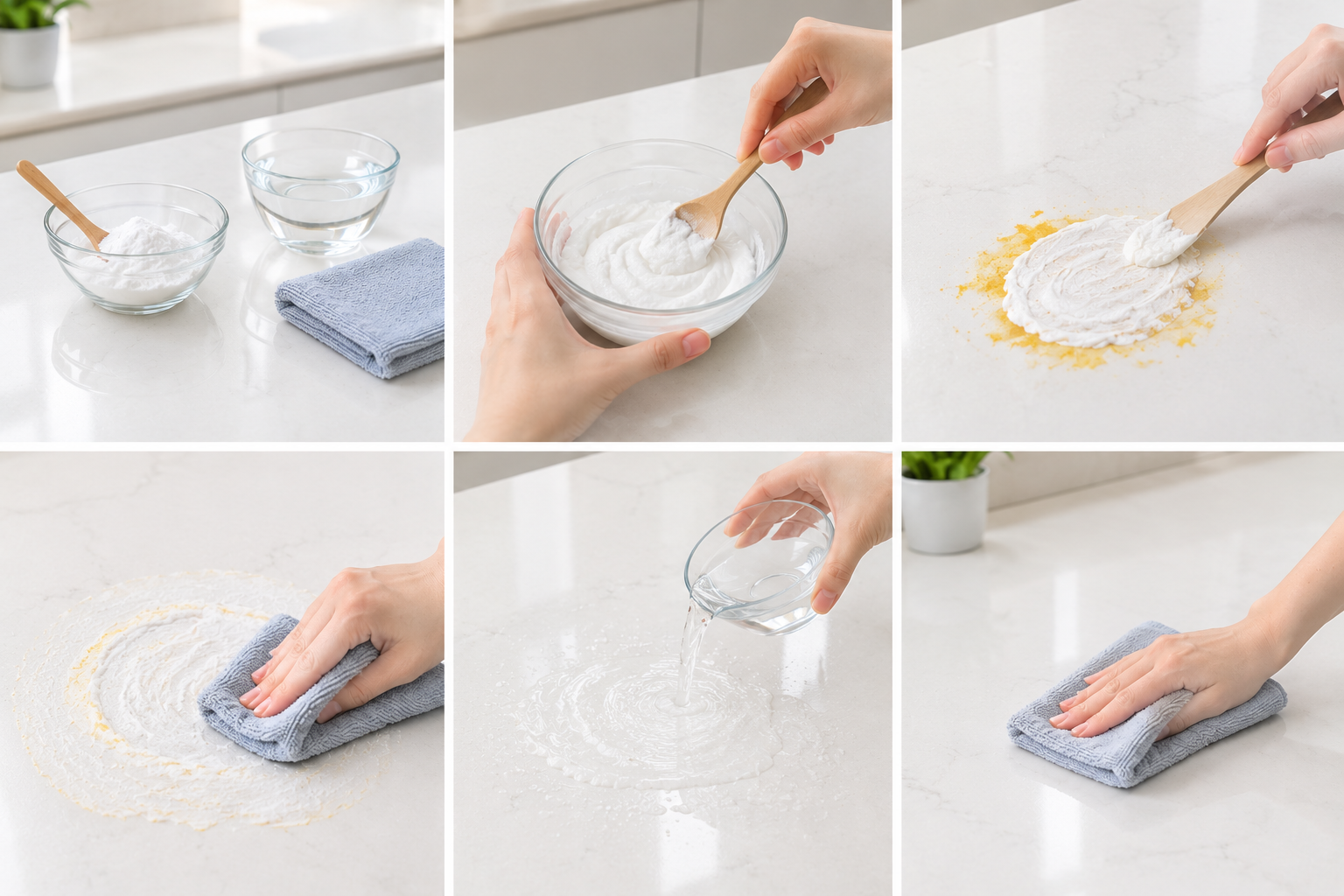
You can use baking soda to help clean turmeric stains on kitchen countertops by following these five simple steps.
What you need: Baking soda, warm water, and a soft cloth.
Instructions:
- Step 1: Mix a sufficient amount of baking soda with warm water to create a thick paste.
- Step 2: Apply a thin layer of the paste to the turmeric-stained area and let it sit for approximately 10–15 minutes.
- Step 3: Use a damp, soft cloth to gently wipe away the paste in circular motions. Avoid vigorous scrubbing or abrasive cleaning tools.
- Step 4: If the stain remains, repeat Step 3 as needed.
- Step 5: Wipe the countertop with clean water to remove any remaining baking soda residue, then dry the surface with another soft cloth.
1.2 Remove Turmeric Stains with Baking Soda and Toothpaste
Toothpaste contains ingredients that help clean surfaces and remove certain types of stains. When combined with baking soda, it may help loosen turmeric stains on kitchen countertops. However, both ingredients can affect some countertop surfaces through abrasion, particularly when applied with excessive pressure. Use this method cautiously.
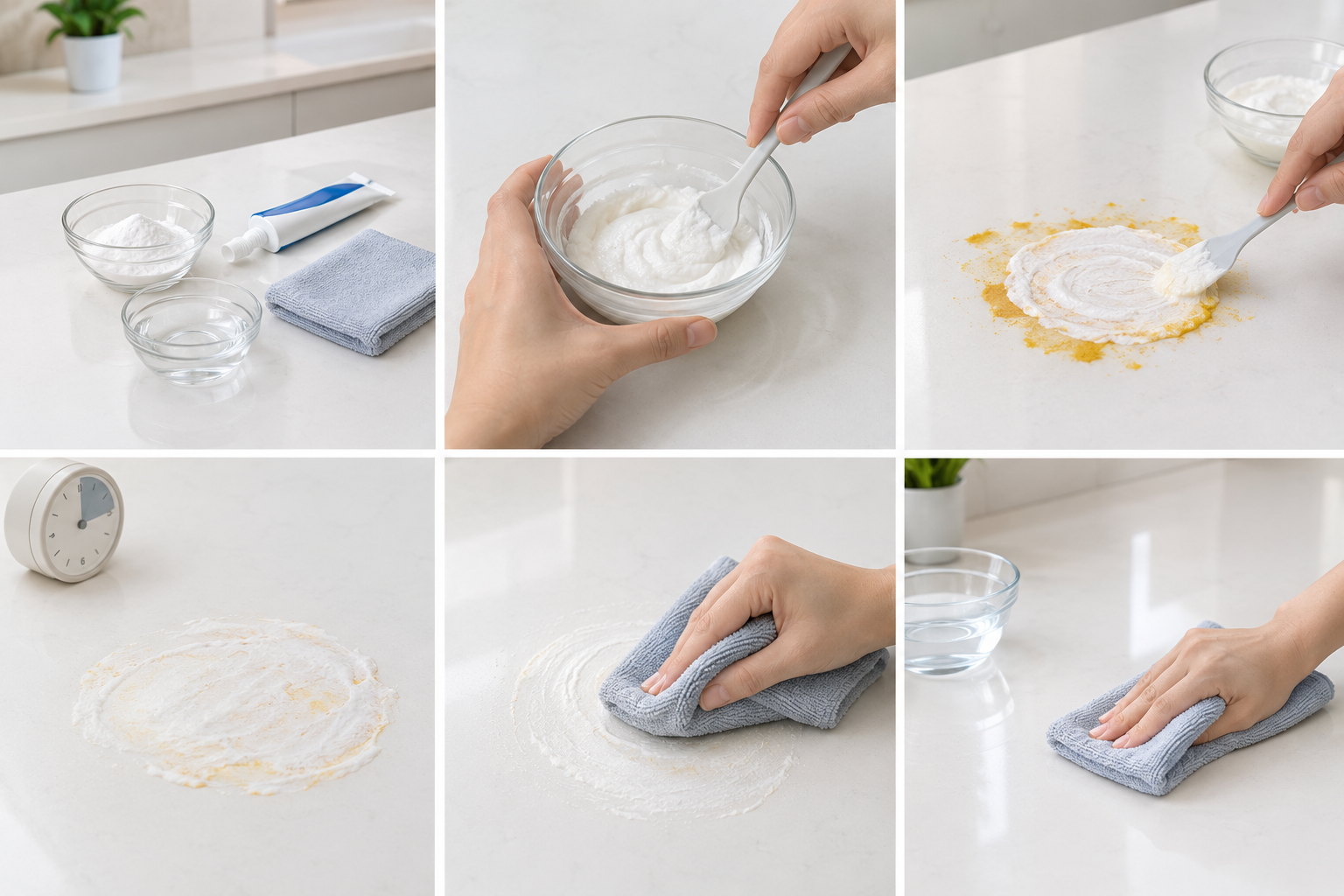
What you need: Baking soda, toothpaste, clean water, and a soft cloth.
Instructions:
- Step 1: Mix baking soda and toothpaste in a 1:1 ratio to create a thick paste.
- Step 2: Apply a thin layer of the mixture to the turmeric stain and leave it for approximately 5–10 minutes.
- Step 3: Use a damp, soft cloth to gently wipe away the mixture in circular motions.
- Step 4: If the stain remains, repeat Step 3 as needed.
- Step 5: Wipe the countertop thoroughly with clean water to remove all residue, then dry it with a soft cloth.
2. Can Dish Soap Remove Turmeric Stains from Countertops?
Dish soap helps remove grease, dirt, and odors from household surfaces. When selected and used appropriately, it can also be a suitable option for cleaning kitchen countertops. Choose a mild dish soap that does not contain harsh cleaning agents, acids, or lemon- or vinegar-derived ingredients that may be unsuitable for your countertop material. Dilute the soap with clean water before cleaning.
Here are two common ways to remove turmeric stains from countertops using dish soap.
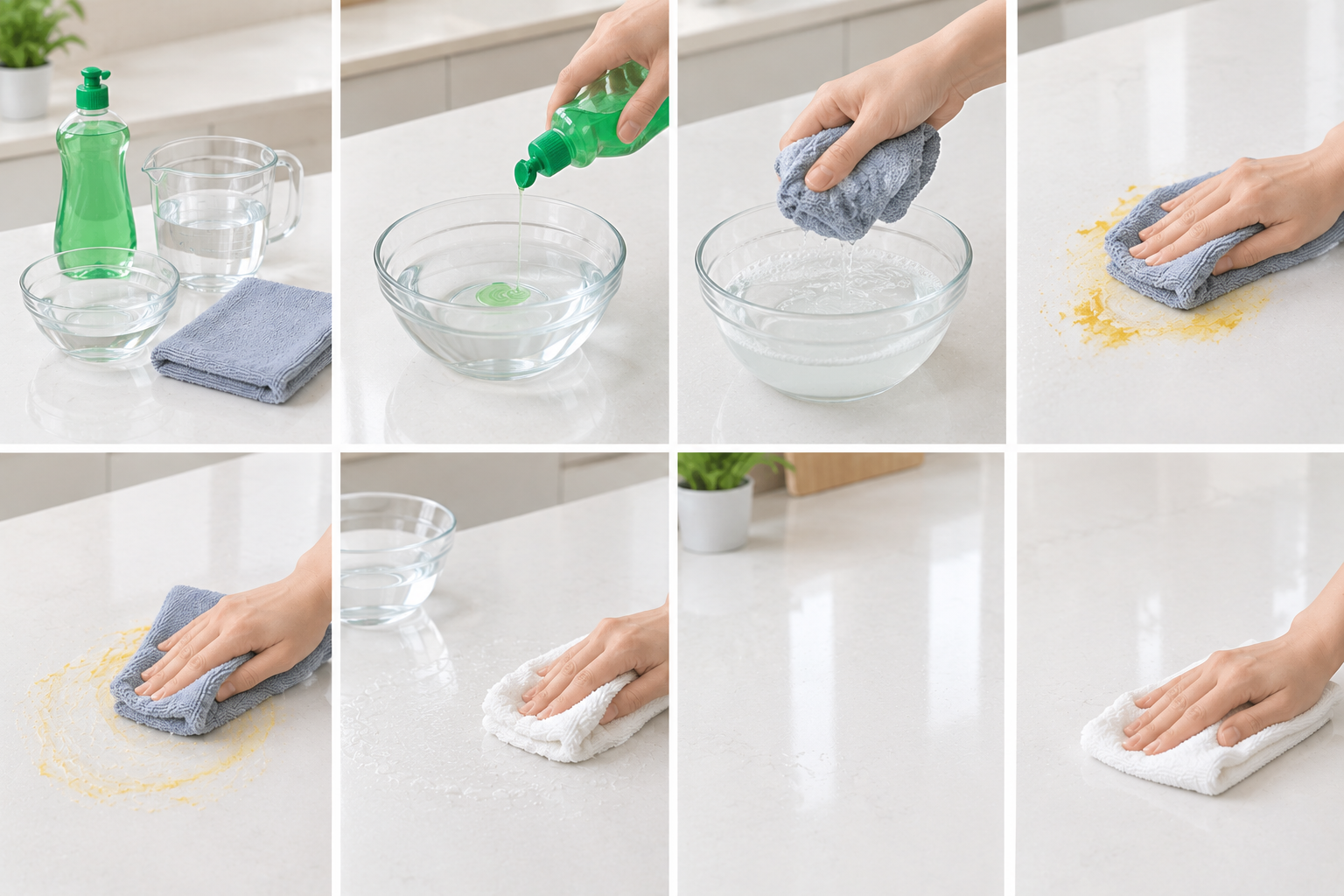
2.1 How to Clean Turmeric Stains from Countertops with Dish Soap
Dish soap can help treat turmeric stains on kitchen countertops when used as follows.
What you need: Dish soap, warm water, and a soft cloth.
Instructions:
- Step 1: Dilute one tablespoon of dish soap in approximately 500 ml of warm water. Avoid applying concentrated dish soap directly to the countertop.
- Step 2: Dip a soft cloth, microfiber cloth, or non-abrasive sponge into the solution. Wring out the excess liquid, then gently wipe the stained area. Avoid rough scouring pads or hard cleaning tools that could scratch the surface.
- Step 3: If the stain remains, repeat Step 2 as needed.
- Step 4: Wipe the countertop several times with a soft cloth dampened with clean water to remove all soap residue. Finish by drying the surface with a clean cloth.
2.2 How to Remove Turmeric Stains with Dish Soap and Flour
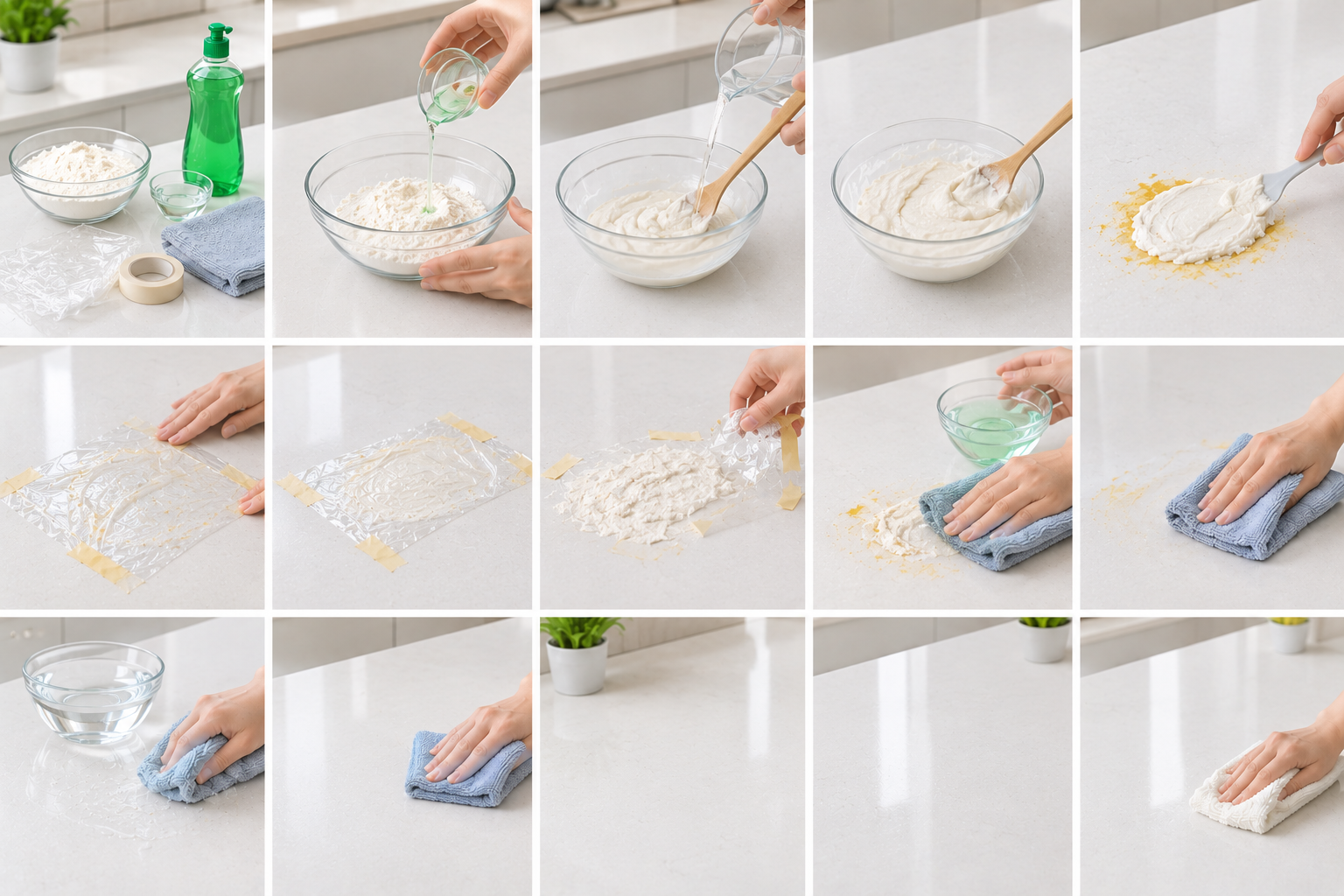
To help tackle turmeric stains on kitchen countertops, you can combine dish soap with flour. When mixed with water, flour forms a paste that may help retain some impurities and assist in lifting stains from the surface. This method can be tried using the following steps.
What you need: Flour, mild dish soap, clean water, plastic wrap, tape, and a soft cloth.
Instructions:
- Step 1: Mix one cup of flour with three teaspoons of mild dish soap. Gradually add water while stirring until the mixture reaches a moderately thick, paste-like consistency.
- Step 2: Apply a layer of the paste approximately 5 mm thick over the turmeric stain. Cover it with plastic wrap and secure the edges with tape to help retain moisture.
- Step 3: Leave the mixture in place for 24 hours. Then, gently remove it using a soft cloth and diluted dish soap.
- Step 4: If the stain remains, repeat Steps 2 and 3 as needed, provided the method is suitable for your countertop material.
- Step 5: Wipe the countertop with a clean, damp cloth to remove any remaining soap residue, then dry it with a soft cloth.
3. How to Remove Turmeric Stains from Countertops with a Specialized Cleaner
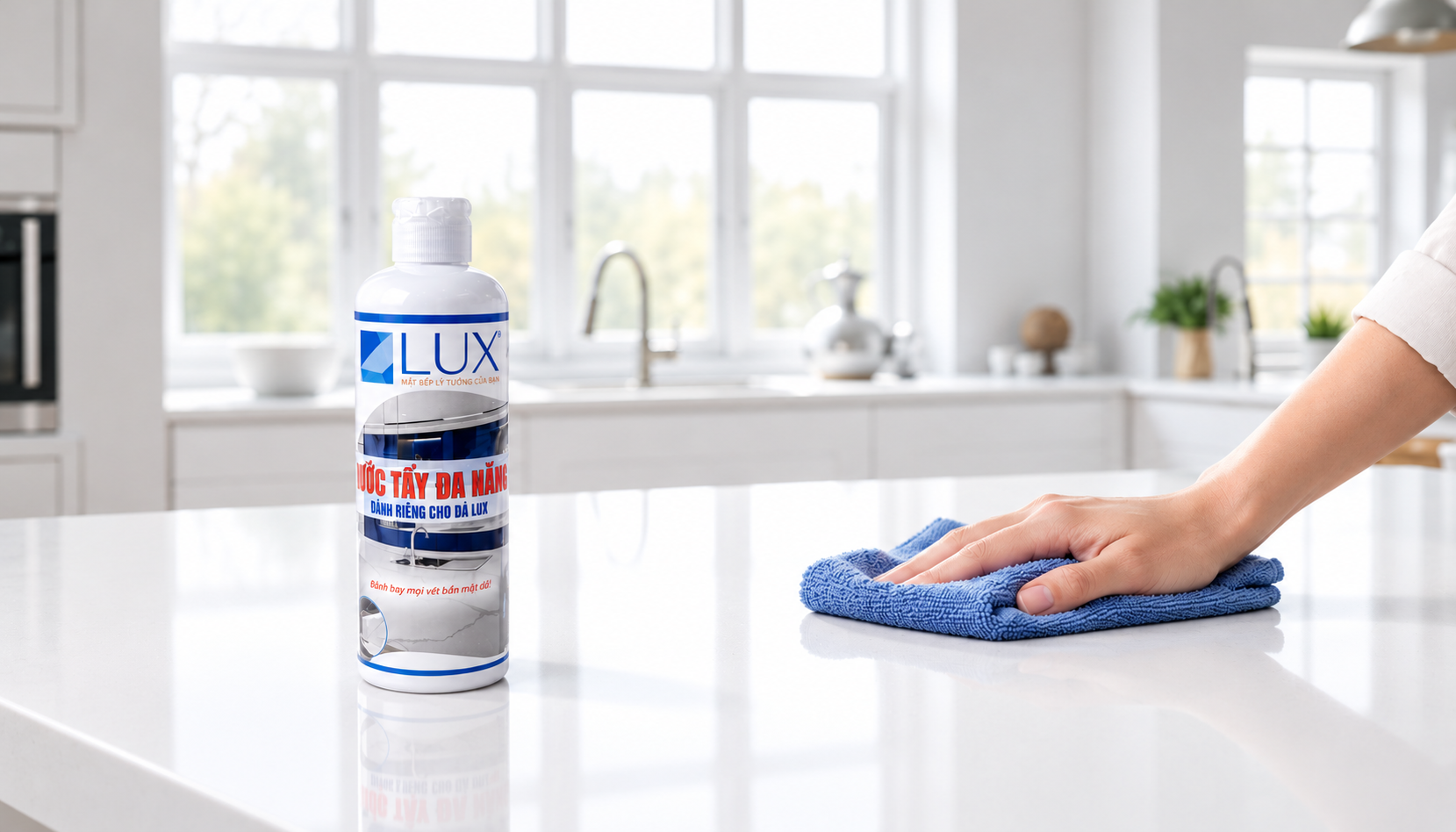
In addition to household cleaning ingredients, you can consider using a specialized cleaner, such as LUX® All-Purpose Cleaner, to remove turmeric stains from kitchen countertops. Developed by Lux Quartz Vietnam for cleaning difficult stains on stone surfaces, this product helps tackle stubborn marks while keeping the countertop clean and maintaining its appearance. Follow these steps to use LUX® All-Purpose Cleaner to treat turmeric stains on countertops.
What you need: LUX® All-Purpose Cleaner, clean water, and a soft cloth.
Instructions:
- Step 1: Shake the LUX® All-Purpose Cleaner bottle thoroughly before use.
- Step 2: Wipe the countertop lightly with a damp, soft cloth to remove loose dirt.
- Step 3: Apply an appropriate amount of LUX® All-Purpose Cleaner evenly to the turmeric-stained area. Leave it for 3–5 minutes, then wipe the area with a soft cloth.
- Step 4: If the stain remains, repeat Step 3 as needed.
- Step 5: Once the stain has been treated, wipe the countertop with clean water and a soft cloth. Dry the surface with a clean cloth. Make sure the countertop has been thoroughly cleaned before placing food on it or preparing meals.
Important note: LUX® All-Purpose Cleaner should be reserved for stubborn stains that cannot be removed with ordinary mild cleaning products. Do not use it as an everyday cleaning solution.
4. Important Tips for Removing Turmeric Stains from Countertops
To remove turmeric stains effectively without compromising the quality or appearance of your kitchen countertop, keep the following tips in mind.
- Clean Turmeric Stains as Soon as Possible: Clean the affected area within two hours of the stain appearing. For dark turmeric stains or particularly stubborn marks, aim to clean the surface within 30 minutes to reduce the risk of the yellow pigment becoming more deeply embedded. The longer a stain remains on the countertop, the more difficult it may become to remove, especially if the surface has scratches or worn areas.
- Choose Mild Cleaning Products: Use clean water, a soft cloth, and a pH-neutral cleaning solution to clean your countertop. Avoid mixing different cleaning chemicals without confirming their compatibility, as doing so may cause unwanted reactions or damage the surface.
- Avoid Strongly Acidic or Alkaline Cleaners: Products containing strong acids, industrial cleaning agents, or chemicals unsuitable for engineered stone may affect the finish, surface texture, or gloss, depending on the material’s composition. Be particularly cautious with products containing vinegar, lemon juice, or citrus extracts.
- Use Baking Soda and Other Household Remedies with Care: Baking soda is mildly abrasive, while vinegar and lemon juice are acidic. These household ingredients are not necessarily suitable for every countertop material. Before trying a cleaning method, check the manufacturer’s care instructions and test the solution on an inconspicuous area.
- Do Not Use Toilet Bowl Cleaners on Countertops: Toilet bowl cleaners may contain strong acids or other cleaning ingredients that are unsuitable for engineered stone. These products can damage the surface and diminish the appearance of your kitchen countertop. Instead, choose a specialized cleaner recommended by the countertop manufacturer.
- Limit the Use of Solvents and Harsh Cleaning Agents: Do not use acetone, organic solvents, or heavy-duty degreasers unless their compatibility with your countertop material has been confirmed. Certain chemicals may affect the binding resins, surface finish, or gloss of engineered stone. Always follow the manufacturer’s safety instructions and storage recommendations when handling cleaning products.
- Avoid Scrubbing the Stain Too Aggressively: Use a soft cloth or a non-abrasive sponge to gently clean the stained area. Scrubbing harder does not necessarily make a stain easier to remove. Excessive friction may scratch the surface or make future cleaning more difficult.
- Do Not Use Steel Wool or Sharp Cleaning Tools: Metal scouring pads, razor blades, and other hard or sharp tools can scratch the countertop, reducing its gloss and visual appeal. Scratches may also allow food residue and grease to accumulate, making the surface harder to clean.
- Rinse and Dry the Surface After Cleaning: After treating the turmeric stain, wipe the countertop with a damp cloth to remove any remaining cleaning solution, then dry it with a soft cloth. Do not allow cleaning chemicals to remain on the surface longer than the time recommended on the product label.
- Follow the Care Instructions for Your Countertop Material: Different types of engineered stone have different compositions and surface characteristics. Before using a specialized cleaner, consult the manufacturer’s or supplier’s care instructions to determine the most appropriate cleaning method.
A note from Lux Quartz Vietnam: When removing turmeric stains from engineered quartz countertops, prioritize gentle cleaning methods and products compatible with the material. If yellow discoloration persists after several cleaning attempts or appears to have penetrated deeply into the surface, consult your countertop supplier before using stronger chemicals to minimize the risk of damage.
Knowing how to remove turmeric stains from countertops can help you maintain a clean, attractive kitchen. By choosing an appropriate cleaning method, acting promptly, and following the right care practices, you can address turmeric stains while helping preserve the appearance of your countertop. Lux Quartz Vietnam hopes these five cleaning methods and practical tips will help you care for your kitchen countertops and keep your cooking space looking its best.
See more: